- Shed demolition is a DIY project that most Winnipeg homeowners can handle with basic tools; the disposal logistics are what most people do not plan adequately for
- A shed produces multiple material types in a small space: framing lumber, sheathing, roofing, siding, and possibly a concrete pad, each with different weight and disposal considerations
- The concrete pad is the most consequential decision: leave it, break it up and bin it, or break it up and reuse as fill. Each has a different cost and effort profile.
- Asphalt shingles from old sheds can go in a standard C and D bin, but some Manitoba disposal facilities charge extra for shingle loads: mention it when booking
- Ecobins & Cartage provides the bin and pickup; the demolition is yours to do
Shed Demolition vs Deck or Fence Removal: Why It Is a Different Project
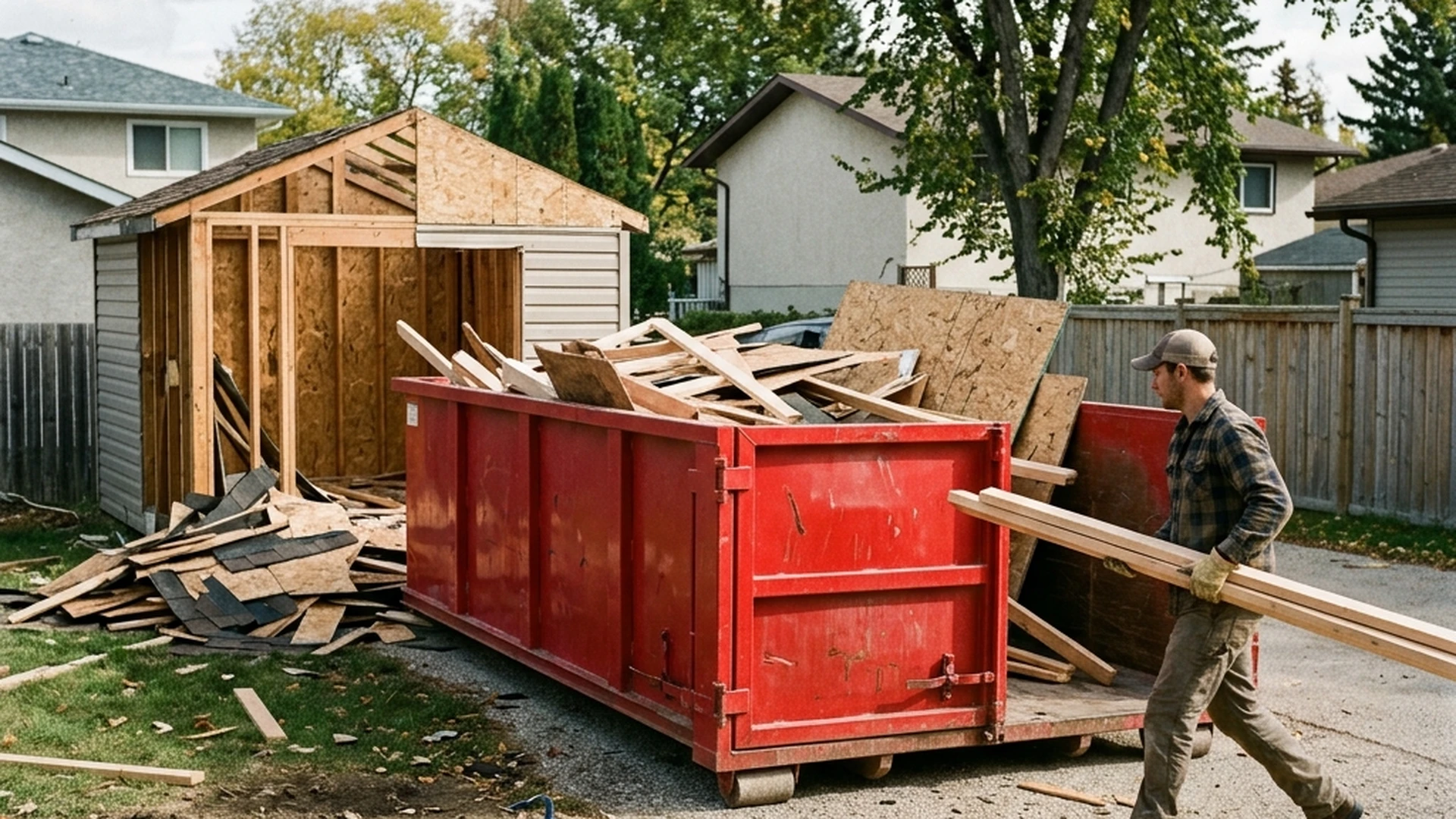
A deck or fence teardown generates one primary material type: dimensional lumber, either treated or untreated. The logistics are straightforward. A shed teardown generates four to six material types in a tight space, with different physical properties for each. Asphalt shingles are heavy and granular. Plywood and OSB sheathing is bulky and light. Metal roofing or siding is awkward and sharp. Framing lumber varies by age and treatment. A concrete pad can weigh as much as everything else combined.
Loading order and material sorting matter more in a shed demolition than in a deck teardown. A bin loaded incorrectly with a concrete base at the top and lumber below is less efficient and may hit weight limits before volume limits if the heavy material is concentrated.
Bin Sizing for Shed Demolition
| Shed Size | Material Without Concrete | With Concrete (Breaking and Binning) | Recommended Bin |
|---|---|---|---|
| Small shed (8 × 10 ft or under) | 3 to 5 cubic yards | 6 to 10 cubic yards | 8-yard ($250) without pad; 12-yard ($275) with pad |
| Standard garden shed (10 × 12 ft) | 5 to 8 cubic yards | 10 to 16 cubic yards | 12-yard ($275) without pad; 20-yard ($300) with pad |
| Large storage shed or workshop (12 × 16 ft or larger) | 8 to 14 cubic yards | 15 to 25+ cubic yards | 12 or 20-yard; 20-yard ($300) if pad is included |
These estimates assume typical residential shed construction. Sheds with heavy timber framing, brick or concrete block walls, or metal construction weigh more per cubic yard and will approach weight limits before volume limits. When in doubt, call Ecobins & Cartage at (431) 317-8581 and describe the shed construction and the concrete situation before booking.
The Concrete Pad: Three Options
The concrete pad is the decision that most determines project scope. There is no one right answer, and the choice depends on your timeline, what the space will be used for next, and how much physical work you want to take on.
Leave It in Place
If a replacement shed is planned for the same footprint, leaving the concrete pad is almost always the right choice. A new shed can be placed directly on an existing pad, the pad is already level and drained, and the demolition work is limited to the shed structure above it. If the space is becoming lawn, garden, or other landscaping, a buried concrete pad creates issues: it prevents soil drainage and root penetration, can cause uneven settling in the soil above it, and requires eventual removal if the space needs to be regraded. For landscaping conversions, removing the pad is worth the effort.
Break It Up and Bin It
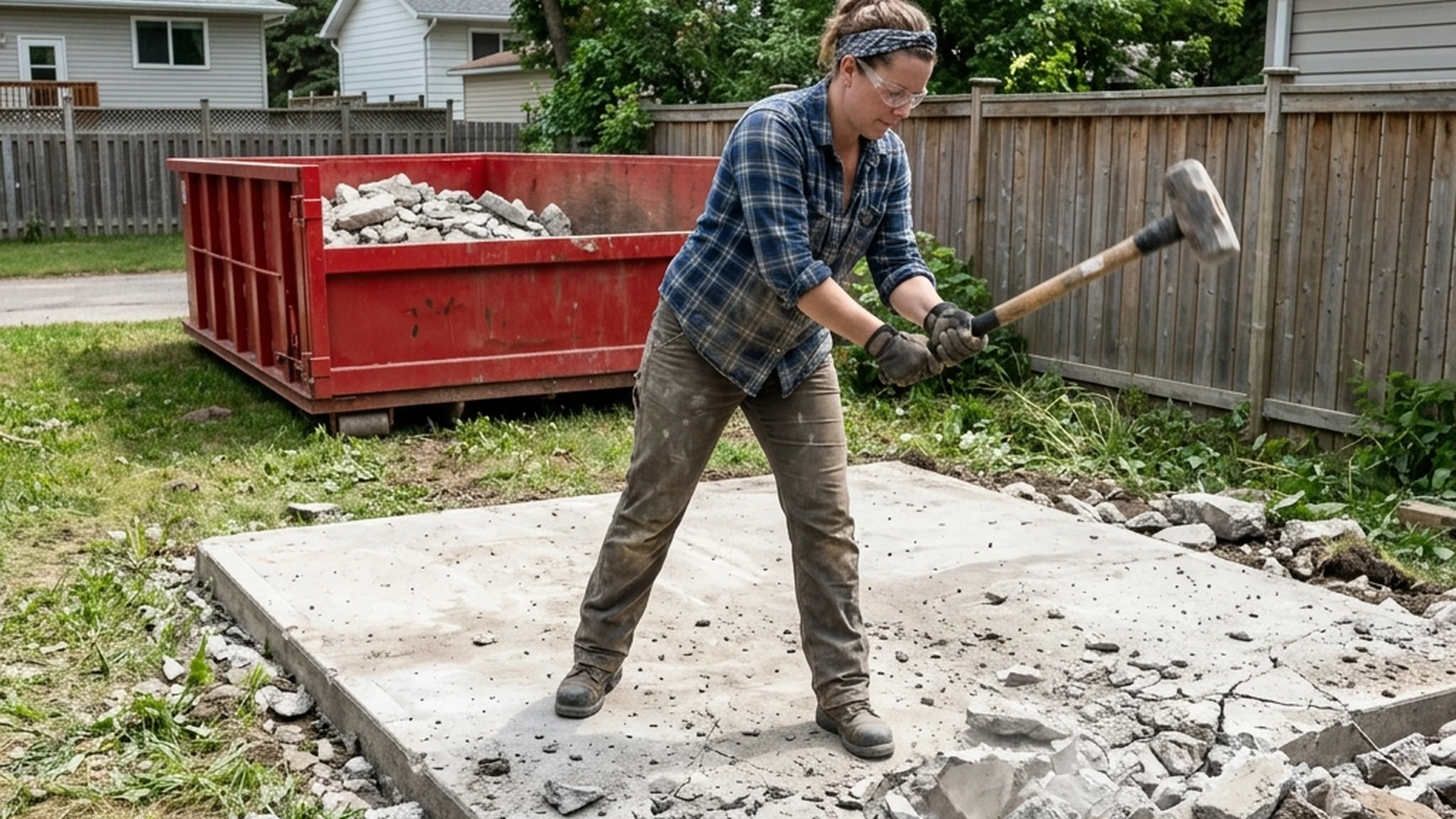
Breaking up a concrete pad requires a sledgehammer, breaker bar, or rented electric demolition hammer for thicker pads. A typical 4-inch residential shed pad can be broken by hand; a 6-inch pad may require a rented electric hammer.
Weight is the key consideration. A 10 × 12 ft pad at 4 inches thick contains approximately 40 cubic feet of concrete, which weighs roughly 5,400 lbs. Tipping fees are charged at $99 per tonne. A single full concrete pad from a standard shed adds significant weight to the bin load. Plan for the tipping fee component when budgeting.
Loading strategy: load concrete first, directly on the bin floor, before adding lumber and other lighter materials on top. Distributing the weight low and evenly prevents the bin from being overloaded on one side and keeps the heaviest material where the bin is structurally designed to carry it.
Break It Up and Reuse on Site
Broken concrete, often called urbanite in landscaping contexts, has reuse applications that eliminate disposal cost entirely. Broken concrete pieces can be used as fill in low areas of the yard where they will be covered by topsoil or gravel, stacked as an informal retaining feature or base layer for a new garden bed, or offered for free pickup on Winnipeg Facebook groups and local classifieds where it is often claimed quickly by people needing fill.
The tradeoff is effort and timeline. Breaking the pad into manageable pieces and staging them for reuse or pickup takes time and physical work. For projects where timeline matters, binning is faster. For projects where budget matters, on-site reuse is free.
Roofing Material Disposal
Asphalt Shingles
Asphalt shingles from residential sheds can go in a standard C and D (construction and demolition) bin. However, some Manitoba waste disposal facilities charge a supplemental fee for shingle loads because shingles require separate processing. When booking your bin, mention that the load will include asphalt shingles so Ecobins & Cartage can flag any relevant disposal considerations.
Weight note: asphalt shingles are heavier than they look. A full layer of shingles on a 10 × 12 ft shed roof weighs approximately 200 to 300 lbs. Multiple layers, common on older sheds where new shingles were applied over old, add proportionally. If stripping layers is part of the demolition, account for this in the bin sizing.
Metal Roofing and Siding
Corrugated metal roofing and metal siding panels are accepted in standard bins. They are light per cubic yard but awkward to load due to their large size and sharp edges. Work gloves are essential. Fold or cut metal panels to manageable lengths before loading rather than trying to maneuver full-length sheets into a bin.
Hazardous Material Considerations
Pressure-Treated Lumber
Older sheds, particularly those built before 2004, may contain pressure-treated lumber treated with chromated copper arsenate (CCA). CCA-treated lumber cannot be burned or composted. Bin disposal is appropriate. If you are unsure whether your shed lumber is CCA-treated, assume it may be and dispose accordingly.
Pesticide and Herbicide Storage History
Sheds that have been used for pesticide, herbicide, or fertilizer storage may have soil contamination on and around the concrete pad, particularly if spills occurred over the years. Before assuming the concrete is clean and can be reused as fill elsewhere, assess whether there is a storage history that warrants more careful disposal. Not a common issue, but worth a moment’s consideration before moving material around the yard.
Asbestos
Sheds built before 1990 may contain asbestos in roofing felt, floor tiles, or insulation. Asbestos-containing material cannot go in a standard bin and requires licensed abatement. If your shed is older and you notice grey-brown fibrous sheeting, floor tiles, or pipe insulation that was not recently installed, have it assessed before proceeding with demolition.
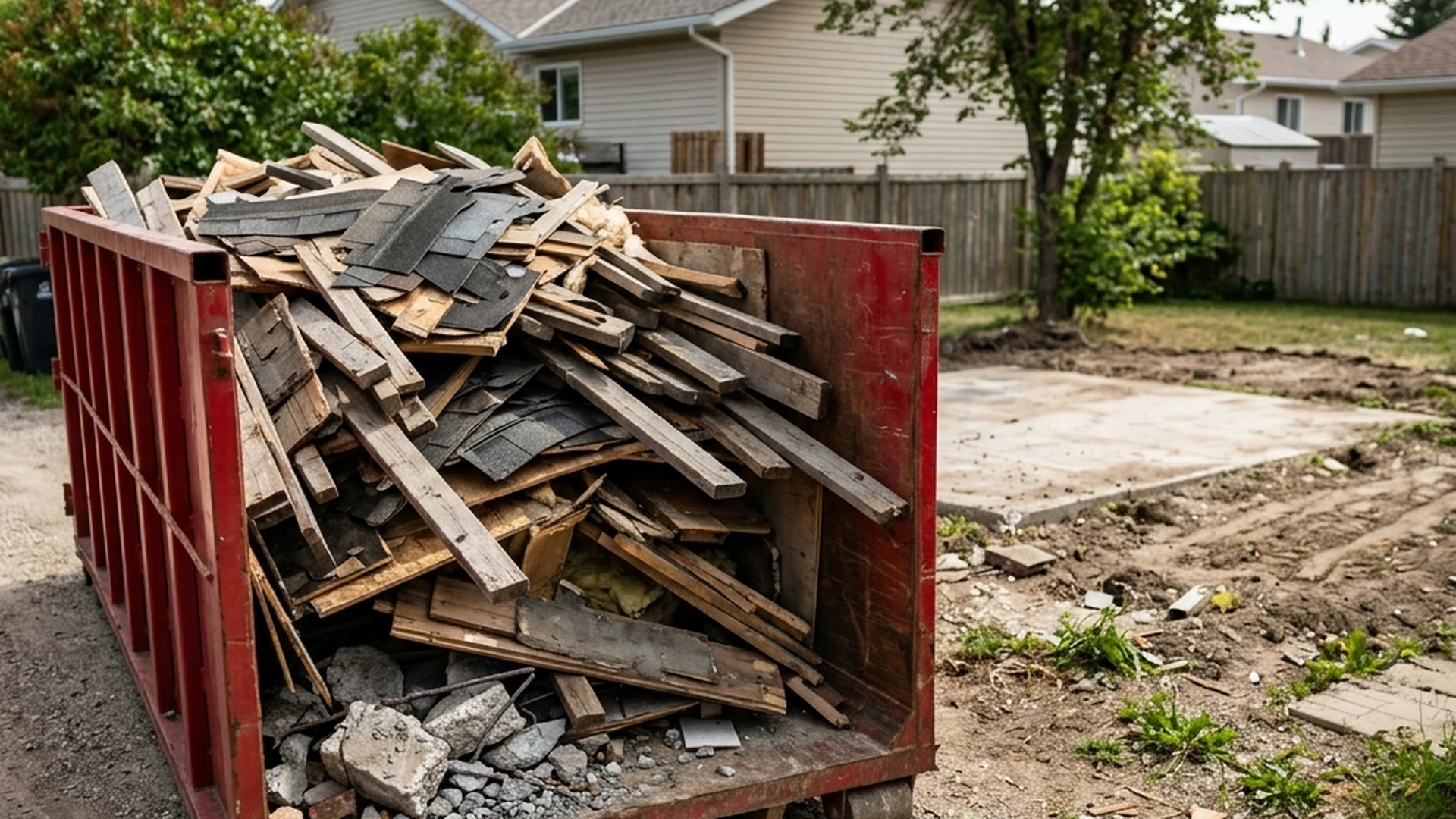
Demolition Sequence and Bin Loading Strategy
The most efficient shed demolition sequence for bin loading:
Remove roofing material first and load it into the bin. Shingles go first to keep them accessible and avoid mixing them into lumber.
Remove siding and sheathing. Stack and break into manageable lengths before loading.
Dismantle framing from top down: rafters, wall studs, plates. Dimensional lumber loads efficiently if broken into consistent lengths.
Break up and load concrete last, or first as the base layer if doing it at the same time as the structure.
Loading concrete last works for smaller pads. For larger pads on large sheds, breaking the pad before the structure demolition and loading it as the bin floor layer before adding lighter material on top is more efficient for weight distribution.
Timing and Booking
Book the bin for delivery the day before demolition starts. Once the shed is down and material is in the yard, the ability to stage and sort efficiently goes quickly. A bin on site from the start allows progressive loading throughout the demolition rather than a pile-then-load approach that involves handling material twice.
For peak-season projects (May through August), book three to five days ahead. Same-day delivery is available in most cases but is not guaranteed during busy periods. For fence or property line restoration after shed removal, Lawn ‘N’ Order handles fence installation across Winnipeg.
FAQ: Shed Demolition Bin Rental in Winnipeg
Does Ecobins & Cartage offer shed demolition services?
No. Ecobins & Cartage provides bin rental and cartage. The demolition is the homeowner’s work. We deliver the bin, you fill it, and we pick it up. For homeowners who want full-service shed removal including teardown, a demolition or landscaping contractor handles that work; Ecobins & Cartage supplies the disposal solution.
Can I put old shed windows and doors in the bin?
Yes, glass windows and doors are accepted in standard bins. Wrap glass in cardboard or plastic sheeting before loading to protect yourself and the bin loaders. Doors with glass panels should be loaded flat and protected. Hollow-core doors load efficiently and do not add significant weight.
What if my shed has a septic-adjacent or well-adjacent location?
Sheds that are close to septic systems or wells may have access constraints that affect bin placement. Confirm placement options with Ecobins & Cartage when booking. Bins should not be placed over septic field lines or in positions where the loaded weight could compress drainage infrastructure below.
Book Your Shed Demolition Bin
Mention concrete pad and shingle content when booking. 7-day rental from $250, additional days at $10 per day. Tipping fees at $99 per tonne.
Book a Bin Online Call (431) 317-8581