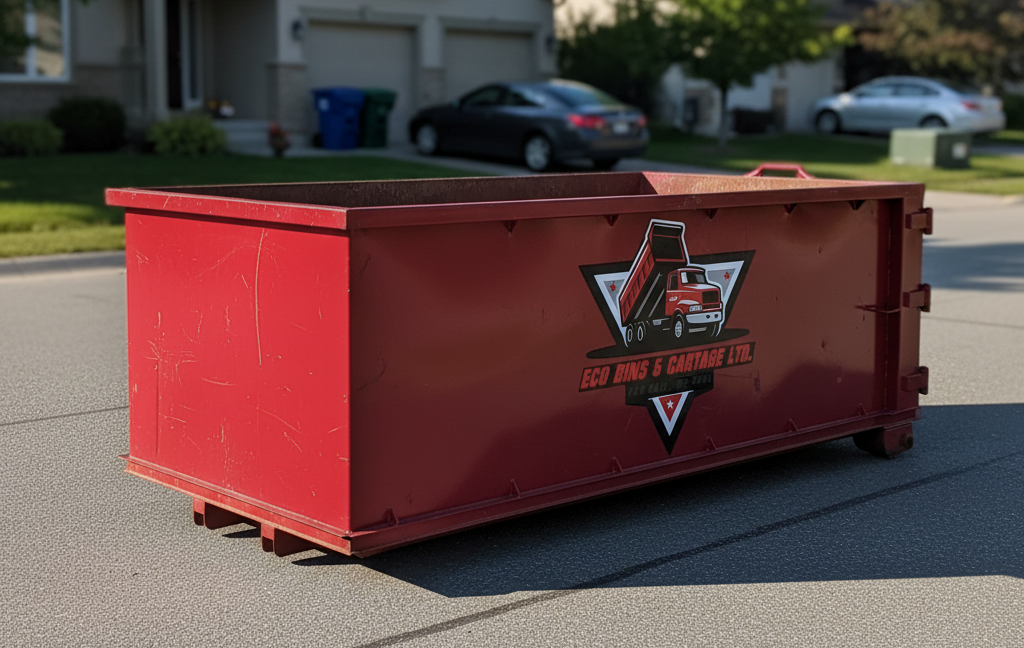
- Basement renovations generate a distinct waste profile compared to other renovation types: old paneling, dropped ceiling tiles, carpet and underpad, and often more concrete from plumbing or floor work
- Pre-1990 Winnipeg homes commonly have asbestos in basement floor tiles, popcorn ceiling texture, or pipe insulation; this needs to be assessed before demolition disturbs these materials
- Concrete cutting for drain relocation, plumbing rough-in, or floor levelling generates heavy material that affects bin weight more significantly than typical renovation debris
- Material has to travel up a stairwell or out through a window well to reach the bin, which affects how you stage and sequence the work compared to a ground-level renovation
- Basement renovations are typically smaller in floor area than a kitchen reno, but waste volume varies widely depending on whether plumbing, electrical, or structural work is involved
Why Basement Renovation Waste Is a Different Planning Problem
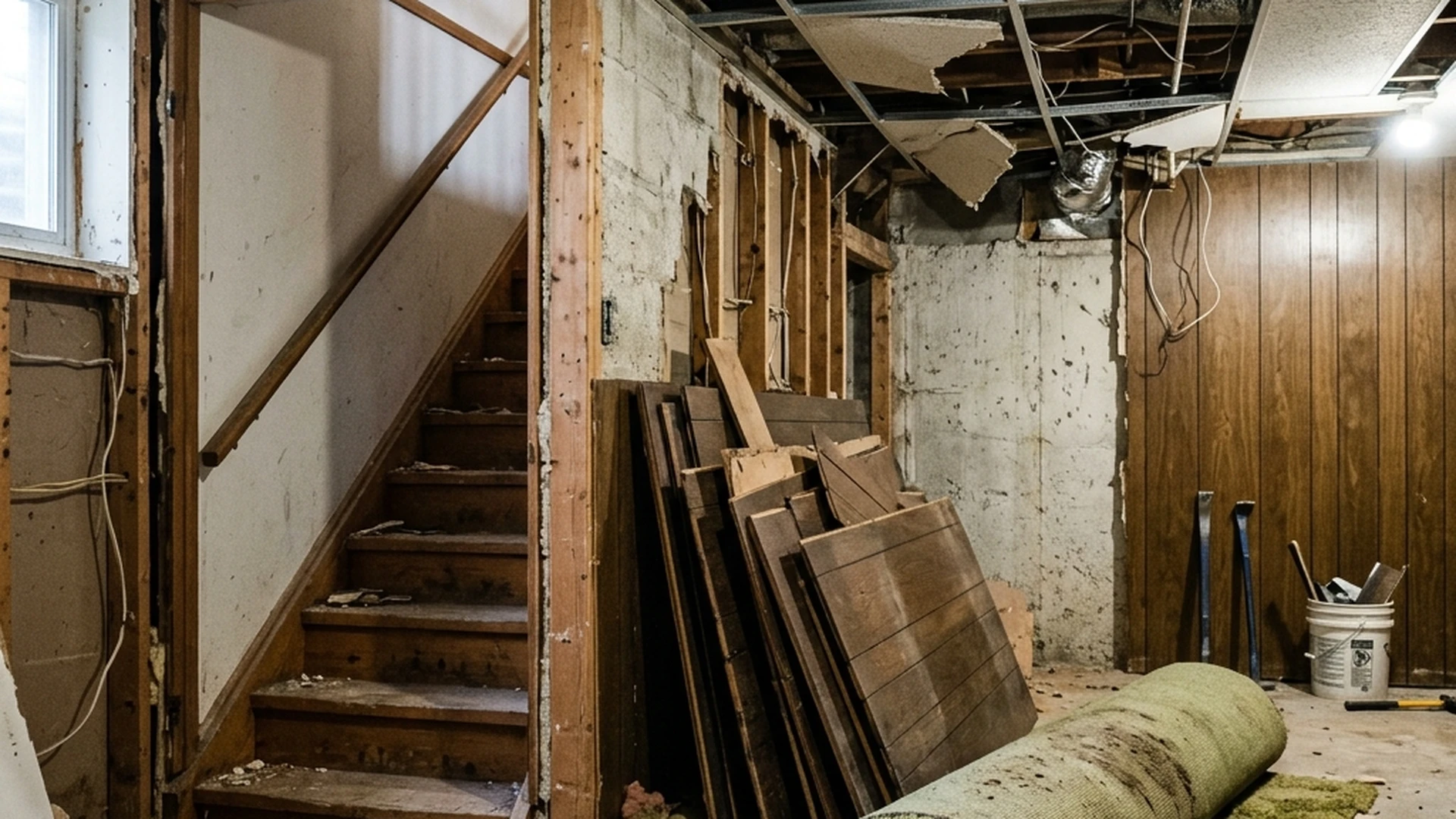
A basement renovation generates a waste profile that differs in composition and logistics from most other residential renovation projects. The materials being removed are often older and different in type than a kitchen or bathroom renovation: wood paneling from past decades, dropped acoustic ceiling tiles, decades-old carpet and underpad, and sometimes structural framing changes if the basement is being reconfigured.
The logistics are also different. Materials from a main-floor or upper-level renovation can usually be carried directly out an exterior door. Basement material has to travel up a stairwell, often a narrow one, or out through a window well if the basement has egress windows large enough. This affects how a project should be sequenced and staged, and it is the detail most generic renovation waste guides do not address.
What a Basement Renovation Actually Generates
Old Wall and Ceiling Materials
- Wood paneling, common in basements finished in past decades, removed in full sheets or broken sections
- Dropped ceiling tiles and the metal grid structure that holds them
- Drywall from any walls being removed or reconfigured
- Insulation, particularly if exterior walls are being reinsulated as part of the project
Flooring Materials
- Carpet and underpad, often heavier than expected due to moisture absorption over years in a below-grade space
- Vinyl or linoleum flooring, sometimes installed in multiple layers over the years
- Old floor tile, which in pre-1990 homes may contain asbestos (see below)
Plumbing and Electrical Waste
- Old plumbing fixtures and piping if a basement bathroom or laundry area is being reconfigured
- Concrete and aggregate from cutting the slab for new drain lines or relocated plumbing
- Old wiring and electrical fixtures if the basement is being rewired
Framing Changes
- If the basement layout is being reconfigured: removed framing lumber, old doors, and structural elements
- Framing waste from a basement is generally similar in composition to framing waste from any other renovation, but the access constraints of getting it out of the basement remain the same
Asbestos: The Consideration That Matters More in Basements
Pre-1990 Winnipeg homes commonly have asbestos-containing materials in several basement-specific locations: 9-by-9 inch vinyl floor tiles (a common asbestos-containing product through the 1980s), popcorn or stipple ceiling texture, and pipe insulation wrapping around heating ducts or plumbing in older mechanical rooms.
Basement renovations involve more cutting, breaking, and disturbance of these materials than most other renovation types, specifically because basement finishing work often means removing old flooring and ceiling treatments entirely. If your home was built or last renovated before 1990 and the basement renovation involves removing floor tile, ceiling texture, or disturbing old pipe insulation, have these materials assessed before demolition begins. Asbestos-containing material requires licensed abatement and cannot go into a standard waste bin.
Concrete: Heavier Than Most Renovation Waste
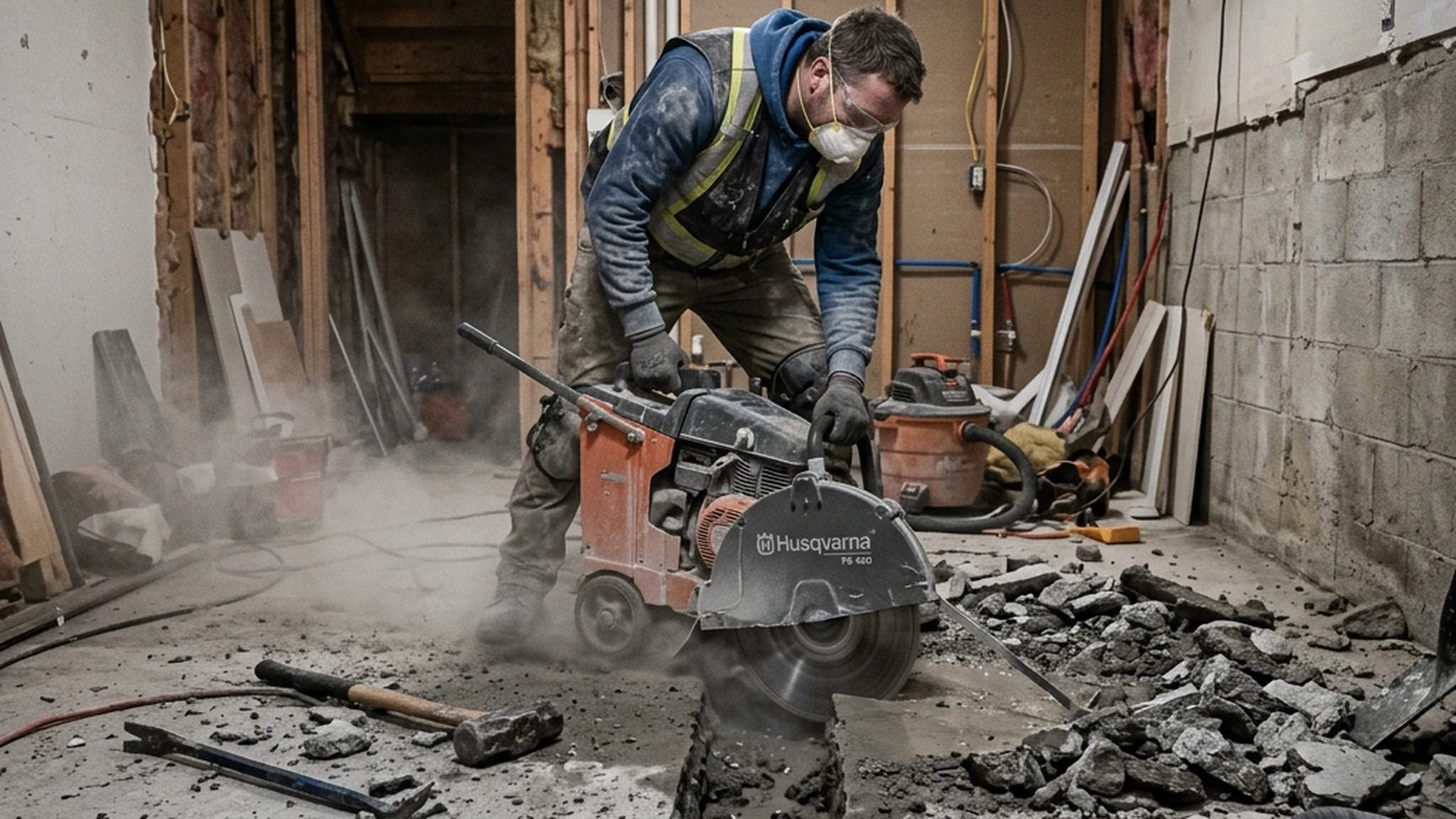
Basement renovations frequently involve cutting into the concrete slab: relocating a floor drain, adding plumbing rough-in for a new bathroom or wet bar, or levelling an uneven floor section. Even a modest amount of concrete cutting generates material that is significantly heavier per cubic yard than the wood, drywall, and flooring materials that make up most renovation debris.
A small section of cut slab, even just a few square feet at standard 4-inch thickness, can add several hundred pounds to a bin load. Tipping fees are charged at $99 per tonne based on actual load weight, so concrete content meaningfully affects the cost side of the project even when its volume looks modest. Mention any concrete cutting when booking your bin so Ecobins & Cartage can advise on sizing and weight expectations.
Bin Sizing for Basement Renovations
| Project Scope | Recommended Bin | Notes |
|---|---|---|
| Single room refresh (flooring and paint only) | 8-yard ($250) | Carpet, underpad, and minor material removal |
| Full basement finishing demo (paneling, ceiling, flooring) | 12-yard ($275) | Standard scope for most basement renovation demolition phases |
| Demo plus plumbing or electrical reconfiguration | 12 to 20-yard ($275 to $300) | Add capacity for concrete cutting waste and old fixtures |
| Full basement gut including structural changes | 20-yard ($300) | Framing, all finishes, and mechanical waste combined |
Basement renovations often generate less total volume than a full kitchen renovation simply because the floor area being worked tends to be more contained, but the weight per cubic yard can run higher due to concrete and saturated old carpet.
Staging Material From a Basement to the Bin
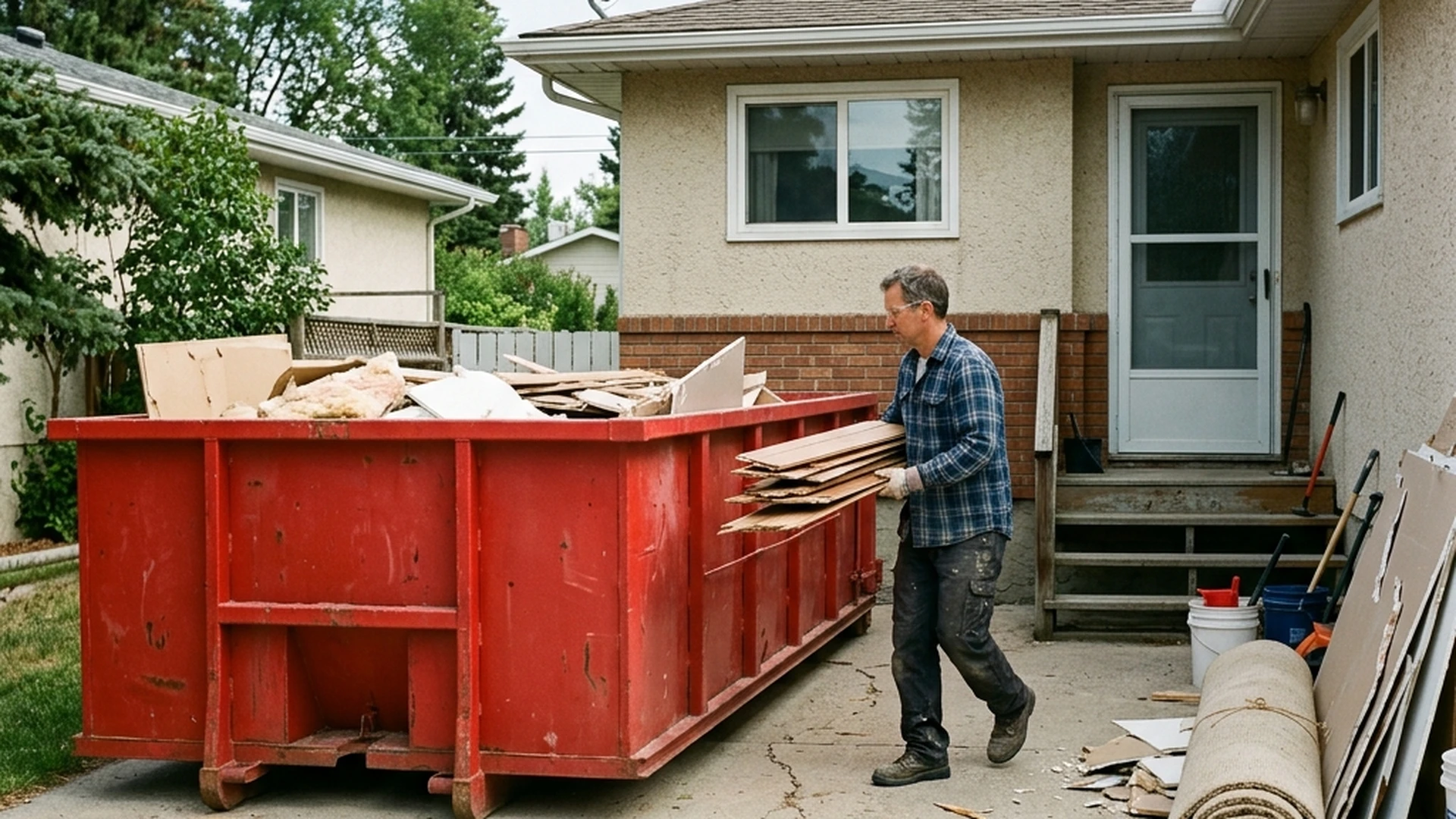
The access constraint is the detail that differentiates basement renovation logistics from most other projects. Material has to travel up a stairwell (often narrow, with turns) or out through an egress window well if the basement has a window large enough.
Stairwell access. Break down bulky items (paneling sheets, ceiling grid sections, large carpet pieces) into manageable sizes before attempting to carry them up the stairs. Protect stairwell walls and corners during the carry-out process, particularly on tight turns where drywall and trim are easily damaged by awkward loads.
Window well access. For basements with egress windows large enough to pass material through, this can be faster than the stairwell for bulky items, but requires removing the window well cover and potentially the window itself temporarily. This works well for rigid materials like cut drywall sections but is less practical for bulky soft materials like rolled carpet.
Staging area. Designate a staging point at the top of the stairs or beside the window well where material accumulates before being carried the final distance to the bin. This breaks the bin run into two shorter trips rather than one long carry from the basement floor to the bin, which is faster over the course of a full demolition day.
Book the bin before demolition starts, following the same principle as any renovation project. For basement projects specifically, confirm bin placement location relative to your stairwell exit or window well access point, since placement convenience matters more when every load is already an extra carry from below grade.
FAQ: Basement Renovation Waste in Winnipeg
Can wet or water-damaged material from a basement go in a standard bin?
Yes, water-damaged carpet, drywall, and other materials are accepted in standard bins. If the water damage is recent and related to flooding or a plumbing failure rather than a planned renovation, confirm there is no mould growth that would warrant a more careful remediation approach before general demolition begins. Routine water-damaged material from an older, non-acute situation is treated the same as any other renovation debris.
How do I know if my basement floor tile contains asbestos?
Visual identification alone is not reliable. Many 9-by-9 inch vinyl floor tiles installed before 1990 contain asbestos, but appearance does not confirm this. A sample can be tested by an accredited lab, or a qualified asbestos abatement contractor can assess the material on site. If your home’s age and the tile’s appearance suggest it could be an older product, have it assessed before cutting, breaking, or sanding the material, as disturbance is what creates the airborne exposure risk.
What if my basement renovation includes both demo and new construction debris?
Both can go in the same bin in most cases: demolition debris (old paneling, flooring, fixtures) and new construction waste (off-cuts, packaging, drywall scraps from new work) are generally compatible in a mixed construction and demolition bin. The exception is any material flagged as hazardous (asbestos, if confirmed) or requiring separate disposal, which should be handled through appropriate channels regardless of project phase.
Book Your Basement Renovation Bin
Mention any concrete cutting, plumbing work, or stairwell access constraints when booking. 7-day rental from $250, additional days at $10 per day, tipping fees at $99 per tonne.
Book a Bin Online Call (431) 317-8581