Above-Ground Pool Removal Winnipeg | Ecobins & Cartage
- Above-ground pool removal generates mixed material: metal frame, resin or plastic components, wood decking if present, and the vinyl liner. Most of it can go in one bin.
- Pool water must be drained before removal, and Winnipeg has specific rules on where that water can legally go: this is a City of Winnipeg Sewer By-law requirement, not optional guidance
- A Wastewater Discharge Licence from the City of Winnipeg is required to drain pool water to a catch basin (storm drain), the street, or a ditch. Draining to your lawn does not require this licence, and draining to your home’s wastewater sewer is described by the City as not requiring one, though this is worth confirming with 311 for your specific situation.
- Salt water pools cannot be drained to a catch basin under any circumstances: the salt content damages storm sewer infrastructure, and this water must go to your lawn, your home’s wastewater sewer, or be removed by a licensed wastewater hauler instead
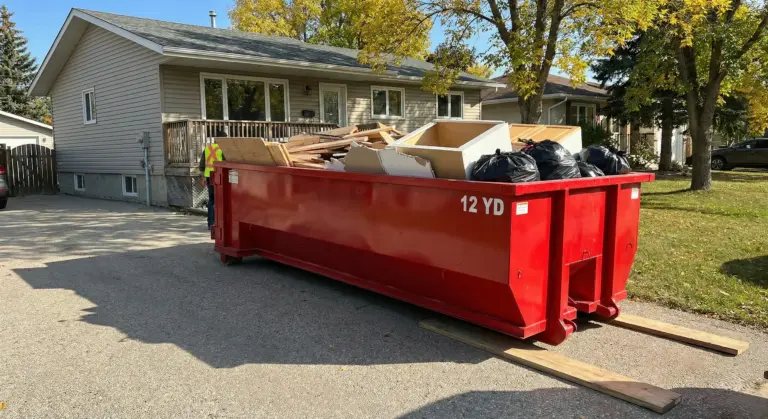
- A standard 15 to 18-foot round above-ground pool typically fills an 8 to 12-yard bin; larger oval pools with wood decking may need a 12 to 20-yard bin
Draining the Pool: The Step That Has to Happen First and Has to Be Done Right
Before any teardown work begins, the pool needs to be drained. In Winnipeg, this is not simply a matter of pulling a plug and letting the water go wherever gravity takes it. Pool water is legally classified as wastewater under the City of Winnipeg Sewer By-law because it typically contains chlorine, bromine, algaecides, and other water treatment chemicals that can harm waterways and storm sewer infrastructure.
Where Pool Water Can Legally Go
Under the City of Winnipeg Sewer By-law, there are three legal destinations for pool water, each with different requirements:
Onto Your Lawn
Draining pool water onto your own property, where it remains until it evaporates or soaks into the ground, does not require a permit or licence. This is the simplest option for most residential pool removals, provided the volume of water and the property’s drainage can accommodate it without runoff onto neighbouring properties or the street.
To the Wastewater Sewer Inside Your Home
Draining pool water into your home’s wastewater sewer connection (not the sump pit) is described by the City as not requiring a Wastewater Discharge Licence, per the City’s public guidance on fall pool draining. This requires a suitable connection point and is more commonly used for smaller volumes or when lawn drainage is not practical. Given that this point determines whether a licence and fee apply, confirm current requirements with 311 or the City’s Water and Waste department before relying on it for a specific project.
To a Catch Basin (Storm Drain), the Street, or a Ditch
This requires a Wastewater Discharge Licence from the City of Winnipeg. The water must be filtered and dechlorinated before discharge under this licence, and the licence is valid for one year with an application fee. Draining pool water to a catch basin, street, or ditch without this licence is a bylaw violation.
If your above-ground pool uses a salt water chlorination system, the water cannot be drained to a catch basin under any circumstances, even with a Wastewater Discharge Licence. The sodium chloride content in salt water pools can damage storm sewer infrastructure. Salt water pool water has three legal disposal routes: drained onto your lawn, drained to your home’s wastewater sewer, or removed by a licensed wastewater hauler, which the City lists as an accepted option specifically for salt water pools.
The City of Winnipeg recommends letting the pool sit for a week or longer without adding any chemicals before draining, allowing chlorine and other treatment chemical levels to decline naturally. This reduces the chemical load in the water regardless of which legal discharge method you use.
Teardown: What’s Involved
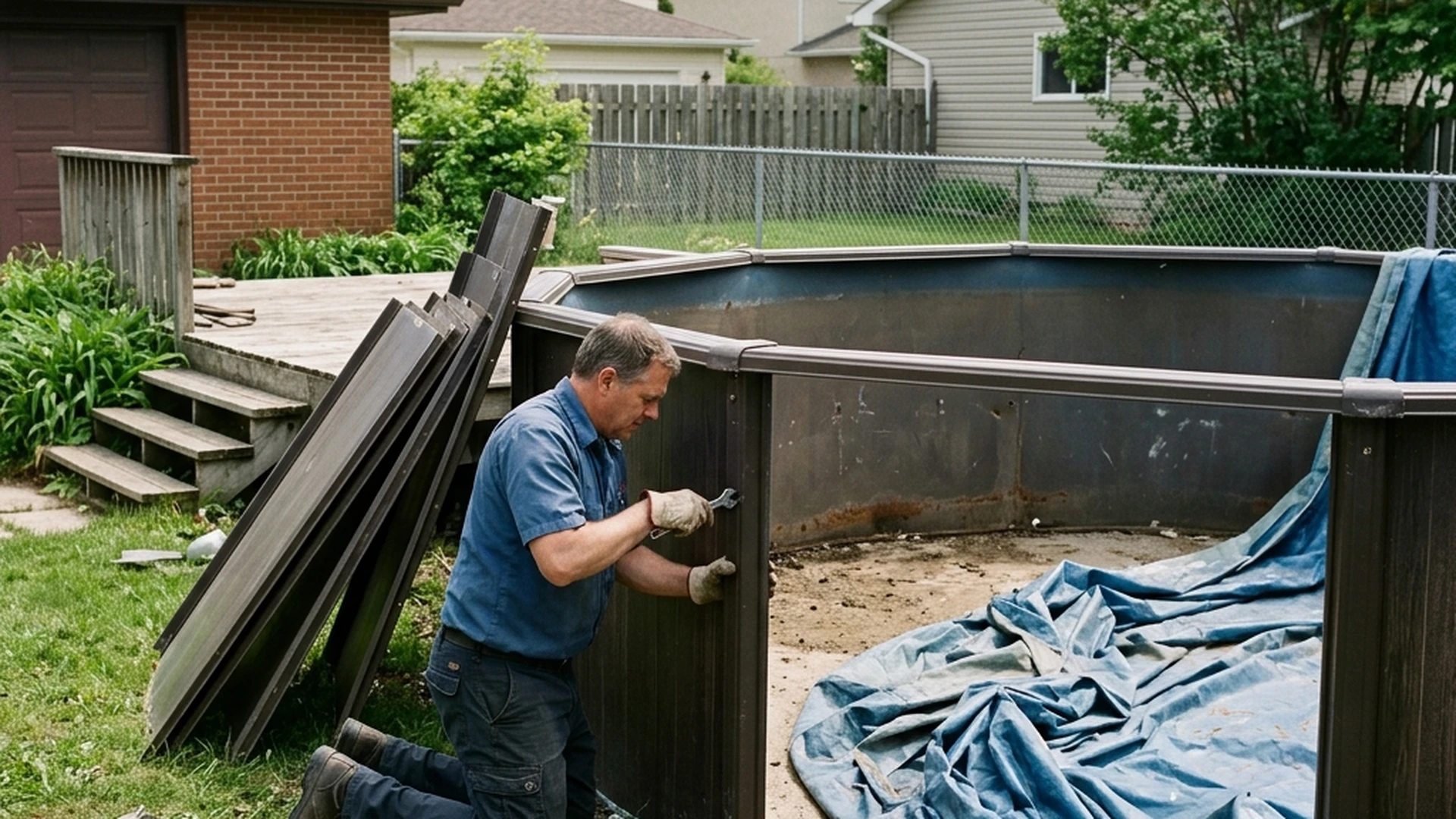
Above-ground pool removal is a project most homeowners can handle themselves or with help from a general contractor or handyman service; it is not a specialized pool company requirement in most cases, unlike in-ground pool removal, which involves excavation.
Disassembly Sequence
Drain the pool completely first, following the legal discharge requirements above
Remove the liner once the pool is fully drained; liners are often torn during removal and are not typically reusable
Disassemble the wall panels, which are usually bolted or clipped together in sections
Remove the top rail and any support posts or A-frame legs
If the pool has an attached deck or surrounding wood structure, this is typically removed separately and generates its own waste stream
What Goes in the Bin
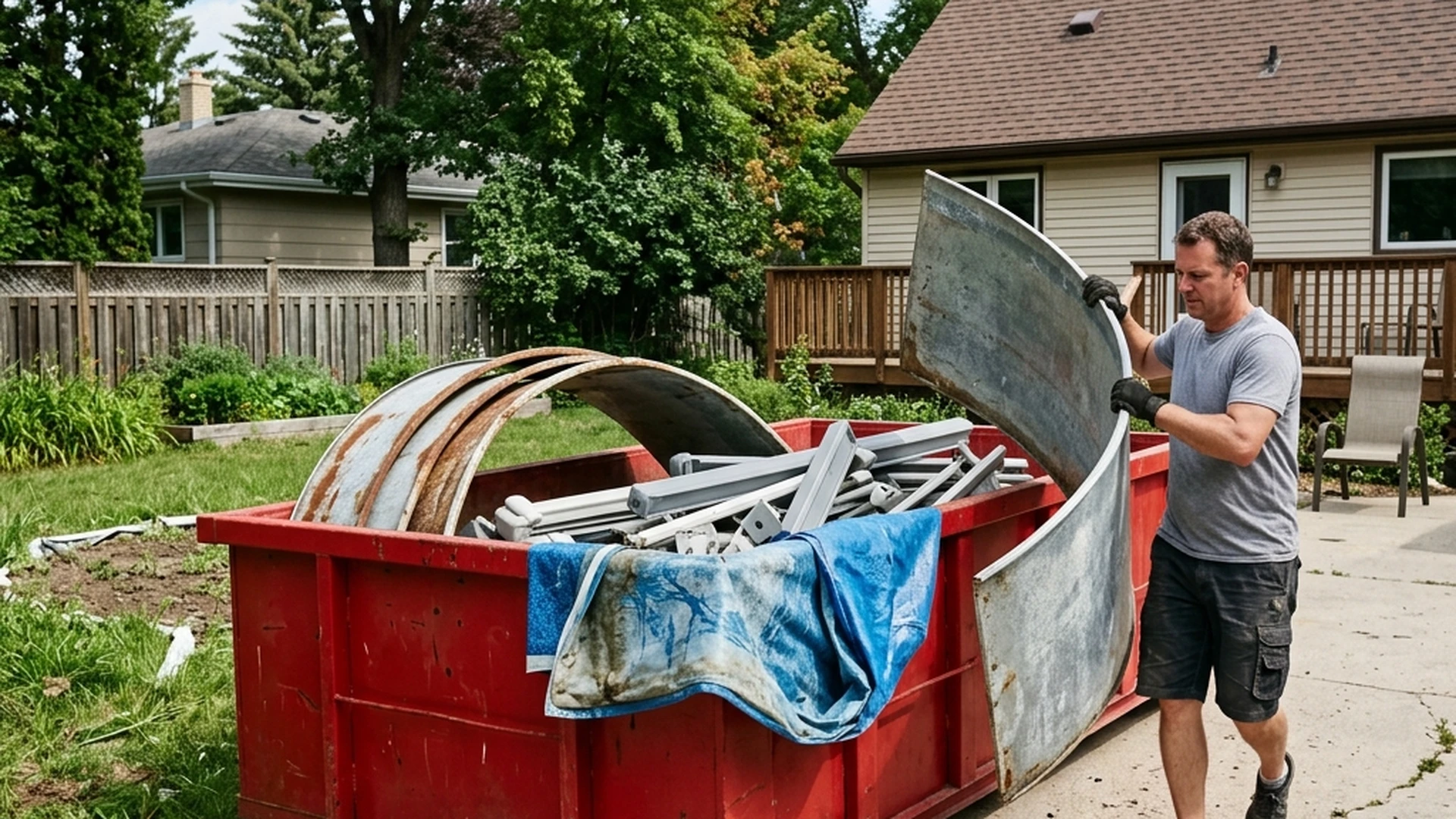
Most above-ground pool components can go into a single mixed bin without special sorting:
- Metal wall panels and support framing
- Resin or plastic top rails, caps, and connector pieces
- The vinyl liner (once drained and removed)
- Any sand or vermiculite base material if it is being removed along with the pool (this adds weight; see below)
- Wood decking or surrounding structure, if part of the same removal project
Metal, resin, and vinyl components mix without issue in a standard bin. The material does not need to be separated for disposal purposes. If a significant amount of the pool frame is metal, mentioning this when booking allows Ecobins & Cartage to account for any weight considerations, though a standard above-ground pool frame is not dense enough on its own to create the same weight concerns as concrete or masonry material.
Bin Sizing for Above-Ground Pool Removal
| Pool Size | Components | Recommended Bin |
|---|---|---|
| 12 to 15 ft round, frame and liner only | Metal frame, liner, top rail | 8-yard ($250) |
| 15 to 18 ft round, frame and liner only | Metal frame, liner, top rail | 8 to 12-yard ($250 to $275) |
| 18 to 24 ft round or oval, frame and liner | Larger frame, more panel sections | 12-yard ($275) |
| Any size pool with attached wood decking | Frame, liner, plus deck lumber | 12 to 20-yard ($275 to $300) |
| Large oval pool with full deck structure | Full frame, liner, extensive decking | 20-yard ($300) |
All bins are 7-day rentals. Additional days at $10 per day. Tipping fees at $99 per metric tonne on actual load weight, though a standard above-ground pool removal without significant wood decking generates a relatively light load per cubic yard compared to construction debris or concrete.
Base Material and Sand
Many above-ground pools sit on a sand or vermiculite base layer that was installed under the pool floor for a level, cushioned surface. If this base material is being removed as part of the project (rather than left in place and graded over), it adds volume and some weight to the bin load. Sand is denser than the pool components themselves, so a significant quantity of base material sand should be mentioned when booking.
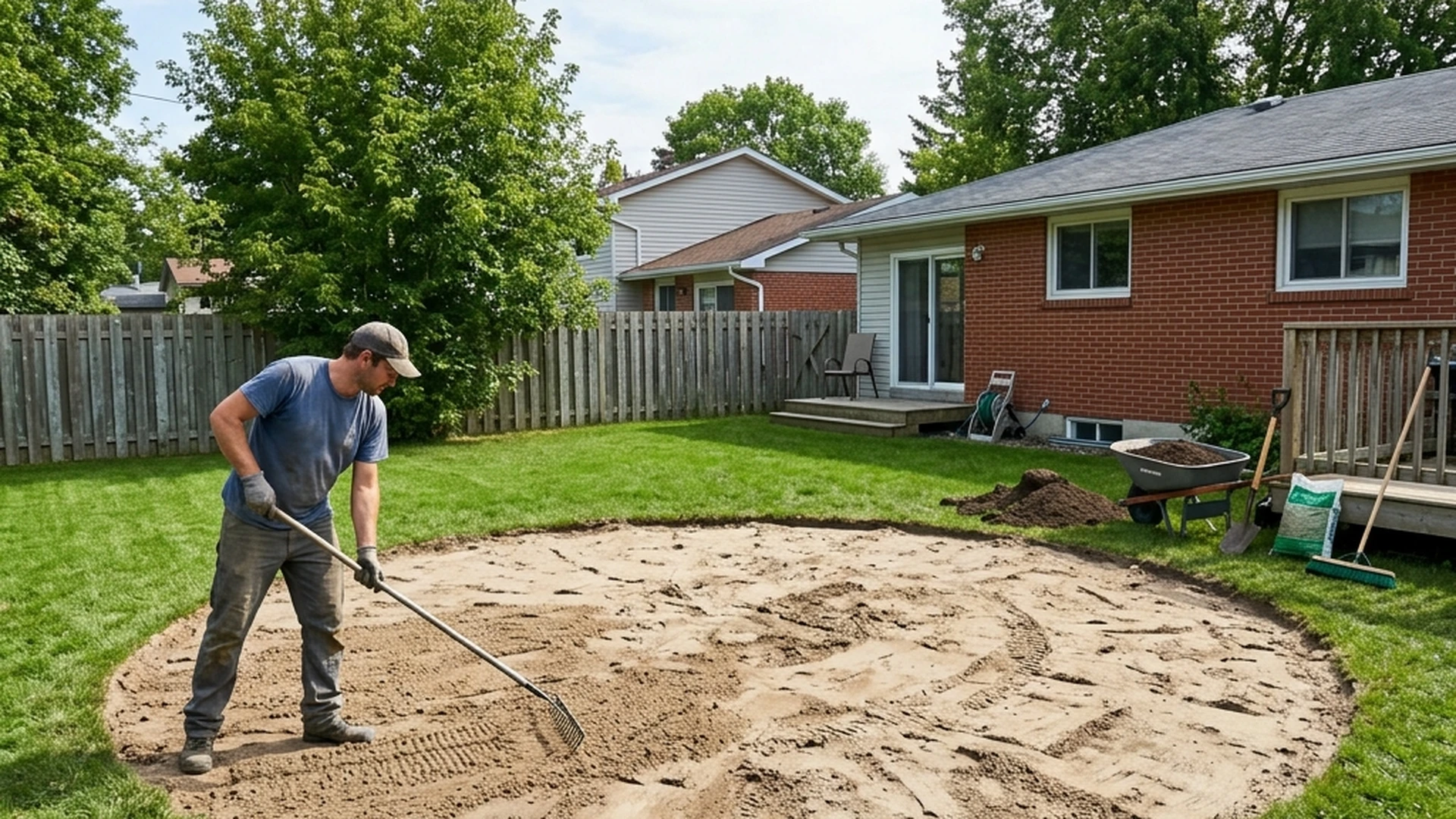
Many homeowners choose to leave the sand base in place, rake it level, and grade over it with topsoil for lawn restoration rather than removing and disposing of it. This avoids the added disposal cost and is a reasonable approach if the base material is clean sand without contamination.
Timing the Bin Delivery
Book the bin for delivery once the pool is drained and ready for teardown, or for the start of the disassembly day if the drain and teardown are happening on the same weekend. Draining takes time, particularly for larger pools, so many homeowners drain over several days before the teardown and bin delivery. Coordinate the bin delivery date with your actual teardown timeline rather than booking it for the same day as the drain if the drain process will take longer than expected.
FAQ: Above-Ground Pool Removal in Winnipeg
Can I drain my pool water into the street or gutter if it’s just plain water with no chemicals?
No. Under the City of Winnipeg Sewer By-law, pool water is classified as wastewater regardless of chemical content, and discharge to a street, lane, ditch, or catch basin requires a Wastewater Discharge Licence. Draining onto your own lawn, where the water stays on your property until it evaporates or soaks in, does not require this licence and is the simplest legal option for most residential situations.
How long does above-ground pool removal take?
Draining a large above-ground pool can take 1 to 3 days depending on the method (gravity drain, submersible pump, or garden hose siphon) and the pool’s volume. Once drained, disassembly of the frame and liner typically takes half a day to a full day for one or two people, depending on pool size and how corroded or difficult the fasteners are to remove after years of exposure.
What if my pool has algae or has not been maintained recently?
Neglected pool water with heavy algae growth is still subject to the same discharge rules; it is wastewater regardless of its condition. Letting the water sit without adding chemicals for a week or more before draining, as the City recommends, is particularly relevant for neglected pools, as it allows any remaining treatment chemicals to decline. The disassembly process itself is unaffected by water condition once the pool is drained.
Book Your Pool Removal Bin
Describe your pool size and whether a deck structure is included so Ecobins & Cartage can recommend the right bin size. 7-day rental from $250, additional days at $10 per day, tipping fees at $99 per metric tonne.
Book a Bin Online Call (431) 317-8581