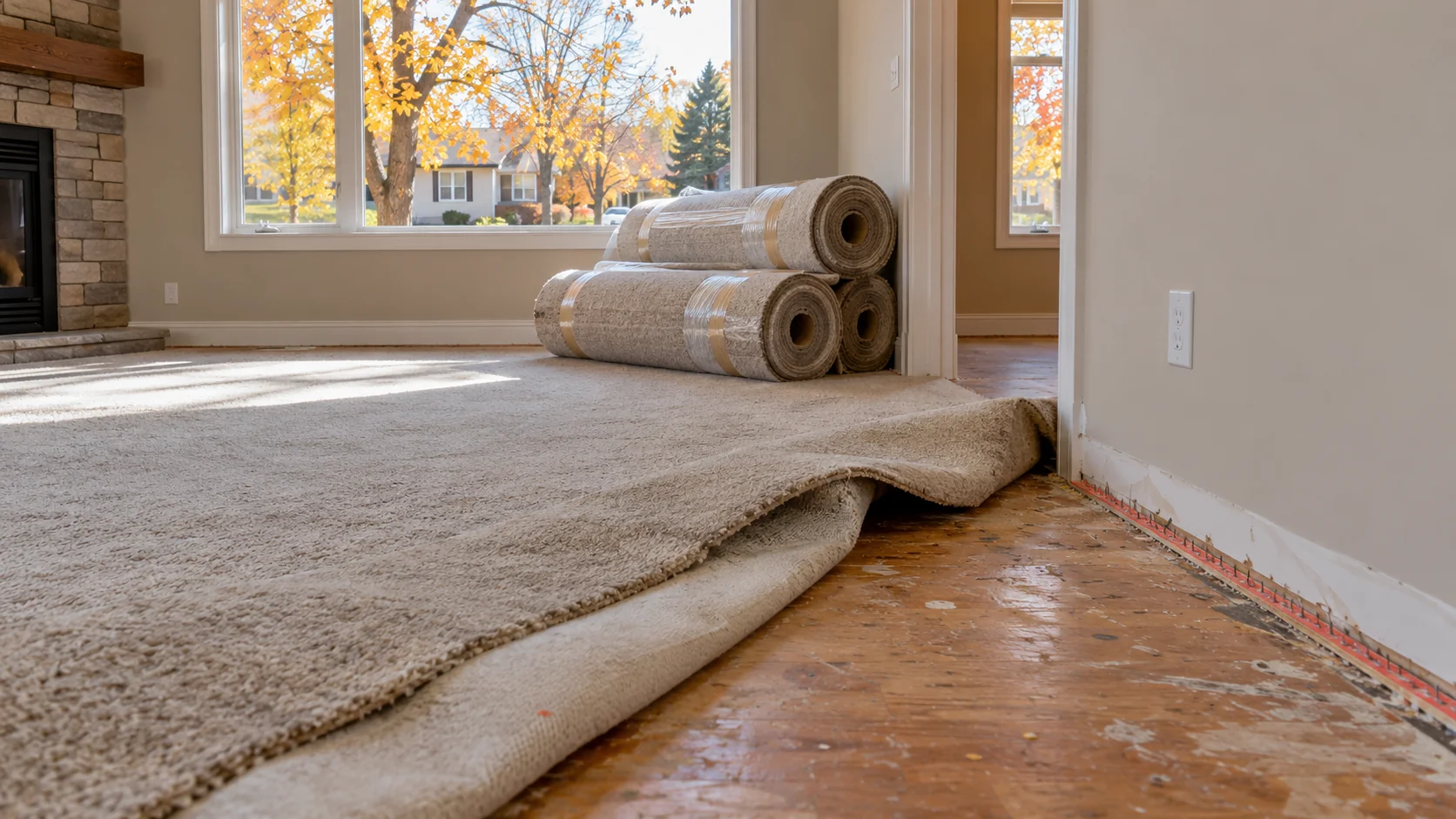
Late October is when a lot of Winnipeg projects move indoors, and pulling up old flooring is usually where they start. It's a satisfying demo job. It also produces a pile of waste that can surprise you, sometimes by how much room it takes up and sometimes by what it weighs.
Flooring waste: volume and weight are two different budgets
Two things set the cost of getting rid of flooring:
- Volume decides what size bin you need. Our bins come in 8, 12 and 20 yards: $250, $275 and $300, each including 7 days.
- Weight decides the tipping fee: $99 per tonne, based on the actual weight of your load at the scale.
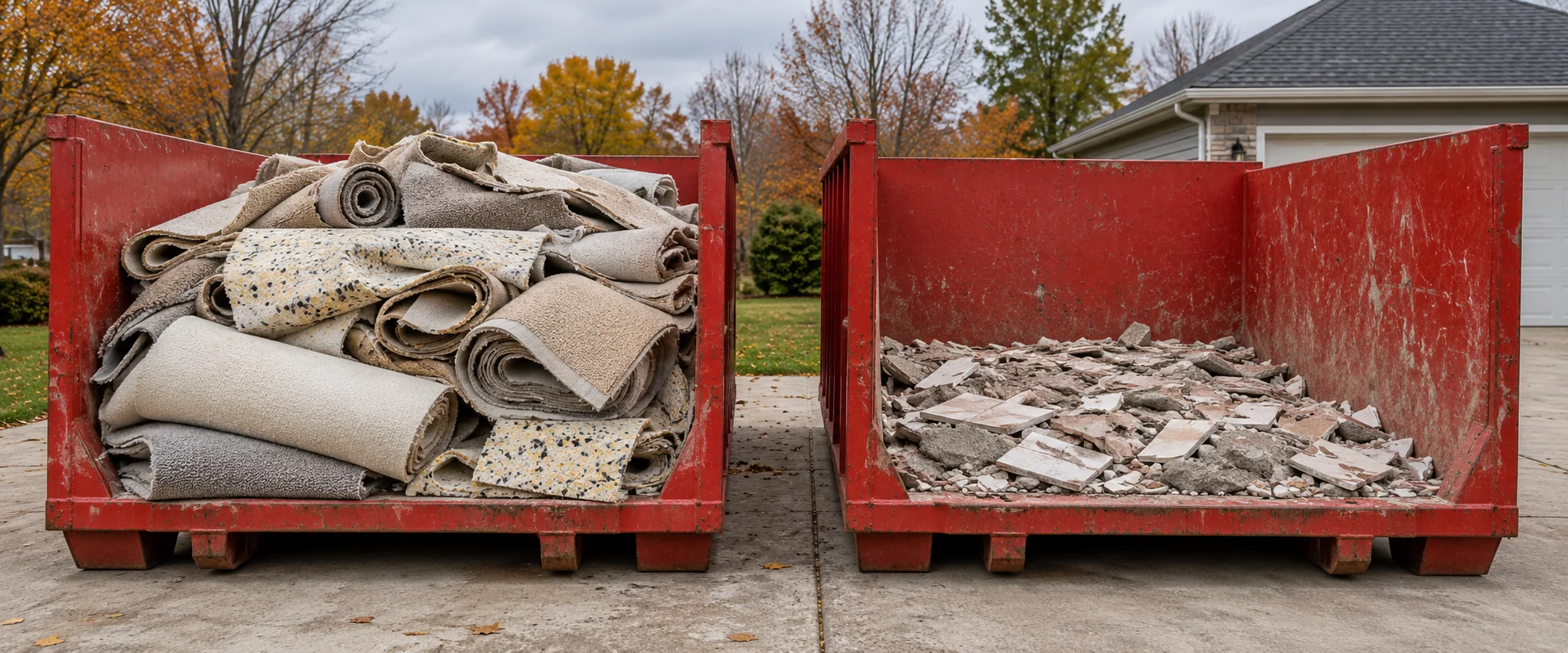
Different flooring hits these two budgets very differently. Carpet fills a bin long before it gets heavy. Tile and mortar get heavy long before they fill a bin. Know which kind of flooring you're removing and you'll know which budget to watch.
Carpet and underpad: light, fluffy, very bulky
Carpet and underpad are light for their size, but they take up a lot of room, especially if you toss them in loose. A pile of loose carpet pieces is mostly air.
The fix is simple: roll it and tie it. Cut the carpet into strips you can handle, roll each strip tightly and tie or tape it. Do the same with the underpad. Rolled and tied, carpet takes considerably less space than it does loose. That can be the difference between one bin size and the next one up.
Two things to watch:
- Wet or water-damaged carpet is heavier. Carpet that has sat for years in a damp basement can weigh far more than it looks. Water-damaged carpet is accepted in standard bins. If the damage is recent and comes from a flood or plumbing failure, check for mould first.
- Roll as you go. Rolling carpet in the room is much easier than wrestling a loose pile into shape at the bin.
Laminate and engineered wood: the middle ground
Laminate and engineered wood sit between carpet and tile on both counts. The boards are denser than carpet, but they still take up a fair amount of room. The thin foam underlay is light and bulky.
- Stack, don't toss. Boards laid flat in the bin take far less room than boards thrown in at angles.
- Keep the underlay together. Roll or bag it so it doesn't spread through the bin.
- Glued-down floors come up in broken pieces with adhesive attached, so expect more weight and more mess than with a floating floor.
Tile, thinset/mortar and leveller: this is what blows up the bill
Ceramic and porcelain tile is a weight job, not a volume job. When tile comes up, it brings the thinset or mortar bed with it, and often patches of floor leveller or a cement board underlayment. All of that is dense, mineral material.
A tile tear-out can look like a small pile and still weigh a lot at the scale. At $99 per tonne, every tonne adds $99 to your bill, whether the bin is full or half empty.
- Tell us it's tile when you book. Heavy material changes which bin and loading plan make sense.
- Don't over-size for tile. Tipping is by weight, not bin size, so a big bin doesn't make heavy material cheaper. For mostly-tile jobs, a smaller bin is often the better fit. See our concrete and brick disposal guide for how heavy loads are handled.
- Spread the weight. Lay heavy debris evenly across the floor of the bin rather than piling it at one end.
Demo debris: tack strip, nails and staples
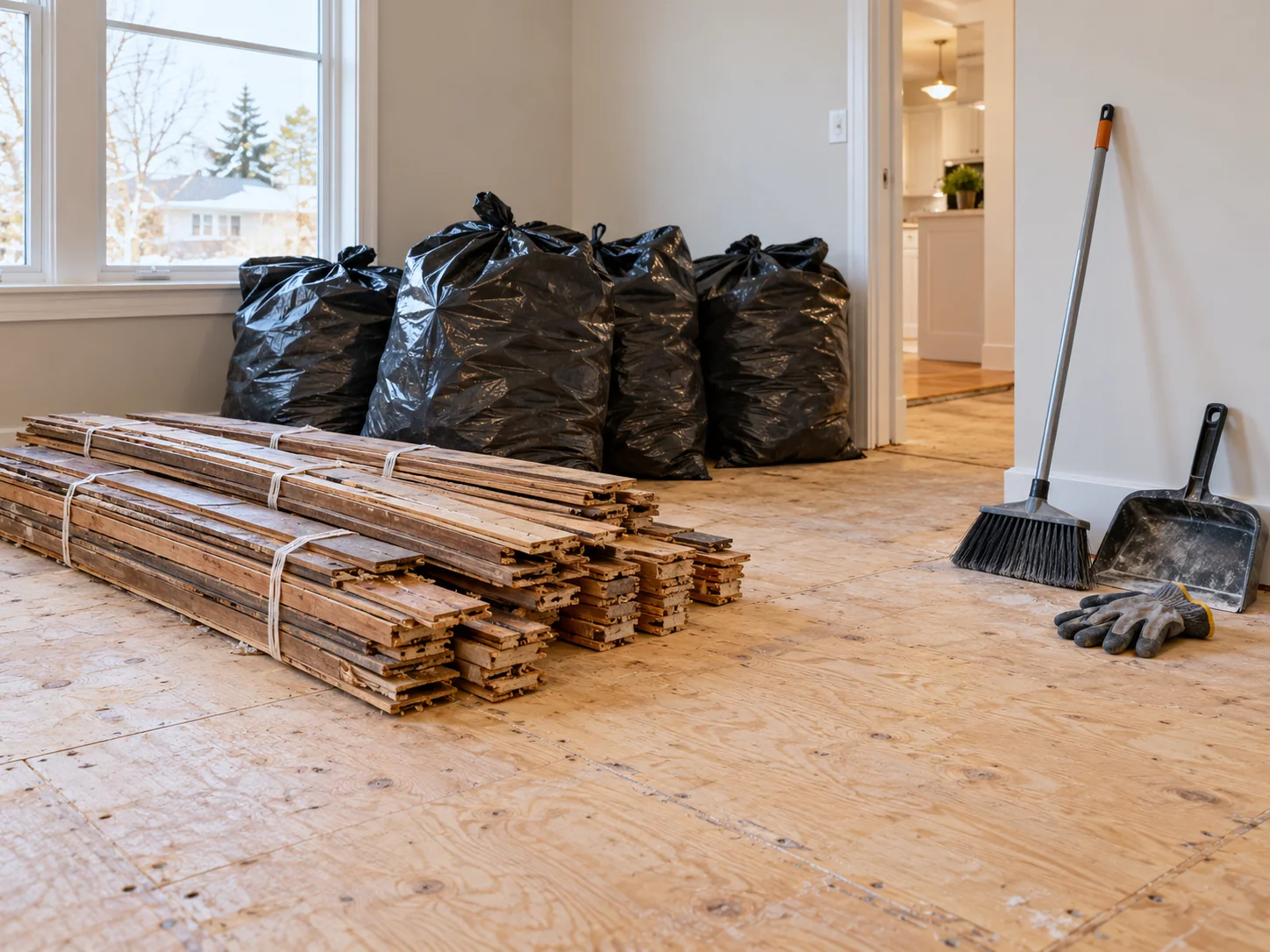
Under every carpet is a layer of small, sharp stuff: tack strip around the edges, staples holding the underpad and nails left behind in subfloors and trim. It doesn't add much weight or volume, but it's what cuts hands and punctures tires.
- Bag the small sharp debris. Staples, nails and short tack-strip pieces go into heavy-duty contractor bags or a sturdy box. Bagged, they don't scatter across your driveway or the bin floor.
- Bundle long tack strips. Pull them up, turn the pins inward and tape them into bundles before they go in the bin.
- Large pieces go in loose. Rolled carpet, stacked boards and broken tile go straight into the bin. Use bagged debris to fill the gaps between them.
- Sweep the route. Run a magnet or broom over the path from the door to the bin when you're done.
Older homes: one thing to do first
If your home is older, some flooring materials, such as early vinyl floor tiles and the backing on some sheet flooring, may contain asbestos. If your home is older, get it tested before removal.
Asbestos can't go in a regular bin. It needs licensed handling and disposal. Testing first keeps you, your household and your crew safe, and it keeps a regulated material out of a general waste load.
Which bin size for which flooring
We won't repeat bin sizing basics here. For that, see our guide to choosing a bin size in Winnipeg. For flooring specifically, start here:
| Flooring job | What drives it | Starting point |
|---|---|---|
| Carpet and underpad, one or two rooms | Volume (roll and tie it) | 8-yard ($250) |
| Carpet and underpad across a floor, or several rooms | Volume | 12-yard ($275) |
| Laminate or engineered wood, one or two rooms | Volume, some weight | 8-yard ($250) |
| Mixed flooring across a whole main floor or basement | Volume, plus weight if tile is involved | 12-yard ($275) |
| Mixed flooring across several floors, or a whole-house tear-out | Volume, plus weight if tile is involved | 20-yard ($300) |
| Tile with thinset/mortar, mostly tile | Weight | 8-yard ($250). Tell us it's tile when you book. |
All bins include 7 days. Tipping is extra at $99 per tonne, based on the actual weight of your load. If flooring is part of a bigger basement job, see our basement renovation waste guide. For planning a renovation bin through the colder months, see winter renovation bins in Winnipeg. For where to put a bin once there's snow on the driveway, see winter bin placement.
FAQ: flooring removal waste in Winnipeg
Can old carpet and underpad go in a bin?
Yes. Carpet and underpad go in a standard bin, and so does water-damaged carpet. Roll and tie it to save space.
Can I mix carpet, laminate and tile in the same bin?
Yes. Different flooring materials can go together in one bin. Just tell us about any tile or mortar when you book, because it changes the weight.
Why does tile cost more to get rid of than carpet?
The bin price is the same. The difference is the tipping fee, which is $99 per tonne based on actual weight. Tile, thinset and leveller are much heavier than carpet.
Should I roll carpet before it goes in the bin?
Yes. Cut it into manageable strips, then roll and tie or tape each one. Rolled carpet and underpad take considerably less space than loose pieces, so you get more into the bin you're paying for.
What do I do with tack strip and staples?
Bag the small sharp pieces, bundle the long strips with the pins turned inward, and put them in the bin with everything else.
Can flooring that might contain asbestos go in the bin?
No. If your home is older, get the flooring tested before removal. Asbestos can't go in a regular bin and needs licensed handling.
How long do I get the bin?
Every 8, 12 and 20-yard bin includes 7 days.
Book a bin for your flooring job
Tell us what's coming up (carpet, laminate, tile or a mix) and roughly how many rooms, and we'll help you pick the bin. 8-yard $250, 12-yard $275, 20-yard $300, each including 7 days. Tipping is extra at $99 per tonne based on actual weight.
Book a bin · Contact us · 431-317-8581
Ecobins & Cartage · 2929 Sturgeon Road, Winnipeg, MB R2Y 2L9