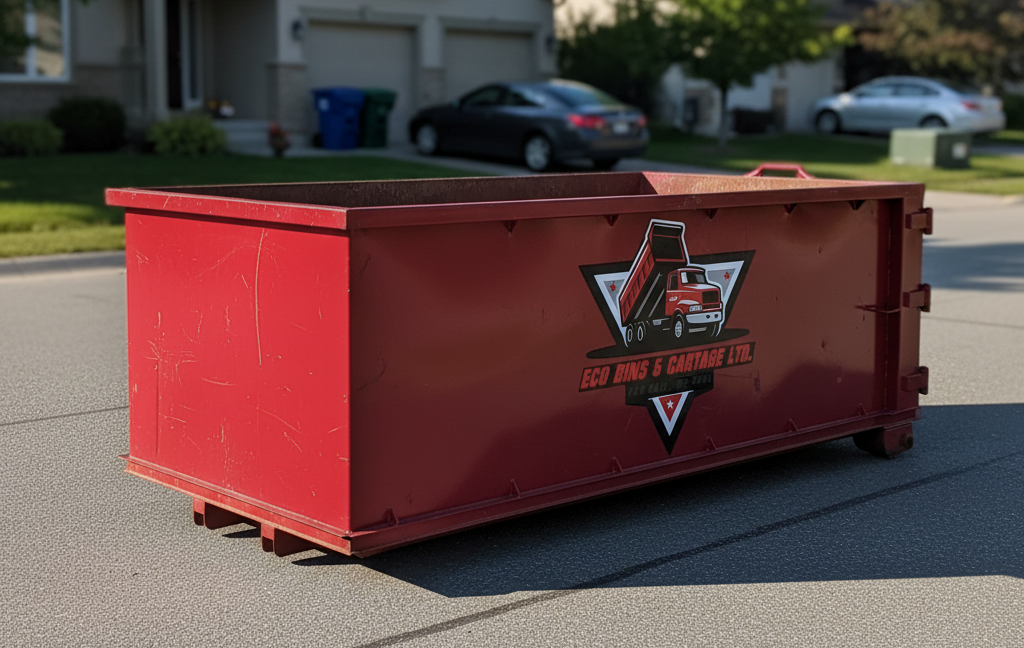
- Deck and fence removal is one of the most common DIY demolition projects in Winnipeg: the skills are accessible, the tools are basic, and the main challenge is disposal
- The bin needs to be on site before the saws come out: once material is piling up in the yard, you have already lost control of the project timeline
- Pressure-treated lumber is heavier than untreated lumber and cannot be burned or composted: bin disposal is the appropriate end destination
- Concrete deck footings are the heaviest component: a 12-inch diameter footing at 3 feet deep weighs 80 to 100 lbs. Even one bin-load of footings can approach weight limits.
- Ecobins & Cartage provides the bin and picks it up when you are done: the removal work is yours to do
Planning the Removal Before Starting
A DIY deck or fence removal is a project that most Winnipeg homeowners can handle with basic tools, a weekend, and a clear plan. The structural work, cutting, pulling, and dismantling, is straightforward. The disposal logistics are where projects get stuck.
The mistake is treating the bin as a detail to sort out during or after the removal. By the time material is piling up in the yard and the project is halfway done, booking a bin for next-week delivery creates a problem: the debris is in the way, the workspace is compromised, and the project is stalled. The bin is the first thing to confirm, not the last.
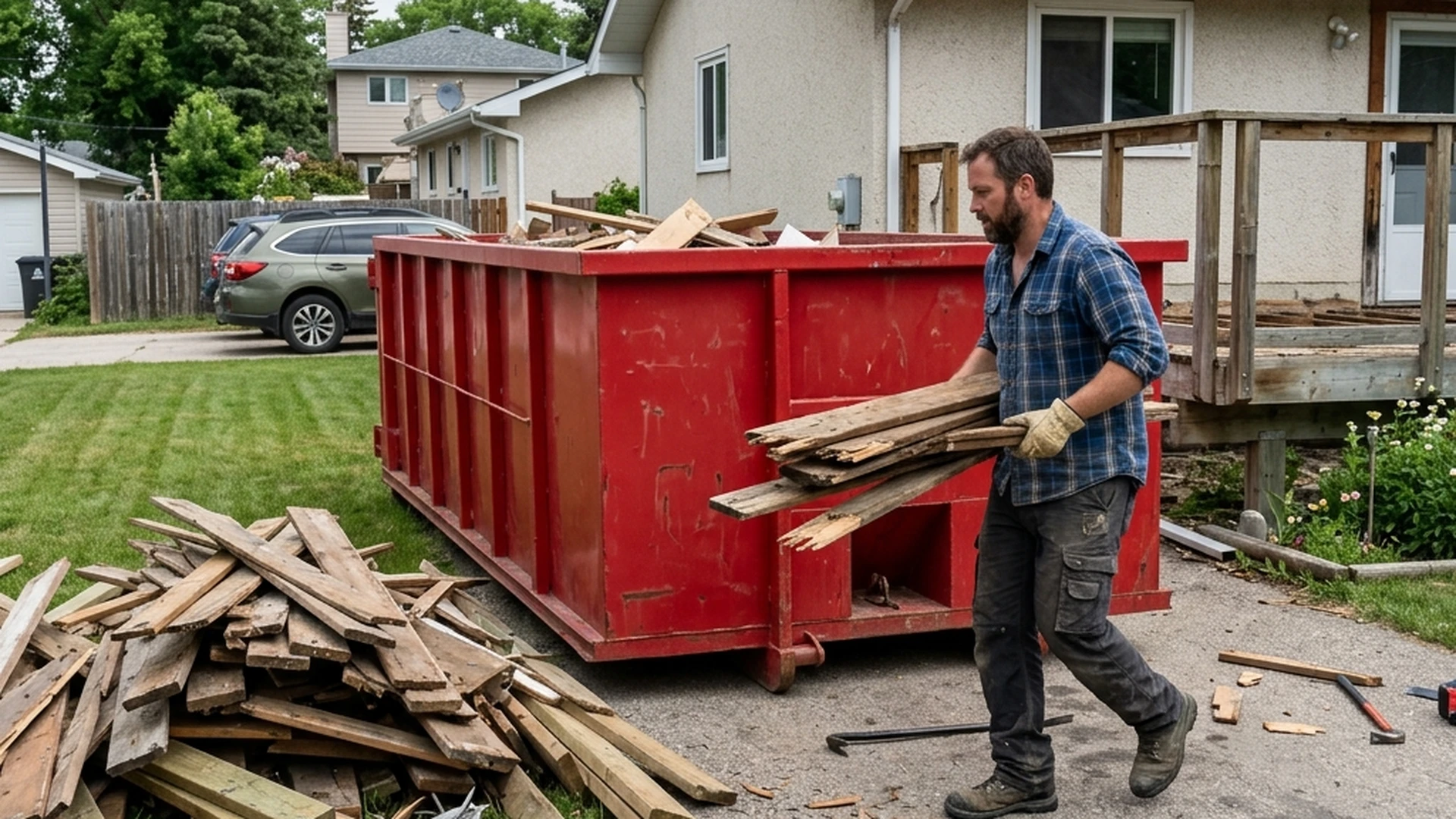
Estimating Volume: How Big a Bin Do You Need?
Deck Removal
| Deck Size | Estimated Volume | Recommended Bin | Notes |
|---|---|---|---|
| 12 × 12 ft (single level, basic framing) | 4 to 6 cubic yards | 8-yard ($250) | Decking, joists, rim boards, hardware |
| 16 × 20 ft (standard residential deck) | 8 to 12 cubic yards | 12-yard ($275) | Full framing package plus larger decking volume |
| 20 × 24 ft or multi-level | 12 to 18+ cubic yards | 20-yard ($300) | Complex framing, multiple structural elements |
Concrete footings significantly affect this calculation. If the footings are being removed rather than left in the ground, add 1 to 2 cubic yards per footing removed, and see the weight note below.
Fence Removal
| Fence Run | Estimated Volume | Recommended Bin | Notes |
|---|---|---|---|
| 40 ft of fence (5 sections) | 2 to 3 cubic yards | 8-yard ($250) | With rails and boards; posts add volume |
| 80 ft of fence (10 sections) | 4 to 6 cubic yards | 8-yard ($250) | Can stretch to 12-yard if posts are large or concrete footed |
| Full yard perimeter (160+ ft) | 8 to 12 cubic yards | 12-yard ($275) | Standard residential lot perimeter |
If deck and fence removal are happening simultaneously as part of a yard renovation, size up to accommodate both volumes. A 12-yard or 20-yard bin handles most combined removals on standard residential lots. The larger bin also provides flexibility for any surprises in the material volume.
The Weight Question: Pressure-Treated Lumber and Concrete
Pressure-Treated Lumber
Pressure-treated lumber used in deck framing, posts, and ledger boards is significantly denser than untreated dimensional lumber. A full bin of pressure-treated framing will approach weight limits faster than a bin of regular dimension lumber.
Important disposal note: Pressure-treated lumber cannot be burned in a residential fire pit, wood stove, or outdoor fire. The preservatives (historically CCA, now copper azole or similar compounds) volatilize in combustion and create toxic smoke. Bin disposal is the appropriate end destination for pressure-treated material. Composting is also inappropriate. Mention the material type when you book so Ecobins & Cartage can advise on any relevant considerations.
Concrete Deck Footings
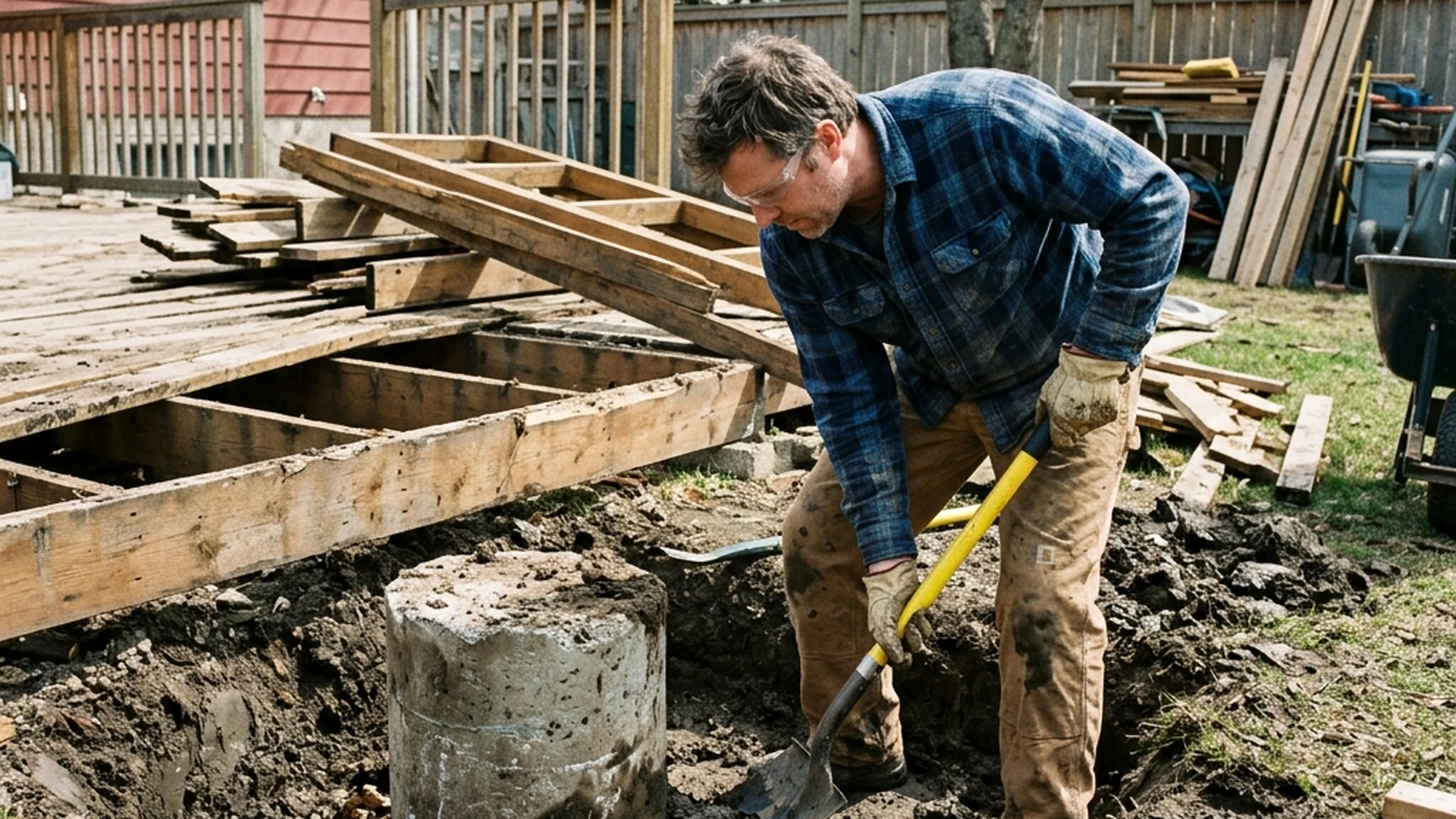
Concrete is the heaviest component in most deck removal projects. A standard 12-inch diameter concrete footing at 3 feet deep contains roughly 2.8 cubic feet of concrete, which weighs approximately 380 to 420 lbs. A deck with 6 footings generates 2,200 to 2,500 lbs of concrete alone, before any lumber is loaded.
Tipping fees are charged at $99 per tonne on actual load weight. A bin loaded heavily with concrete and pressure-treated lumber will generate tipping fees above the base rental rate. Know the footing count before booking, mention concrete in the load when booking, and budget for the tipping fee component accordingly. An alternative: break concrete footings into smaller pieces and use them as fill material in a low area of the yard, or offer them on local classifieds as free fill material. Reusing on-site reduces disposal costs and eliminates the weight contribution from the load.
Timing: The Bin Comes First
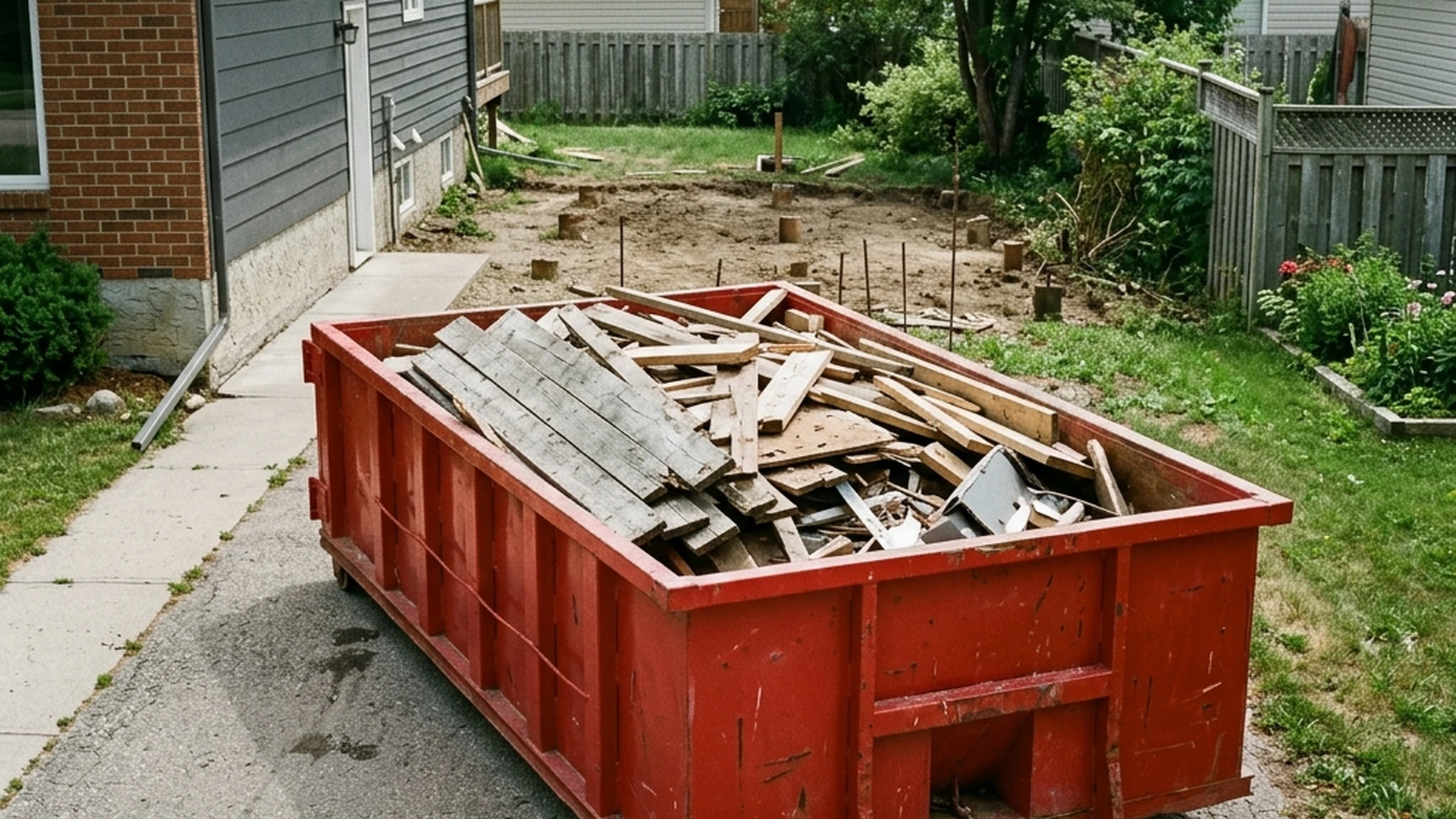
The correct sequence for a deck or fence removal project: confirm the removal date and how many days the project will take, book the bin for delivery the day before work starts or the morning of day one, then begin demolition after the bin is confirmed. Loading as you go rather than staging material in the yard and loading at the end keeps the work area clear and reduces the physical effort of handling material twice.
During peak season in Winnipeg (May through August), book the bin three to five days ahead to ensure availability on your target delivery date. Month-end dates have compressed availability due to concurrent move-out and landscaping activity.
Coordinating With Replacement Contractors
Most deck and fence removals are the first step of a replacement or new construction project. The bin needs to be gone, or at least not in the way, before the replacement contractor arrives with materials and equipment. Build the timeline backward: when does the replacement contractor start? The bin pickup needs to happen at least one day before. For projects where the replacement contractor is starting the morning after the removal, same-day removal pickup is available but requires advance arrangement.
Lawn ‘N’ Order handles fence installation across Winnipeg for the replacement phase after removal is complete. See lawnnorder.ca/fence-installation-winnipeg for fence options and installation services.
What Else Can Go in the Bin During Deck and Fence Removal
Since the bin is on site anyway, deck and fence removal is a good opportunity to add other yard material that needs disposal:
- Old lattice, pergola components, or garden structures being replaced
- Damaged outdoor furniture not worth donating
- Old shed components if a partial shed removal is happening
- Accumulated lumber and hardware from the garage or storage area
Keep hazardous material out of the bin regardless: treated lumber is fine for bin disposal, but paint, solvents, propane tanks, and batteries require separate disposal.
FAQ: Deck and Fence Removal Bin Rental in Winnipeg
Do I need a permit to remove a deck or fence in Winnipeg?
Removal of existing structures typically does not require a permit in Winnipeg. Construction of replacement structures may require a permit depending on size and type. Confirm with the City of Winnipeg Permits and Inspections branch before starting any new construction. The removal itself, as a DIY project, generally proceeds without permit requirements.
How long does a typical deck removal take?
A standard 16 × 20-foot deck with basic framing takes one motivated person a full day, or two people a half day. The pace depends on fastener type (screwed decking takes longer than nailed), access to the framing underneath, and whether footings are being removed. Allow extra time if the deck is older and fasteners are corroded or if there is significant rot requiring careful demolition to avoid structural collapse.
Can I leave the concrete footings in the ground?
Yes, and it is often the practical choice. Footing removal requires significant digging and the concrete weight adds substantially to disposal costs. If the footings are below the frost line (approximately 4 feet in Winnipeg), they are stable and not causing any active problem. Future landscaping or construction may require their removal, but for most residential projects leaving the footings in place is acceptable. Confirm with any replacement contractor whether the existing footings can be reused or need to come out.
Book Your Removal Bin
Mention pressure-treated lumber and concrete if your project includes these materials. Delivery across Winnipeg; 7-day rental from $250. Additional days at $10 per day. Tipping fees at $99 per tonne based on actual load weight.
Book a Bin Online Call (431) 317-8581