Winter Renovation in Winnipeg: What Goes in Your Bin (And What Costs Extra)
January means indoor renovation season in Winnipeg. Contractors are available, you’re home anyway, and that kitchen project finally gets the green light.
Then demolition starts and you realize you’re generating way more waste than expected—in categories you didn’t know existed.
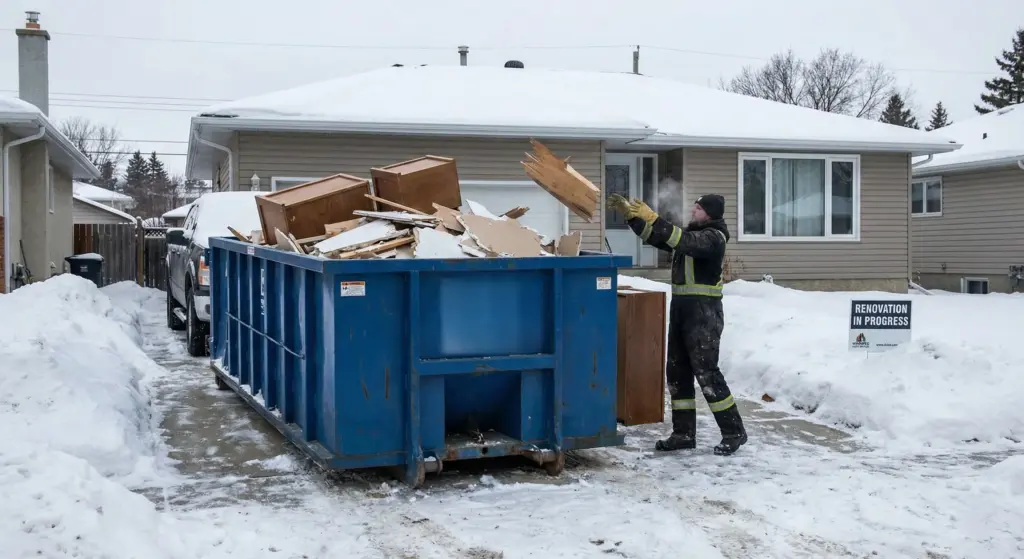
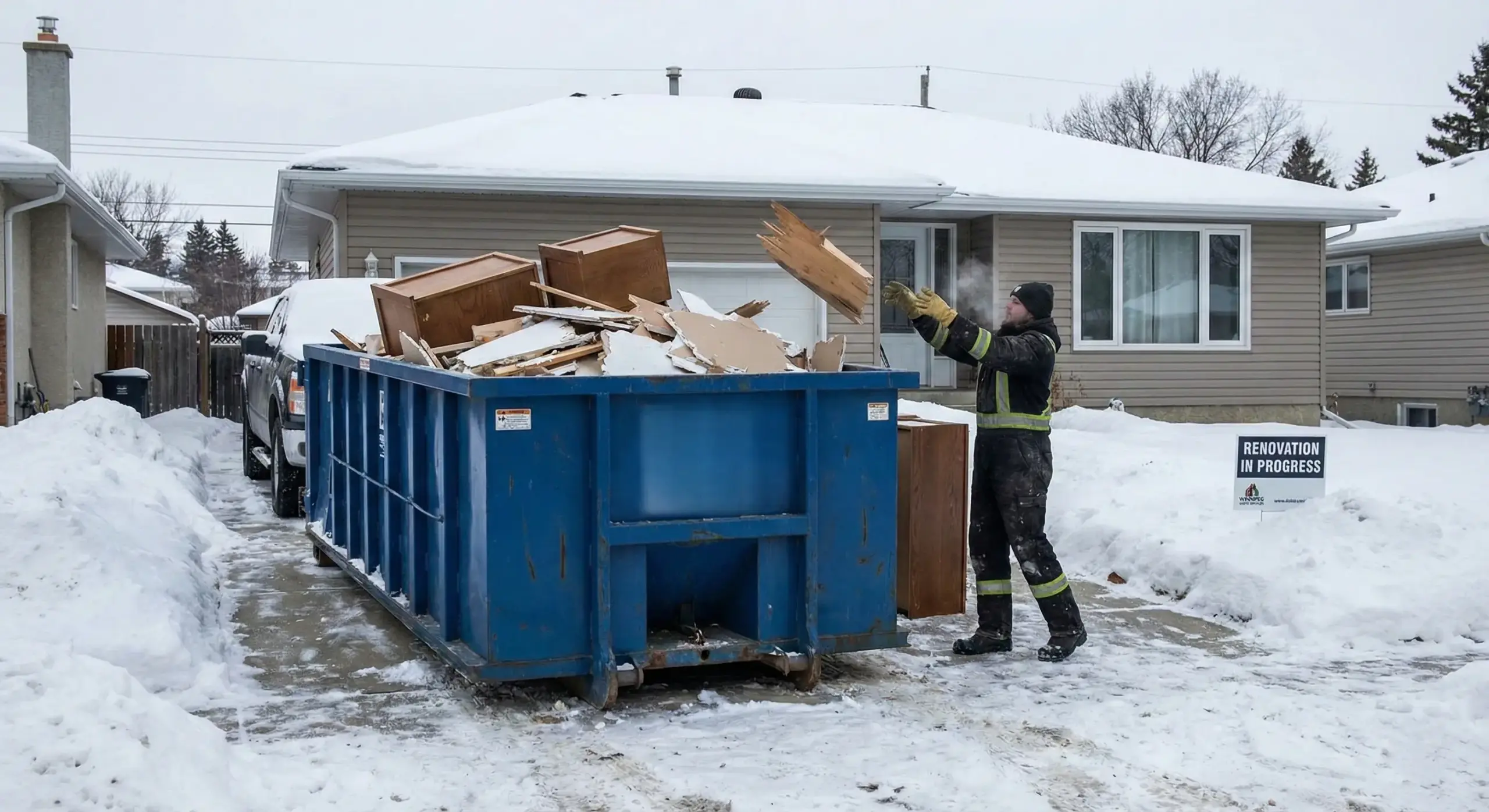
Here’s what catches people off-guard: not all renovation debris costs the same. Understanding differences before demo prevents surprise charges.
What Goes in Standard Bins
Most indoor renovation waste qualifies as “general construction debris”—materials mixed together at standard rates:
- Drywall and plaster: Biggest component of most renovations. No separation required
- Framing lumber: 2x4s, wall studs, floor joists, standard disposal
- Cabinets and trim: Kitchen cabinets, vanities, doors, baseboards, millwork
- Flooring: Carpet, tile, hardwood, laminate, vinyl—can mix together
- Insulation: Fiberglass, foam board when part of general renovation waste
- Packaging: Cardboard, plastic wrap, compound buckets, cut-offs from new materials
Manitoba disposal facilities charge standard tipping fees (roughly $110-130 per tonne) for mixed renovation debris. Most bins run on weight-based charges, so what you’re disposing of matters more than how full the bin looks.
Materials That Cost Extra
Heavy Materials (Weight Surcharges)
Concrete, brick, masonry: Weight 2-3× more than typical debris. Standard renovation debris averages 400-600 lbs per cubic yard. Concrete runs 1,800-2,200 lbs.
Practical impact: Removing concrete basement wall or brick fireplace requires notification. Masonry-heavy loads often run $50-100 more than equivalent volumes of standard waste.
Separation-Required Materials
Metal (large amounts): Small metal mixed in is fine. Removing substantial quantities—steel beams, extensive ductwork, metal siding—benefits from separation. Metal has scrap value and reduces disposal weight.
Appliances: Anything with refrigerants (fridges, freezers, AC units) requires special handling under Manitoba regulations. Can’t go in standard bins. Separate service, typically $25-50 per unit.
Prohibited Materials
- Asbestos: Any suspected asbestos requires professional testing and certified removal. Cannot go in bins under any circumstances
- Liquid paint and chemicals: Hazardous waste requiring disposal through Manitoba Hazardous Waste Management Corporation
- Treated lumber: Newer pressure-treated lumber is acceptable. Older CCA-treated lumber (pre-2003, greenish tint) needs discussion for large quantities
Winter Bin Placement Challenges
Snow-Narrowed Access
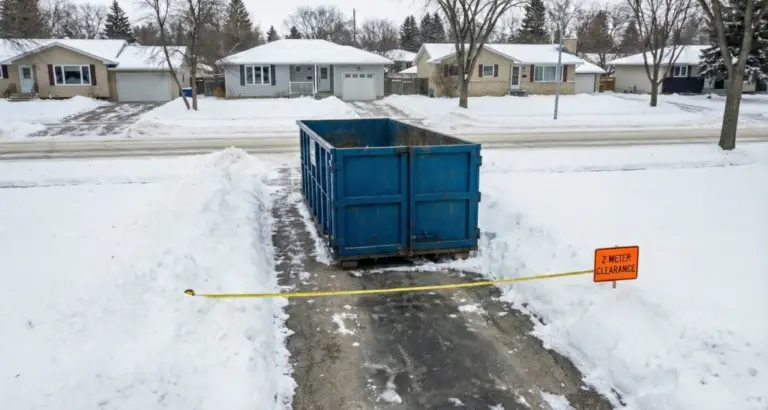
Your 4-meter summer driveway becomes 2.5 meters between January snowbanks. Plan for:
- Continued snow clearing access around bin
- Room for loading access to bin opening
- Pickup truck approach path staying clear
Position bins where growing snowbanks won’t block access over 2-3 week rental periods. Read our winter placement guide for detailed tips.
Loading in Cold
Renovation debris from heated interiors doesn’t freeze, but -30°C makes loading slower. What takes 30 minutes in July takes 45+ in January working in winter gear.
Keep paths to bins cleared and salted—ice around bins creates slip hazards. Loading in 4:30 PM darkness requires adequate lighting.
Ground Conditions
Frozen ground provides excellent support. But bins delivered in January on frozen ground might not get picked up until March—by then ground may be thawing. Communicate timeline for long-term placements.
Renovation Waste Volume Estimates
- Kitchen (full gut): 10-12 cubic yards — cabinets, countertops, flooring, drywall, fixtures
- Bathroom (full): 6-8 cubic yards — tub/shower, vanity, flooring, drywall, fixtures
- Basement finishing demo: 12-16 cubic yards per 1,000 sq ft — drywall, framing, old flooring
- Bedroom/living remodel: 4-6 cubic yards per room — flooring, trim, drywall, fixtures
Add 20-30% if removing unusual heavy materials or extensive water damage.
Cost Management Tips
Separate heavy materials when possible: Removing brick fireplace separately before general bin arrives saves $50-150 on general debris weight.
Fill efficiently: Disassemble cabinets into components. Break drywall into smaller pieces. Alternate heavy and light materials. Compact safely when possible.
Communicate material composition: “Removing all cabinets, 150 sq ft tile, drywall from two walls” tells us much more than “renovating a kitchen.” Specific descriptions help recommend appropriate bin sizes.
Time rental with project phases: Coordinate delivery for demolition phase (first 1-2 weeks) when most waste generates. Standard 7-day rental with $10/day extension beats weeks of unused rental.
When Projects Need Multiple Bins
Large renovations sometimes exceed single-bin capacity:
- Whole-house projects: Kitchen + bathrooms + flooring throughout often requires 2-3 loads as different trades complete work
- Phased work: Heavy demolition waste followed by lighter construction packaging sometimes justifies separate bins
- Weight concerns: Keeping heavy materials separate from lighter debris sometimes means smaller bins for masonry and standard bins for general waste
Working with Other Services
Coordinate bin placement with:
- Material delivery: If Ditchfield Soils is delivering materials, ensure bins don’t block delivery access
- Landscaping work: Lawn ‘N’ Order site work needs access and staging areas—bin placement affects this
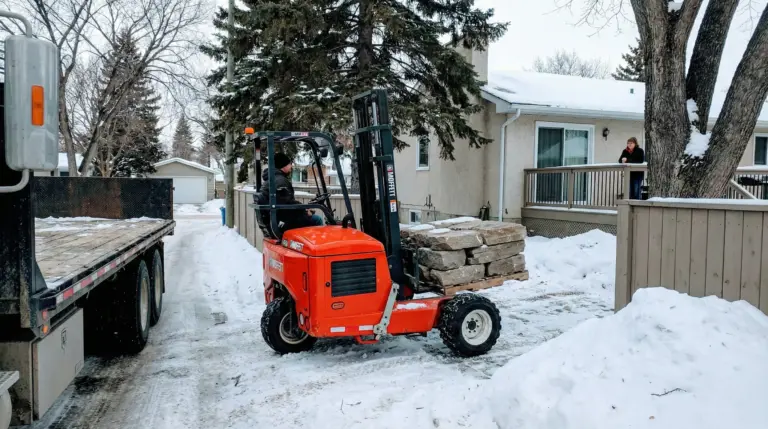
- Challenging access: For narrow side yards, tight urban lots, winter-narrowed driveways, Moffett forklift delivery places bins precisely despite spatial constraints
Expert Winter Renovation Support
Understanding what costs standard rates versus what triggers fees prevents budget surprises. Planning winter bin placement around snow realities keeps projects moving.
EcoBins & Cartage handles renovation bins throughout Winnipeg winters. We’ve seen every combination of materials and access challenges. When in doubt about what goes where, ask before loading—much easier than surprises at weigh scale.
Professional delivery, transparent pricing, expert guidance on material separation and bin sizing.
Get a Quote Call: (431) 317-8581The Bottom Line
Winter renovations succeed when waste management aligns with reality. Know what goes where, what costs extra, and how winter affects logistics.
Communicating specific materials rather than generic “renovation waste” ensures appropriate service. Planning around snowbanks and frozen ground prevents access complications.
Related Resources
- EcoBins Renovation Bin Service
- Winter Bin Placement Guide
- Lawn ‘N’ Order Site Preparation
- Ditchfield Soils Material Delivery
Smart renovation planning includes smart waste management. Understanding material categories, weight impacts, and winter logistics prevents surprises and keeps projects on budget.