Pool and Sport Court Excavation Disposal Winnipeg
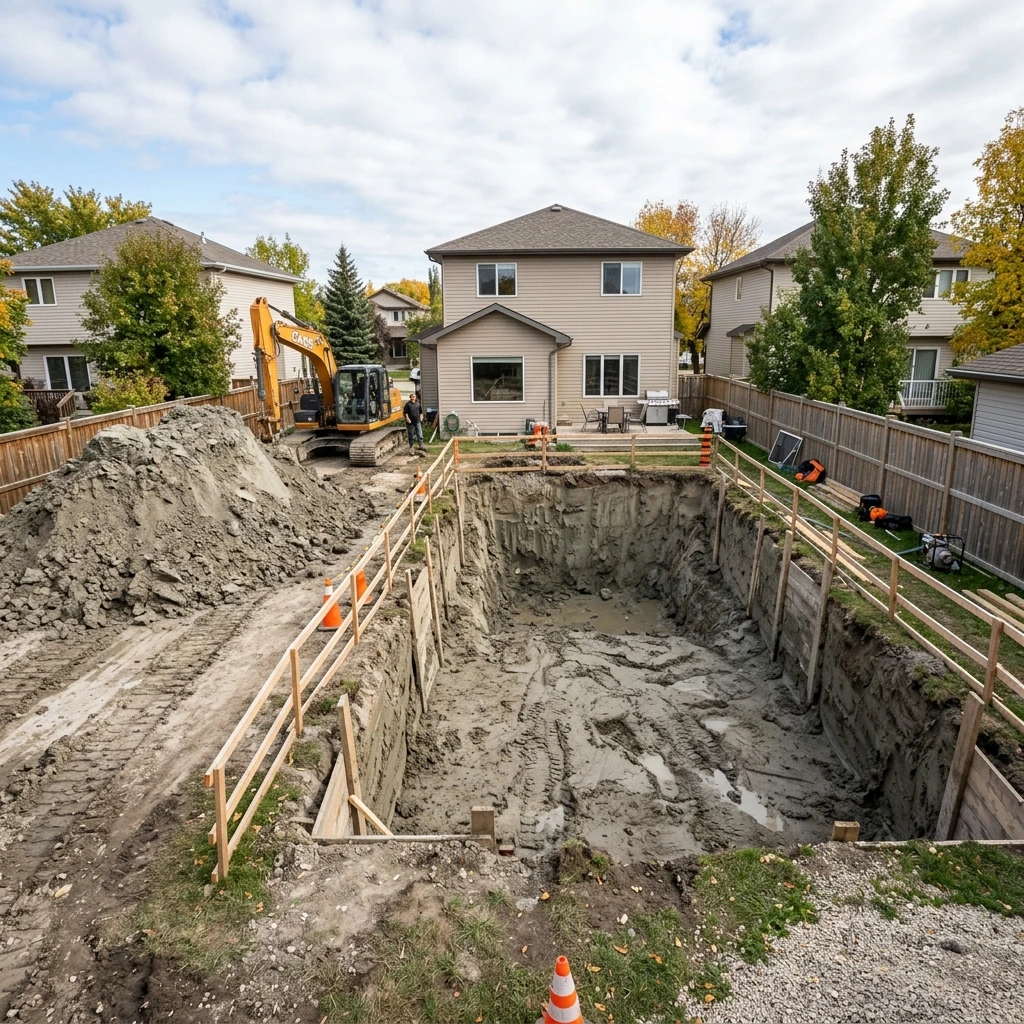
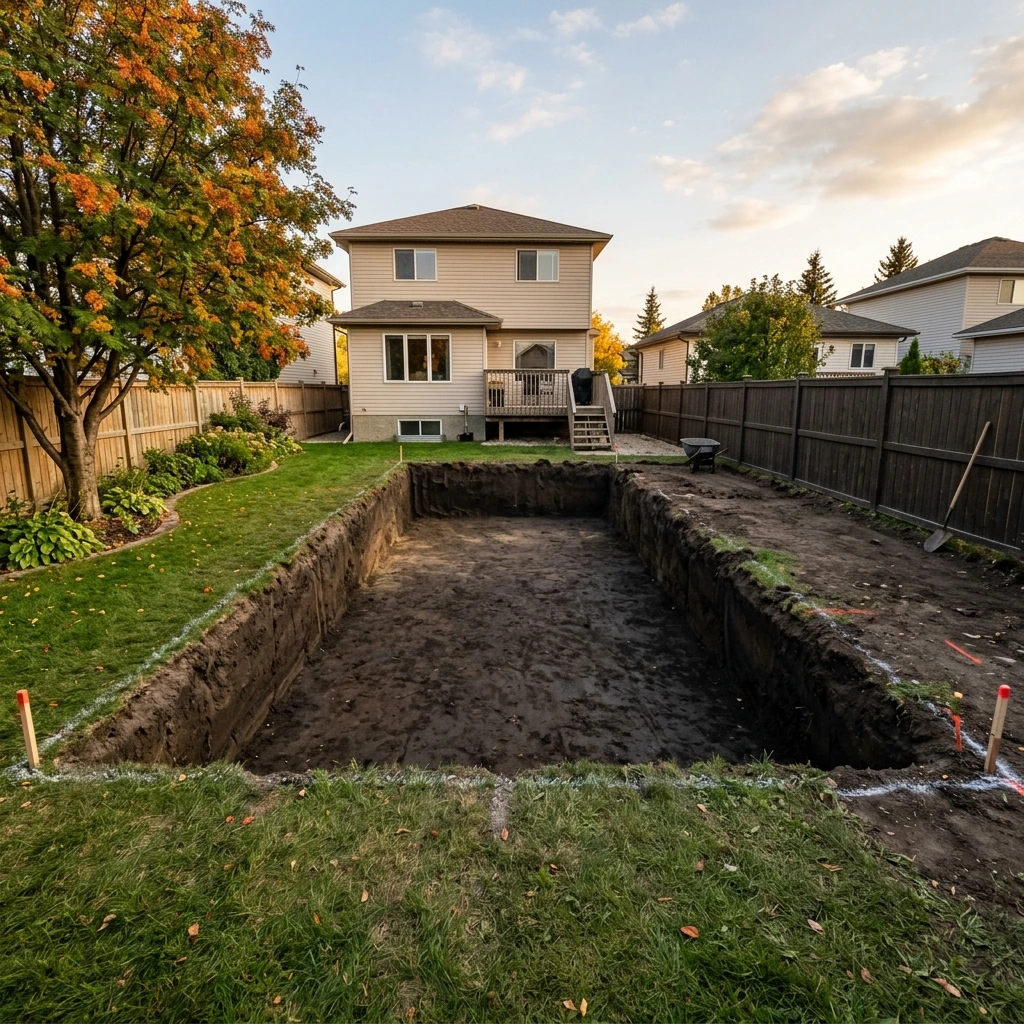
- A 40 × 60 ft sport court excavated 18 to 24 inches deep generates 133 to 178 cubic yards of material before swell factor
- Once excavated clay is loosened, actual haul volume runs 160 to 215 cubic yards — far beyond what any rental bin handles
- A standard fibreglass pool excavation generates 80 to 130 cubic yards before swell, depending on pool size and depth
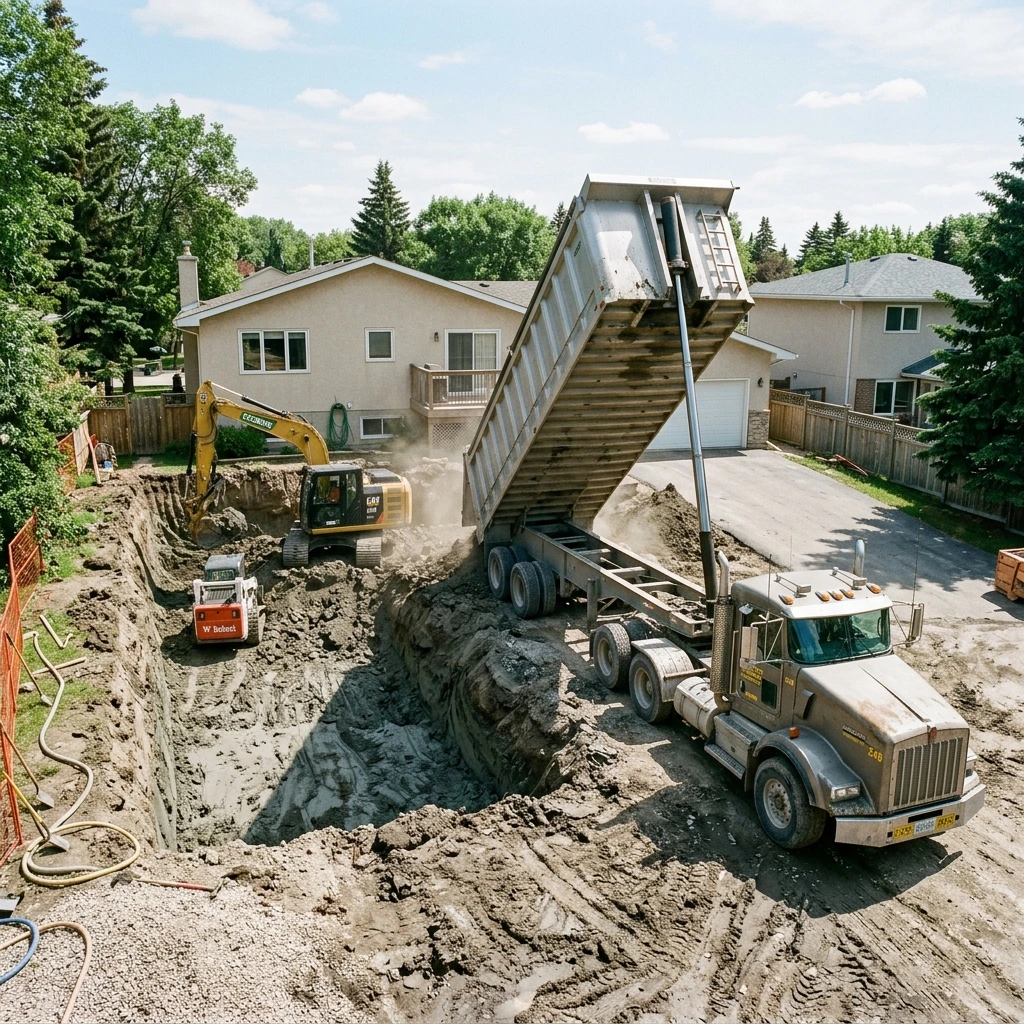
- Cartage removes this volume in one to three truck loads on the same day as excavation — the site is clear before the base crew arrives
- Booking cartage before the excavator starts is the single most important scheduling decision on a large outdoor build
Why Excavation Volume Surprises Most Homeowners
The most common budget and schedule surprise on a large outdoor build is not the cost of the concrete or the surface materials. It is the volume of excavated material that needs to leave the site before any build work can begin.
Clay soil is dense. When it is excavated and loosened, it expands by roughly 20 to 30 percent in volume — a factor called swell. That means the number you calculate from the dimensions of the excavation understates the actual haul volume by a meaningful margin. And the haul has to happen on a specific day, coordinated with the excavator, before the next trade can access the site.
Getting this logistics piece wrong delays every subsequent stage of the project. Getting it right means the base crew shows up to a clear site and starts work the same day or the next morning.
Excavation Volume by Project Type
Backyard Sport Court: The Math
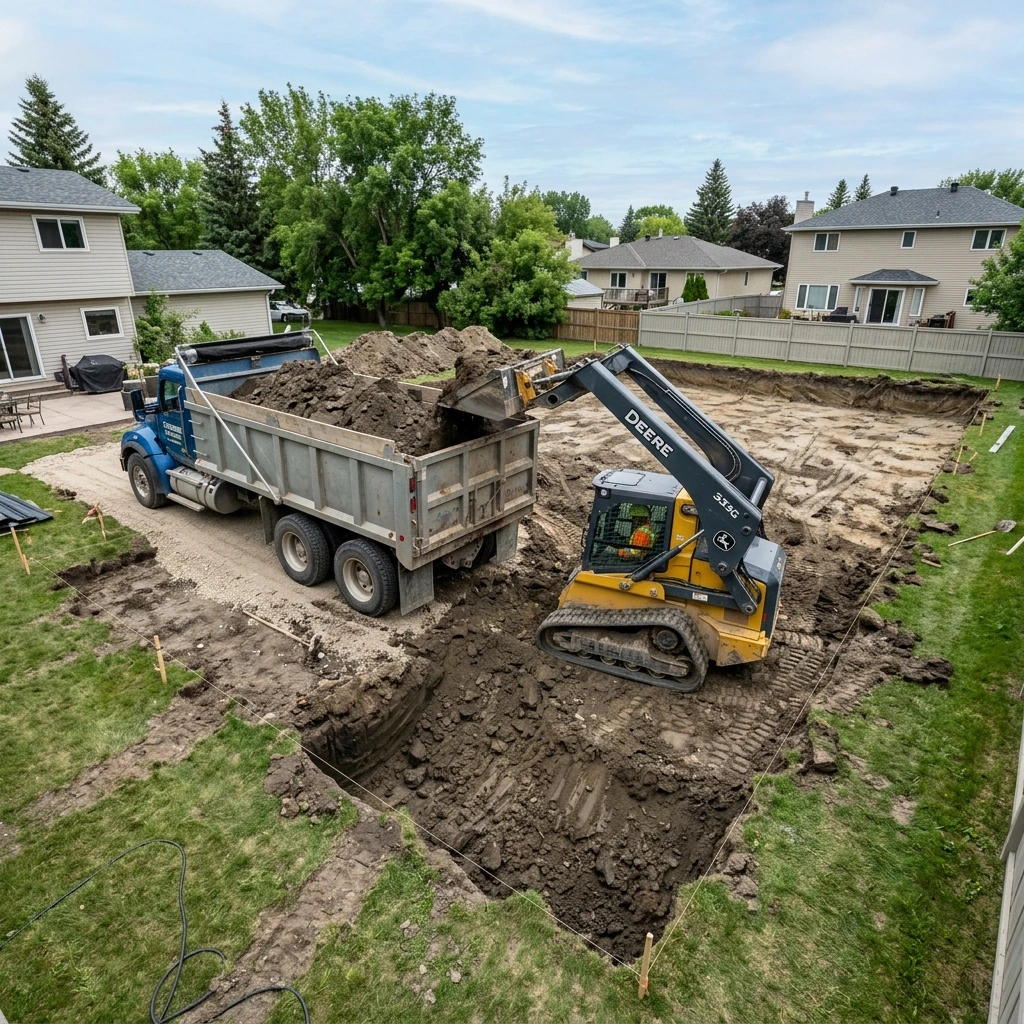
A standard multi-sport court footprint is 40 × 60 feet. Base preparation in Winnipeg requires excavating the existing soil to a depth of 18 to 24 inches before the crushed limestone sub-base goes in. Here is what that generates:
| Depth | Volume Before Swell | Approx. Haul Volume (+20% swell) |
|---|---|---|
| 18 inches | 133 cubic yards | 160 cubic yards |
| 21 inches (midpoint) | 155 cubic yards | 186 cubic yards |
| 24 inches | 178 cubic yards | 214 cubic yards |
Then multiply by 1.2 for swell factor
Example: 40 × 60 × 1.5 ÷ 27 = 133 cubic yards · with swell: 133 × 1.2 = 160 cubic yards
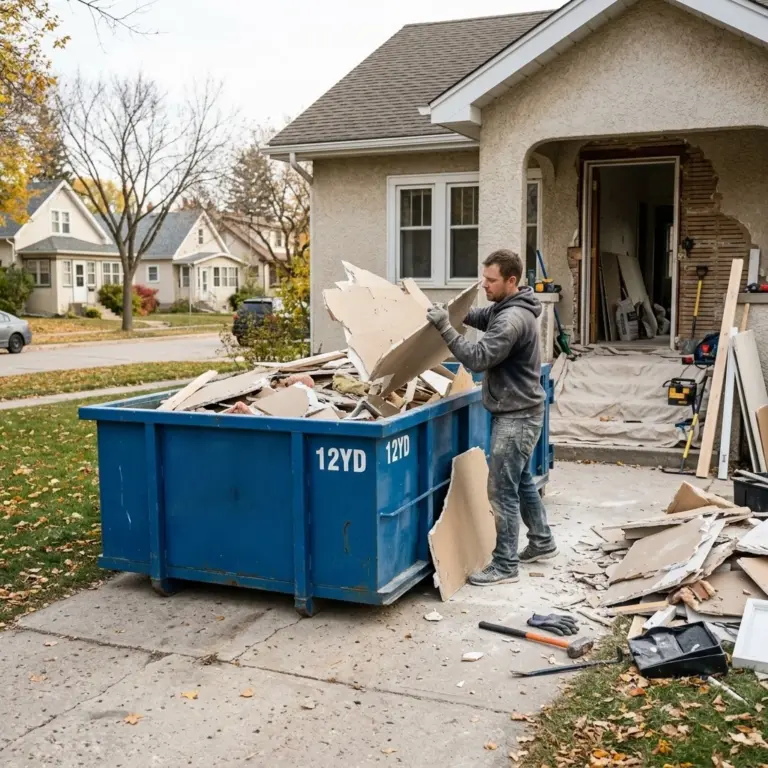
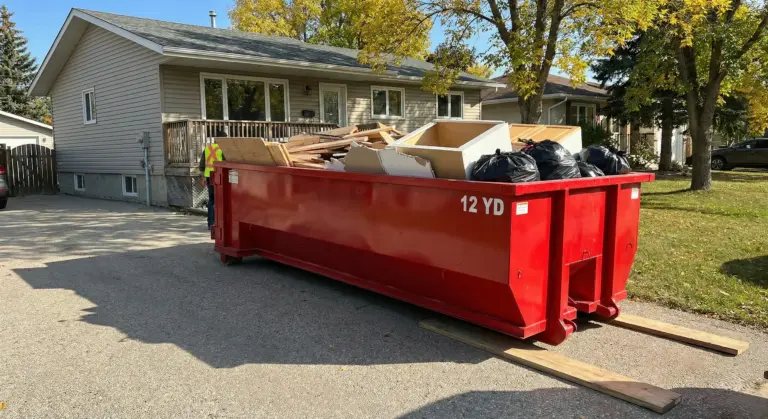
A 20-yard rental bin holds approximately 8 pickup truck loads. At 133 cubic yards minimum, a sport court excavation represents roughly 17 to 27 bin-equivalents. This is a cartage job, not a bin job. For full detail on what a properly built sport court base requires in Winnipeg’s clay and frost conditions, see the Lawn ‘N’ Order sport court guide.
Swimming Pool: The Math
Fibreglass pool excavations vary significantly by pool size and depth, but here are realistic ranges for Winnipeg residential installs:
| Pool Size | Approx. Excavation Volume | Approx. Haul Volume (+20% swell) |
|---|---|---|
| Small (12 × 24 ft, 5 ft deep avg) | 53 cubic yards | 64 cubic yards |
| Medium (14 × 30 ft, 5.5 ft deep avg) | 85 cubic yards | 102 cubic yards |
| Large (16 × 36 ft, 6 ft deep avg) | 128 cubic yards | 154 cubic yards |
Pool excavations also generate shell backfill volume: the space between the pool shell and the excavation walls needs to be filled with clean granular material after the shell is set. This is a separate material delivery — not part of the excavation haul — but it needs to be coordinated on the same project timeline.
Home Addition Foundation: The Math
A main-floor addition typically requires foundation excavation to approximately 5 to 7 feet deep around the perimeter. Volume depends on the addition footprint:
| Addition Footprint | Excavation Depth | Approx. Volume Before Swell |
|---|---|---|
| 20 × 20 ft | 5 ft | 74 cubic yards |
| 20 × 30 ft | 5 ft | 111 cubic yards |
| 20 × 20 ft | 7 ft | 104 cubic yards |
Foundation excavations also generate concrete formwork waste and, once backfilling begins, any excess granular material that does not go back into the excavation. A bin on site during the build phase handles the ongoing construction debris that follows the cartage phase.
Timing: The Decision That Affects Everything Else
Book cartage before you book the excavator. The excavator creates the material. The cartage truck removes it. If the truck is not confirmed before the excavator starts, you either delay the base crew or pay an excavator to wait. Both options cost money.
The Right Sequence
Confirm your build date
Coordinate with your contractor to confirm the excavation day.
Book cartage for the same day
Call Ecobins & Cartage with your excavation dimensions, approximate depth, and target date. Confirm the cartage truck for the same day or the morning after excavation.
Confirm the excavator
Once cartage is booked, confirm the excavator. Both are now on the same date.
Base crew starts the next morning
Excavation finishes, cartage clears the site same day, base crew arrives to a clean site the following morning. The project moves without delay.
Ecobins & Cartage can typically dispatch on short notice during off-peak months, but April through August is peak season in Winnipeg. Availability tightens significantly from late April onward. Two to three weeks of advance notice during peak season is the safe target.
Same-Day vs Next-Day Cartage
For most sport court and pool excavations, same-day cartage is the most efficient option. The excavator finishes, the cartage truck makes one to three loads while the excavator is still on site or immediately after it leaves, and the site is clear by end of day. The base crew can start the following morning with a clean site.
Next-day cartage works when the excavated material can be staged on site overnight without blocking other work. For backyard sport courts and pools where the excavated pile sits in the centre of the work area, same-day removal almost always produces the better project flow.
What Happens If You Do Not Plan Ahead
The pattern is consistent on projects where cartage is treated as an afterthought. The excavator finishes on a Thursday. The homeowner calls for cartage. The earliest available truck is Tuesday. The base crew was scheduled for Friday and now has to reschedule. The concrete pour gets pushed. The project that was supposed to be done before the long weekend finishes two weeks later. The excavation haul is the gating event for every stage that follows on a major outdoor build. It deserves the same booking priority as the excavator itself.
Can Some Excavated Material Stay On Site?
Sometimes, yes — and this is worth discussing with your contractor before assuming all excavated material needs to leave.
- Excavated clay can be used as fill in other areas of the property: raising low spots, building up grade along fence lines, creating berms. It is dense and requires amendment to support planting, but for structural fill applications it works well.
- Clean sand or granular material recovered during excavation can sometimes be reused as backfill around pool shells or in other fill applications on the same site.
- Organic topsoil stripped from the surface before excavation can be stockpiled for reuse in garden beds or lawn areas.
For projects where partial reuse is possible, the cartage volume and cost both drop. Identify reuse opportunities before the excavator starts, since moving material twice costs more than deciding in advance.
FAQ: Excavation Disposal in Winnipeg
How many truck loads does a sport court excavation require?
A tandem dump truck carries approximately 10 to 14 cubic yards per load. For a 40 × 60 ft court excavated to 18 inches, the 160 cubic yard haul volume (with swell) requires approximately 12 to 16 tandem loads. An end-dump semi carries 20 to 25 cubic yards per load and would handle the same volume in 7 to 9 loads. Ecobins & Cartage will confirm the right equipment and estimated number of loads when you book, based on your specific excavation dimensions.
Is excavated Winnipeg clay usable as fill elsewhere?
For structural fill where the material will be covered by hardscape or topsoil, yes. Winnipeg clay compacts well and provides stable bearing capacity when properly placed and compacted. It is not appropriate as topsoil for planting without significant amendment. If you have a fill requirement elsewhere on the property or a neighbouring project that needs fill, let Ecobins & Cartage know when you book. Coordinating fill reuse reduces both disposal cost and the material cost for the receiving site.
What is the difference between booking cartage for excavation versus booking a bin?
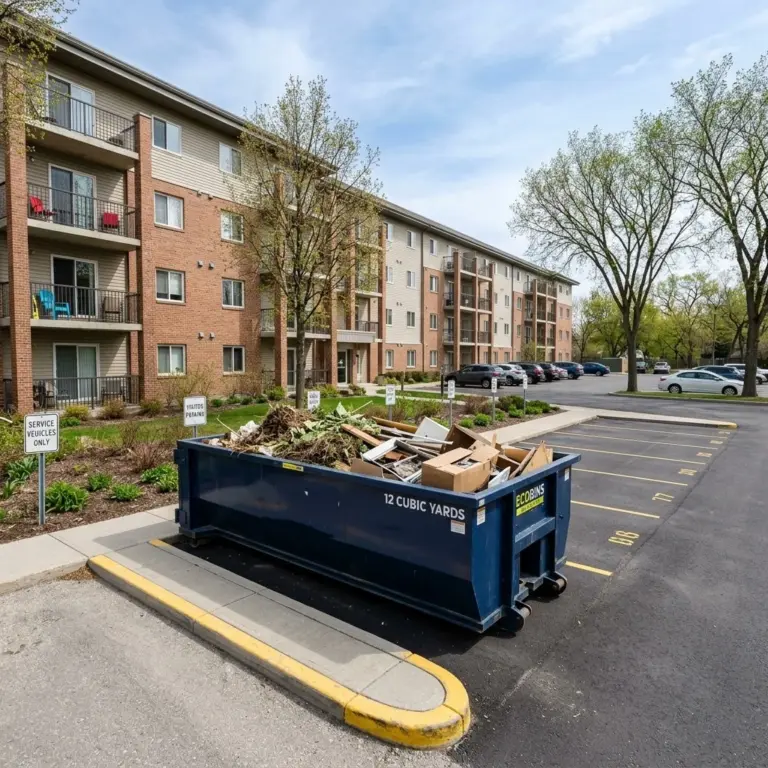
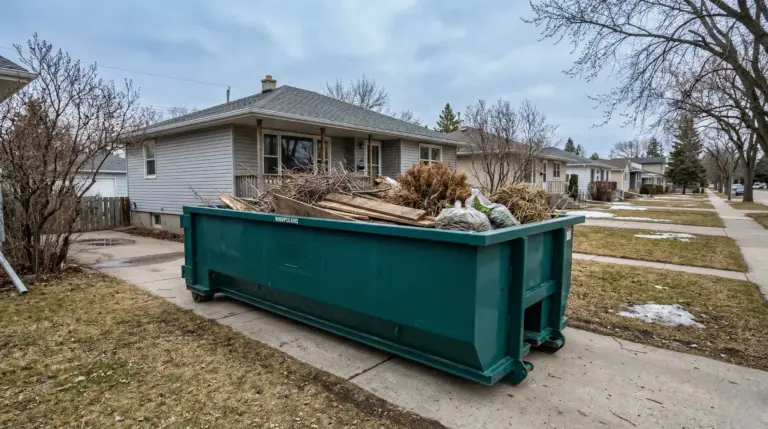
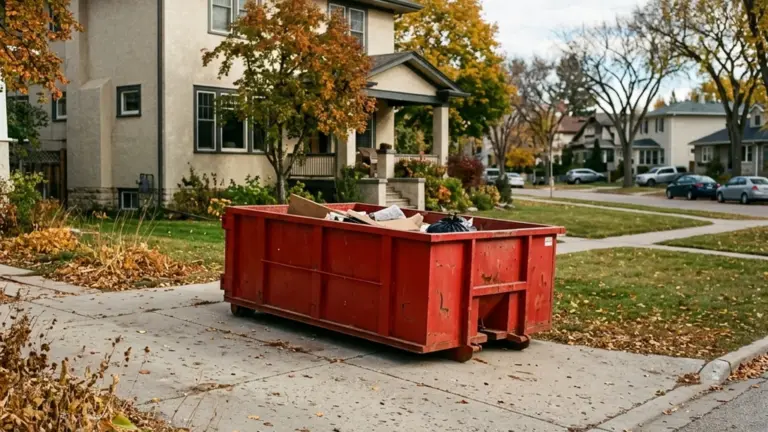
A rental bin is passive storage: it sits on your property while material accumulates over days. It is the right tool for construction debris that builds up gradually during a build phase. Cartage is active transport: a truck comes to the site, loads the material, and hauls it away — typically within a few hours. For large excavations where 100 to 200 cubic yards of material needs to leave the site in one day, cartage is the only practical option. See the Ecobins & Cartage cartage page for full service details.
Book Cartage Before Excavation Day
Call Ecobins & Cartage at (431) 317-8581 or visit ecobinsandcartage.ca/cartage-logistics to book cartage for your excavation. Have your project dimensions, excavation depth, and target date ready. For the outdoor build itself, Lawn ‘N’ Order builds sport courts, pools, and full outdoor projects across Winnipeg and can coordinate the cartage timing as part of the project schedule.
Book Cartage View Bin Options