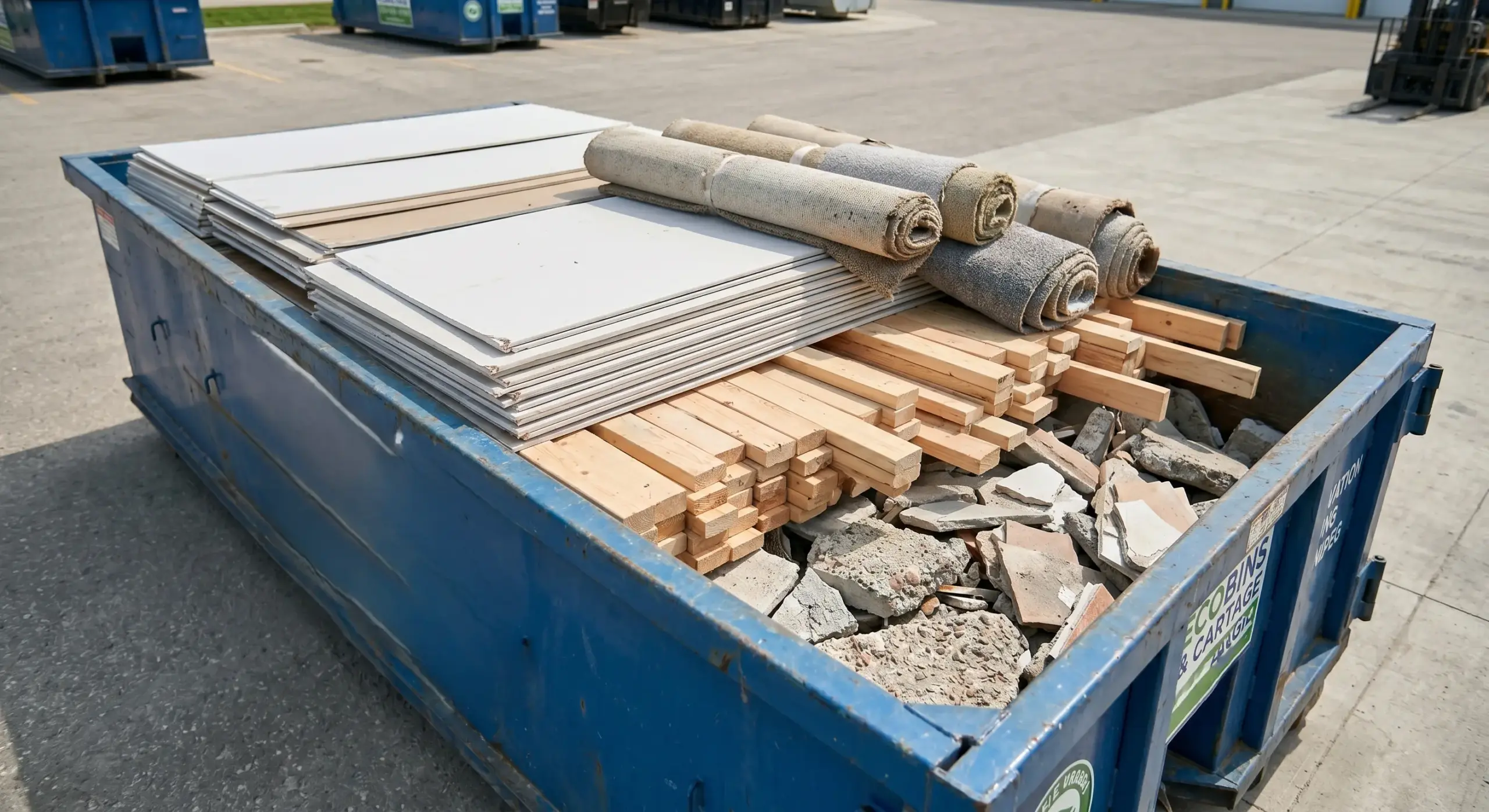
- Most renovation, construction, and cleanout debris is accepted in a standard Ecobins & Cartage rental bin
- Weight matters as much as volume — concrete, tile, and soil hit weight limits faster than they hit volume limits
- Hazardous materials, including paint, propane tanks, and asbestos-containing materials, cannot go in any standard rental bin
- Mixing material types is fine for most projects — you don’t need to sort drywall from lumber from carpet
- When in doubt, call Ecobins & Cartage before you load: (431) 317-8581. It’s easier to clarify upfront than to deal with a rejected load at pickup
Why This Question Comes Up
The most common call Ecobins & Cartage gets after a bin is delivered isn’t about sizing or scheduling. It’s “can I put this in?” A homeowner mid-cleanout, standing next to an old can of deck stain and wondering. A roofer who found some old insulation under the sheathing. A renovation crew that pulled up floor tile and noticed what might be a vinyl composite product from the 1970s.
The answers matter for two reasons. First, putting the wrong material in a bin can result in rejection at the disposal facility, which sends the bin back to your property and requires a separate disposal arrangement — an expensive and inconvenient outcome. Second, certain materials have specific environmental or legal disposal requirements in Manitoba that exist for good reasons.
This guide covers the full picture: what’s straightforwardly accepted, what requires a heads-up when booking, and what needs to go somewhere else entirely.
Materials That Are Straightforwardly Accepted
✓ Construction & Renovation Debris
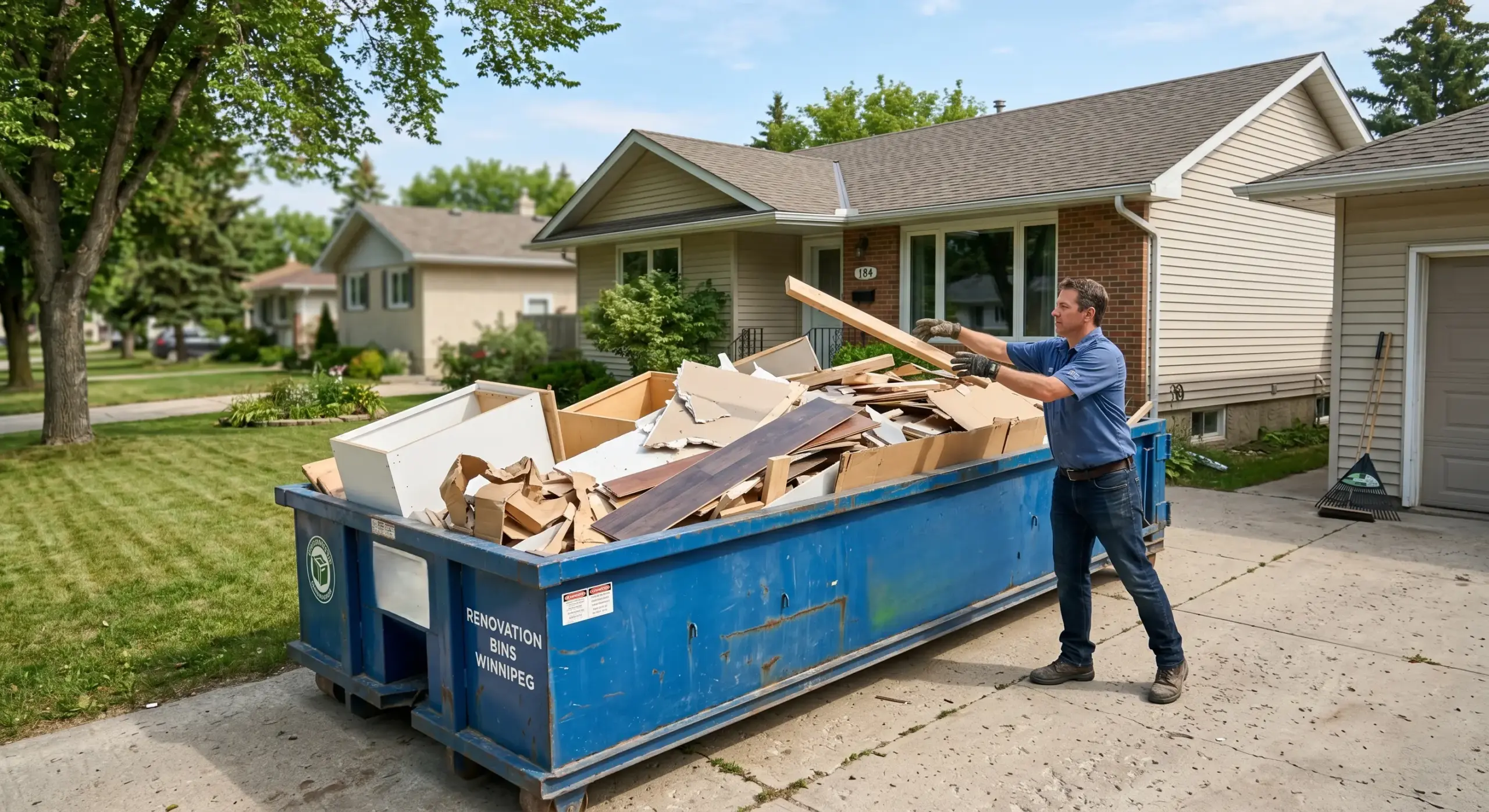
- Drywall and gypsum board — all types, painted or unpainted
- Lumber, dimensional framing, plywood, and engineered wood
- Flooring — hardwood, laminate, vinyl plank, carpet and underpad
- Cabinets, millwork, and trim
- Insulation — fibreglass batt, blown fibreglass, rigid foam board
- Windows and doors, including glass
- Roofing materials — asphalt shingles, underlayment, flashing, fascia
- Packaging — cardboard, foam, plastic wrap, boxes
- Metal — copper pipe, steel studs, galvanized ductwork, aluminum flashing
✓ Yard & Household Items
- Tree branches, brush, and storm debris
- Sod and organic yard waste
- Old landscape fabric, edging, and garden materials
- Deck lumber, fence boards, and posts
- Outdoor furniture and structures (wood, plastic, aluminum)
- Furniture — sofas, mattresses, chairs, bed frames
- General household goods and accumulated storage items
- Old tools and non-hazardous equipment
- Electronics — TVs, computers, small appliances (check for freon-containing units)
Materials Accepted with Conditions or Weight Considerations
Concrete, Brick, and Masonry
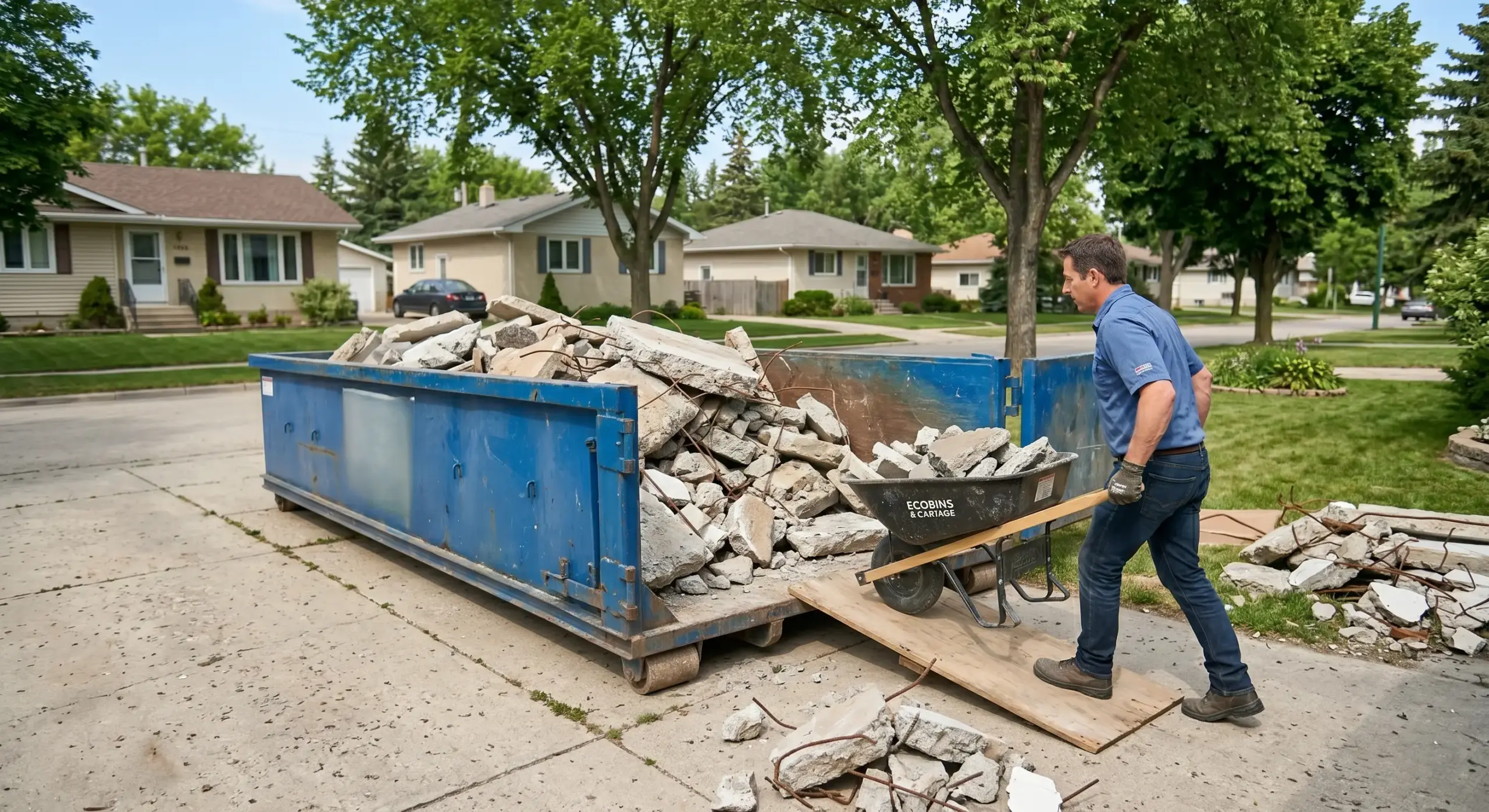
Concrete, brick, patio stones, and similar masonry are accepted — but they’re among the heaviest materials you can put in a bin. A cubic yard of broken concrete weighs roughly 2,000 to 2,700 lbs. A bin loaded exclusively with concrete can reach its weight limit when it’s visually only one-third to one-half full. If a significant portion of your load is concrete or masonry, mention it when booking. Ecobins & Cartage can advise on the right bin size and help you understand the weight implications before delivery. For large concrete demolition volumes, cartage — a direct haul by tandem or semi truck — is often more efficient than bin rental.
Soil and Aggregate
Soil, gravel, sand, and aggregate are accepted in moderate quantities mixed with other materials. A bin loaded predominantly with heavy soil or aggregate runs into the same weight-limit issue as concrete. If your project involves significant soil removal — say, a major garden bed rebuild or an excavated area — discuss the volume when booking.
Ceramic and Porcelain Tile
Tile is accepted but falls in the same weight-dense category as concrete. A full bathroom tile tearout — floor and wall tile in an average bathroom — can add 800 to 1,500 lbs to the load. Mixed with lighter materials (drywall, lumber), this is manageable. Bins loaded primarily with tile need the same weight consideration as concrete loads.
Appliances
Most appliances are accepted with one condition: refrigerators, freezers, air conditioners, and dehumidifiers contain refrigerants that must be removed by a certified technician before disposal. An appliance with an intact refrigerant charge cannot go in a standard bin or through standard disposal. Stoves, dishwashers, washers, dryers, and hot water tanks don’t have this restriction and are accepted as-is. If you’re not sure whether an appliance contains refrigerant, the presence of a compressor (the motor unit, usually at the back or bottom) is the indicator. When in doubt, call before loading.
Materials That Cannot Go in a Standard Rental Bin
No exceptions: These materials are not accepted in any Ecobins & Cartage rental bin and cannot be disposed of through standard waste channels in Manitoba. They require separate handling through Manitoba Hazardous Waste Management or designated collection programs.
Hazardous Materials
Paint, solvents, motor oil, propane tanks, batteries, and other household chemicals are the most common hazardous materials that cannot go in any standard rental bin — and they’re also the most commonly attempted. These materials are regulated under Manitoba’s household hazardous waste program and must be disposed of through designated channels.
| Hazardous Material | Why It Can’t Go in the Bin | Where It Goes Instead |
|---|---|---|
| Paint (latex and oil-based) | Toxic to soil and water; regulated disposal required | Green Action Centre drop-off or household hazardous waste events |
| Solvents, chemicals, cleaners | Toxic; reactive in landfill conditions | Manitoba Hazardous Waste Management facilities |
| Propane tanks and gas cylinders | Explosion risk during compaction | Propane retailers or cylinder exchange programs |
| Motor oil and automotive fluids | Soil and groundwater contamination risk | Canadian Tire, O’Reilly Auto, and other automotive retailers |
| Batteries (automotive and industrial) | Lead and acid; environmental regulations | Battery retailers and recycling depots |
| Pesticides and herbicides | Regulated hazardous waste | Manitoba Hazardous Waste drop-off events |
| Fire extinguishers | Pressurized disposal requires depressurization | Fire equipment servicing companies |
Asbestos-Containing Materials
This is the most critical material restriction for older Winnipeg properties. Asbestos was used in a range of building materials up through the early 1980s, including:
- Floor tiles (particularly 9×9-inch and 12×12-inch vinyl composite tiles, common before 1980)
- Pipe insulation and duct wrap in older mechanical systems
- Stipple ceiling texture (popcorn ceilings applied before 1980)
- Some roofing shingles and roofing compounds from the 1960s and 1970s
- Some drywall joint compound applied before the late 1970s
If your renovation involves a Winnipeg home built before 1985 and you encounter any of the above materials in a condition you’re not certain about, stop and have the material tested before disturbing it further. Asbestos abatement requires licensed contractors and specific disposal procedures. It cannot go in a rental bin, and disturbing it without proper precautions creates a health and legal liability. When in doubt, testing is inexpensive relative to the cost of remediation if disturbed material is mishandled.
Tires
Tires are not accepted in standard rental bins. Manitoba has a tire recycling program — most tire retailers accept old tires for a modest handling fee.
The Weight Question: Understanding Bin Limits
Every rental bin has two limits: volume (cubic yards of space) and weight (lbs of material). For most renovation debris — drywall, lumber, carpet, and cabinets — you hit the volume limit first. For dense materials such as concrete, tile, soil, and roofing shingles, you often hit the weight limit first. The bin may look partially full, but the load is at or near the maximum the truck can legally transport.
| Material | Approx. Weight per Cu Yd | Hits Weight Limit? |
|---|---|---|
| Drywall | 500–700 lbs | Usually no — volume limit first |
| Lumber and framing | 400–600 lbs | Usually no — volume limit first |
| Carpet and underpad | 200–400 lbs | No |
| Asphalt shingles | 1,500–2,000 lbs | Yes — often hits weight before volume |
| Ceramic tile | 1,800–2,200 lbs | Yes |
| Concrete (broken) | 2,000–2,700 lbs | Yes — typically limited to ⅓ full |
| Soil / aggregate | 2,200–2,800 lbs | Yes |
| Mixed renovation debris | 600–1,000 lbs avg | Typically volume limit first |
Practical Loading Tips
Heavy Material on the Bottom
Load heavy, dense material — concrete, tile, soil — at the bottom and in the middle. Light materials like lumber, drywall, and carpet fill around and on top. This distributes weight more evenly and allows you to pack lighter material into spaces around heavier items.
Break Down Large Items
Whole sheets of drywall, full deck boards, and intact cabinet carcasses take up disproportionate space relative to their mass. Breaking drywall into smaller pieces, cutting deck boards in half, and removing cabinet doors before tossing carcasses lets you fit more into the same volume.
Don’t Overfill
Material must sit at or below the top edge of the bin — nothing can extend above the rim for transport. Loose material that exceeds the bin height creates a load rejection risk and a road safety issue. If the bin is getting full, call Ecobins & Cartage to arrange a pickup and a second delivery rather than stacking above the rim.
FAQ: Bin Rental Materials in Winnipeg
Can I mix different types of material in the same bin?
Yes. Mixed loads are standard. You don’t need separate bins for drywall, lumber, and carpet. The only sorting requirement is removing hazardous materials — everything else from a renovation or cleanout can go in together.
What happens if I put something in the bin that isn’t accepted?
If a disposal facility identifies prohibited material during processing, the load may be rejected and returned. That means the bin comes back to your property with the material still in it, and you’re responsible for arranging separate disposal for the prohibited items before Ecobins & Cartage can pick it up again. Dealing with that upfront is considerably easier than dealing with it after.
Do I need to know exactly what’s in my load when I book?
No — a general description is enough. “Renovation debris from a kitchen gut” or “spring yard cleanout with some old deck lumber” gives Ecobins & Cartage what’s needed to confirm sizing and flag any material questions. If you’re dealing with a pre-1985 home and disturbing old materials, that’s worth mentioning specifically.
Can I add more material after the bin is picked up if I realize I’m not done?
You can arrange a second bin. Ecobins & Cartage handles multi-bin projects. Call when the first bin is ready for pickup and flag that you’ll need another. The turnaround time depends on scheduling, so calling ahead of your project end date gives more flexibility.
When in Doubt, Call Before You Load
Book online at ecobinsandcartage.ca or call (431) 317-8581 with your project details and any material questions. For large-volume projects requiring direct hauling rather than bin rental — significant concrete demolition, major excavation, bulk material removal — Ecobins & Cartage cartage service handles high-volume material transport with end-dump semis and tandem trucks.
Book Your Bin Learn More