Quick Takeaways
- Shingles are heavy—weight limits matter more than volume for roofing bins
- Most residential roofs (15-25 squares) fit in a 12-yard bin
- Multiple shingle layers double your disposal needs
- Position the bin close to the roof for efficient, safe loading
- 7-day rental typically covers a standard roofing project timeline
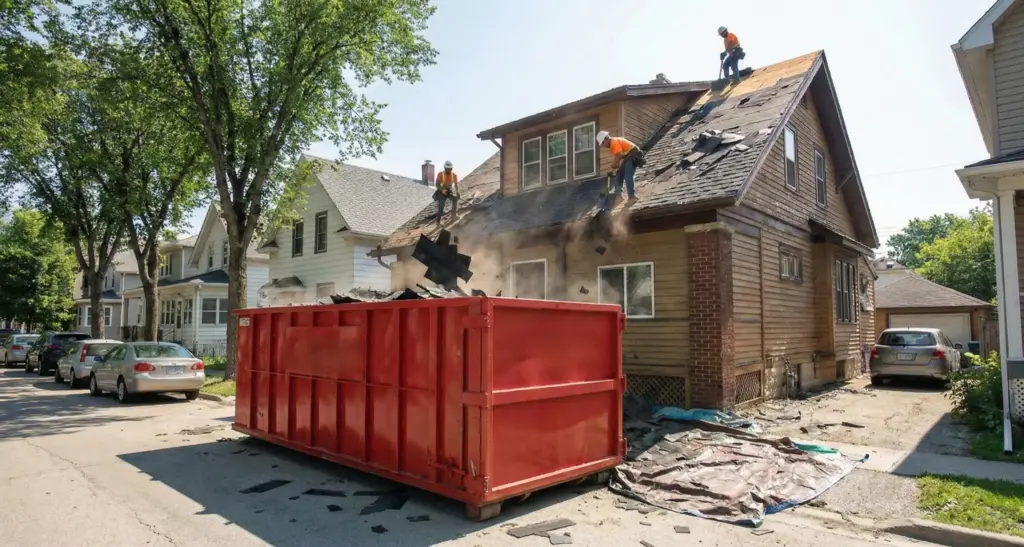
Roofing projects generate massive amounts of debris. Stripped shingles, tar paper, flashing, nails, damaged plywood—it adds up faster than most homeowners expect. Trying to haul it away in pickup trucks means endless trips to the dump and debris scattered across your property between runs.
A roofing bin keeps your jobsite clean and safe while eliminating the disposal headache. But choosing the wrong size leads to overfilled bins, extra fees, or paying for capacity you don’t need. Here’s how to get it right.
Why Roofing Projects Need a Dedicated Bin
Shingle Weight: Heavier Than You Think
Standard three-tab asphalt shingles produce approximately 2,400 pounds of waste per 1,000 square feet of roof. Heavier architectural shingles? That jumps to 4,200 pounds per 1,000 square feet.
This weight matters because bins have weight limits, not just volume limits. A bin that looks half-full might already be at capacity when loaded with dense roofing materials. Exceeding weight limits means extra fees, sometimes significant ones.
Safety: Keeping the Jobsite Clear
Roofing debris is hazardous. Exposed nails, broken shingles, and sharp flashing create injury risks for anyone walking the property. A bin positioned close to the work area lets crews dispose of materials immediately rather than piling debris on the ground.
How Do You Calculate the Right Bin Size for Roofing?
Understanding Roofing Squares
Roofing is measured in “squares.” One roofing square equals 100 square feet of roof area. A 2,000 square foot roof has 20 squares. This measurement determines both how many shingle bundles you need to buy and how much disposal capacity you’ll require.
If you know your roof’s total square footage, divide by 100 to get roofing squares. If you don’t know the exact measurement, your roofing contractor or material supplier can calculate it.
Single Layer vs. Multiple Layers
Here’s where calculations get tricky: if your roof has multiple layers of shingles, multiply your disposal needs accordingly. A 20-square roof with two layers of shingles produces the same debris as a 40-square single-layer roof. Checking for multiple layers before ordering your bin prevents the expensive surprise of running out of capacity mid-project.
What Size Bin for Different Roof Sizes?
At Ecobins & Cartage, we offer three bin rental sizes suited for roofing projects:
Ecobins Roofing Bin Sizes:
$250 for 7 days • ~10 roofing squares • Best for: Small repairs, garages, partial tear-offs
$275 for 7 days • 15-20 squares • Best for: Average residential homes (most popular)
$300 for 7 days • 25-30+ squares • Best for: Large homes, 2 layers of shingles
Additional days available at $10/day. Tipping fees apply for overweight loads.
12-Yard Bin: Average Home Roofing Projects
Most Winnipeg homes fall into the 15-25 roofing square range. The 12-yard bin at 12′ × 8′ × 4′ handles these standard residential projects comfortably. It’s our most popular size for roofing disposal.
If you’re right on the edge between bin sizes, the 12-yard is usually the safe choice. The modest price difference between 8 and 12-yard bins provides significant extra capacity.
What Goes in a Roofing Bin?
Accepted Materials
Standard roofing bins accept asphalt shingles (both three-tab and architectural), cedar shakes, metal roofing and flashing, tar paper and underlayment, damaged plywood and OSB, gutters and downspouts, and nails and fasteners mixed with other debris.
Materials with Restrictions
Some materials require special handling: asbestos-containing materials (common in roofs installed before 1980), spray foam insulation, solvents and liquid roofing tar, and items unrelated to the roofing project. If you suspect asbestos in your existing roofing materials, have them tested before starting demolition.
Tips for Loading Your Roofing Bin
Position for Direct Roof Access
Place the bin as close to the work area as possible. Ideally, roofers should be able to drop materials directly from the roof into the bin, or at minimum have a short path from the drop zone. The driveway is typically the best location, providing both access and a solid surface.
Distribute Weight Evenly
Load heavy materials evenly across the bin floor rather than piling in one area. Uneven loading can make bins difficult to transport. Start loading at the back and work toward the front, spreading material as you go. Keep materials level with or below the top edge of the bin.
Frequently Asked Questions
Can I put shingles in any bin, or do I need a special roofing bin?
Any of our standard bins can handle roofing materials. The key consideration is weight, not container type. Shingles are dense, so a bin that handles typical renovation debris may hit its weight limit before its volume capacity.
What if my bin fills up before the project is done?
Call us for a swap. We’ll pick up the full bin and deliver an empty one so your project keeps moving. Planning ahead by accurately estimating your roof size helps avoid mid-project swaps, but they’re a normal part of larger roofing jobs.
How do I know if my roof has multiple shingle layers?
Look at the roof edge near the eaves or check where shingles meet flashing. Multiple layers will be visible as stacked material. You can also examine areas where shingles are lifting or damaged. Your roofing contractor should verify this before starting work.
Can the bin damage my driveway?
We place wood boards under the bin’s contact points to distribute weight and protect your driveway surface. On hot days, asphalt driveways are more susceptible to marking, so we take extra precautions. Concrete driveways typically handle bin placement without issues.
What happens to the shingles after pickup?
Asphalt shingles are recyclable. The material gets processed and used in road construction and new asphalt production. Recycling diverts significant tonnage from landfills while providing valuable material for infrastructure projects.
Book Your Roofing Bin Today
At Ecobins & Cartage, we’ve served Winnipeg homeowners and contractors since 2004. Our 8, 12, and 20-yard bins handle roofing projects of any size, with same-day delivery often available and flexible scheduling to match your project timeline.
Contact Us Call: (431) 317-8581