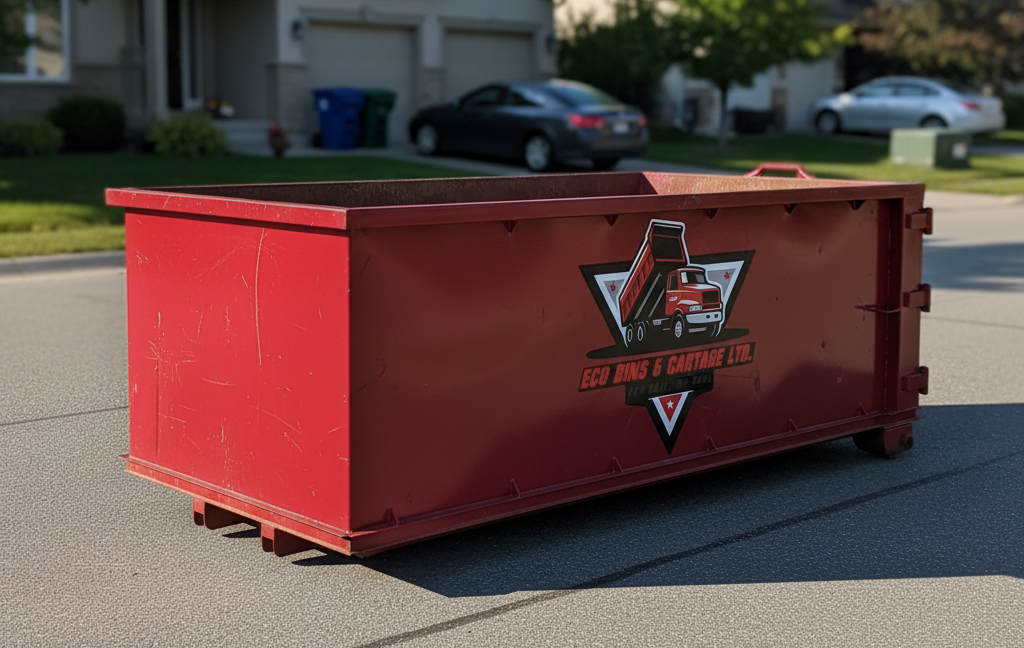
- Closeout waste is not one final cleanup. It is a sequence, and the heavy material usually leaves the site before the light material does.
- Excavated soil and broken concrete are priced by weight, not by how much room they take up. A half-full bin of clay can cost more to dispose of than a full bin of framing offcuts.
- Heavy material is capped by legal road weight, so a hauler will stop you filling a bin to the rim with soil or concrete. Plan for more trips, not bigger loads.
- Bulk excavated soil is usually a cartage job rather than a bin job. Bins suit mixed debris and staged trade waste.
- Settle who owns which waste stream between the general contractor, the subtrades and the owner before the last month, not during the handover walk.
Closeout Is a Phase, Not a Sweep
On most Winnipeg builds, the waste plan gets written for excavation and framing and then quietly runs out. By the time the project is three weeks from handover, there is no plan left, just a pile beside the trailer and a general contractor trying to get a bin on site at the same moment as the paving crew, the landscaper and the cleaning company. The construction waste disposal page covers what the bins take across a build; this post is about the last phase of one.
Closeout waste is different from the waste that came before it. It arrives in overlapping bursts from trades that are all finishing in the same two weeks. It includes material that has been sitting on site since excavation and was never dealt with. And it has a hard deadline, because the site has to be in a defensible condition on the day someone walks it with a clipboard.
This post is about planning that last phase as a contractor. If you are clearing an existing property rather than closing out a build, the commercial lot cleanup guide covers that situation, including what accumulates on a lot and the timing pressure before freeze-up.
The Weight Account
The single thing that catches contractors out at closeout is that disposal is billed by weight. Ecobins & Cartage charges $99 per tonne on the actual weight of the load, separate from the bin rental itself. For mixed construction debris, that is a modest line item. For soil and concrete, it is the main cost of the job.
Why Weight Beats Volume at Closeout
A cubic yard of mixed construction debris weighs a few hundred pounds. A cubic yard of broken concrete weighs about a ton. Same space, roughly five times the disposal bill. Estimators who budget closeout disposal on volume alone underbid it every time there is excavated material or demolition concrete still on site.
| Material | Approximate weight per cubic yard | Rough tipping cost per cubic yard at $99/tonne |
|---|---|---|
| Mixed construction and renovation debris | 350 to 500 lbs | $16 to $22 |
| Wood, framing offcuts, formwork | 300 to 500 lbs | $13 to $22 |
| Drywall and interior finishing waste | 400 to 600 lbs | $18 to $27 |
| Excavated topsoil, loose and dry | 2,000 to 2,400 lbs | $90 to $108 |
| Excavated clay, wet | 2,400 to 3,000 lbs | $108 to $135 |
| Broken concrete and masonry | 2,000 to 2,400 lbs | $90 to $108 |
| Broken asphalt | 1,900 to 2,300 lbs | $85 to $103 |
Treat these as budgeting figures, not quotes. Actual weight depends on moisture, how densely the material is loaded and how much soil is clinging to the rubble. Wet Red River clay sits at the top of the soil range and heavier again after a rain, which is why late-season excavated material almost always weighs more than the spring estimate assumed.
What That Looks Like on a Real Load
Ten cubic yards of wet excavated clay is roughly 26,000 lbs, or about 11.8 tonnes. At $99 per tonne that is approximately $1,170 in tipping fees, before the bin rental. The same bin filled with mixed interior finishing waste might run $350 to $450 in tipping. If your closeout budget carries one number for disposal, it is almost certainly the wrong number for one of those two loads.
Heavy Material Hits a Ceiling Before the Bin Is Full
A bin has a volume capacity and the truck carrying it has a legal road weight. With concrete or soil, the truck limit arrives first. That means a hauler will tell you to load heavy material low and flat rather than to the rim, and it means a given quantity of concrete takes more trips than the cubic yards suggest. Build that into the closeout schedule rather than discovering it on the morning the driver refuses an overloaded bin.
One timing note that does not apply to a fall closeout but does to a spring one: Manitoba applies seasonal road weight restrictions during the spring thaw, which can reduce how much weight a hauler may legally move on affected routes. If your heavy material is leaving in fall, this is not your problem. If the project carries into spring, confirm it when you book.
Match the Hauling to the Construction Schedule
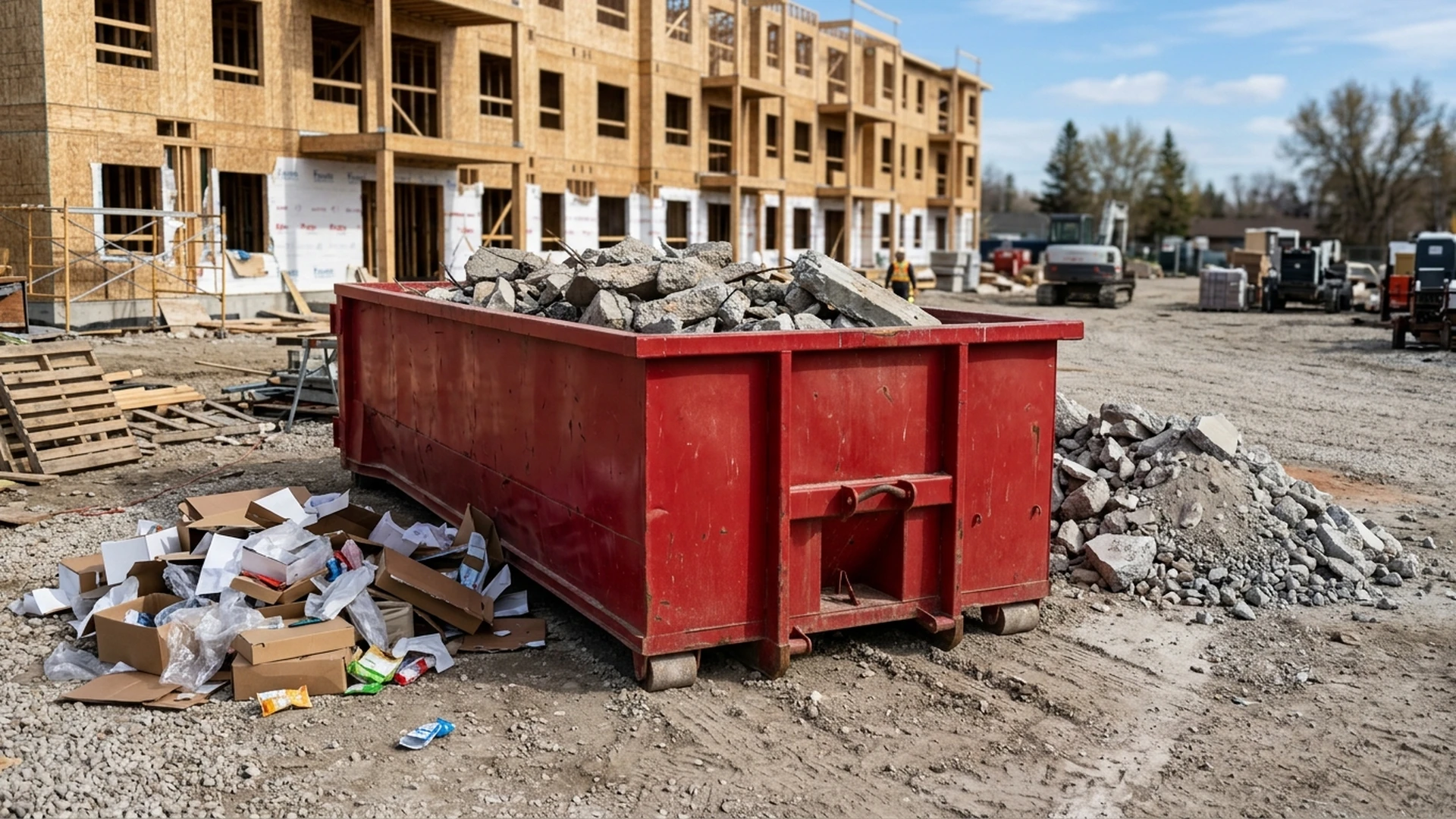
Phased hauling is the difference between a closeout that runs clean and one where three trades are working around the same pile. The principle is simple: heavy and bulky material leaves first, while there is still access and before the finished surfaces go in; light trade waste leaves in cycles as each trade finishes; the final sweep is small and fast.
| Stage | What comes off the site | How it usually leaves |
|---|---|---|
| Excavation and backfill complete | Surplus excavated soil, rock, stumps | Cartage, by the load |
| Demolition or hardscape removal complete | Concrete, masonry, asphalt | Dedicated heavy load, loaded low |
| Structure and envelope complete | Formwork, framing offcuts, packaging, pallets | Bin, cycled as it fills |
| Interior trades finishing | Drywall, flooring offcuts, fixture packaging | Bin, cycled as it fills |
| Landscape and paving | Pallets, banding, surplus aggregate, trimmings | Bin or cartage depending on volume |
| Final clean | Protection materials, site office waste, last sweep | Final bin pull |
Bulk excavated soil is the one to separate out in your head. Once you are moving material by the truckload rather than the bin load, it stops being a bin rental question and becomes a cartage and hauling question, with end-dump trailers and tandems instead of roll-off bins. Those are quoted separately. Trying to move a building pad’s worth of surplus clay through roll-off bins is slow and expensive. For where the line between the two sits, see when you need more than a bin.
Swap-Out Cycling
The thing that actually keeps a closeout moving is cycling bins out while the next trade works, rather than holding one bin and hoping it lasts. A full bin sitting on site is not storage, it is a stopped trade.
Three practical points for the last month of a build:
- Book the swap before the bin is full. Scheduling an exchange on the day a trade is overflowing means that trade loses the morning. Trades finishing in parallel generate waste faster than anyone predicts, so plan the swap a day early rather than a day late.
- Rental time is a cost, not a buffer. Each bin includes seven days, with additional days at $10 per day. A bin that sits half-full for three weeks because nobody called for the pull is paying rent to do nothing. In a phased plan, bins arrive, fill and leave.
- Keep the heavy load separate from the cycling bins. If concrete goes into the same bin the drywall crew is using, you lose the ability to route clean material anywhere other than landfill, and the weight will cut the usable volume for everyone else. Clean separated concrete can sometimes be routed to a crushing facility rather than landfill. Ask when you book, because it depends on the load being genuinely clean. The concrete and brick disposal guide covers where that material goes and how the weight is handled.
Site Condition Before the Handover Walk
Whoever walks the site at handover is not auditing your waste plan. They are looking at whether the site reads as finished. The things that most often fail that test at closeout are not the big pile, which everyone remembers, but the residue around the edges of it.
- Material staged behind the building or down the side, out of the sightline from the entrance but not out of the sightline from the walk
- Pallets, banding and crate lumber from the last deliveries, which arrive after most people consider the waste plan finished
- The ground where the bin sat, especially if it sat on a finished surface or on soft ground that rutted
- Soil and aggregate tracked onto new paving or sidewalks by the last loads leaving
- Small quantities of material nobody owns, which is usually the stuff that does not belong in a bin at all
The practical move is to schedule the final pull before the final clean, not after. If the last bin leaves on the same day the cleaners finish, the ground where it sat is the one spot nobody addressed.
Who Owns the Waste
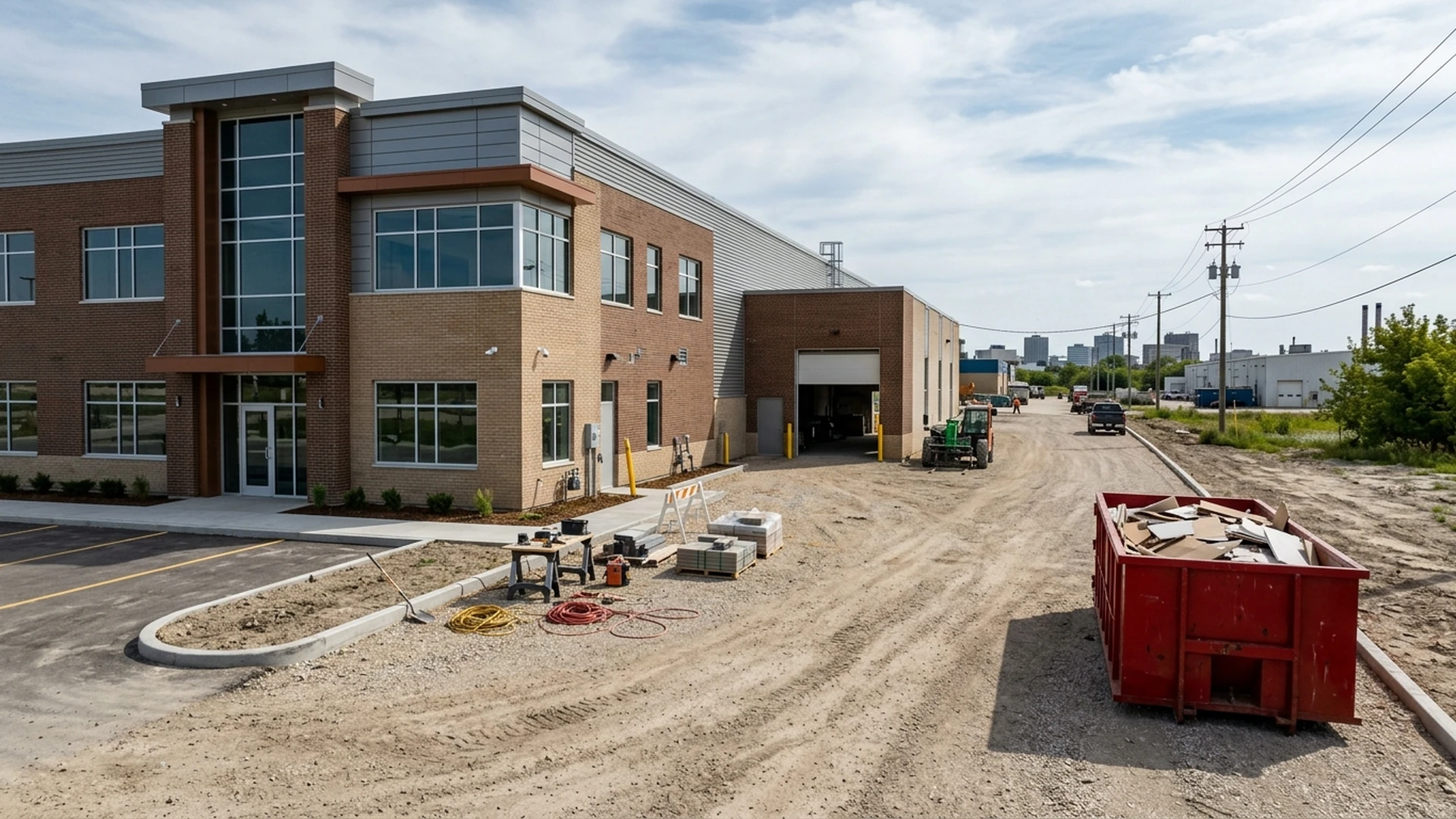
Responsibility for closeout waste is often assumed rather than written, which is why it becomes an argument in the last two weeks. Three splits are worth settling in advance.
General Contractor and Subtrades
Subcontracts frequently require each trade to remove their own waste, and just as frequently that obligation goes unenforced because the general contractor has a bin on site and it is easier to let everyone use it. That is a workable arrangement as long as it is the arrangement, and the general contractor’s own disposal budget accounts for the volume. It becomes a problem when the contract says one thing and the site does another, and the tipping invoice at the end does not match anybody’s estimate.
General Contractor and Owner
Owner-supplied material, owner-directed changes and anything that was on site before the contractor arrived are the usual grey areas. Material that predates the project, particularly anything that might be regulated, is worth identifying and assigning in writing early, because discovering it during closeout gives you no time to deal with it properly.
Anything Regulated
Regulated material does not become a general waste question just because the project is nearly finished. Asbestos-containing material cannot go in a standard bin and requires licensed handling. Paints, chemicals, batteries, propane cylinders and tires are not accepted either. The construction waste disposal guide covers what is and is not accepted in detail.
A Note on Sizing and Placement
This post deliberately does not re-cover which bin size to order or where to put it on site. Both are covered already: choosing a bin size walks through the 8, 12 and 20 yard options, and the commercial lot cleanup guide covers placement on a commercial site. The closeout question is not what size, it is how many and in what order.
FAQ: Job Site Closeout in Winnipeg
Should we keep one bin on site for the whole closeout?
Usually not. One bin held for a month costs rental time it is not earning, and it will be full at the wrong moment. Cycling smaller loads matched to each trade’s finish date generally moves faster and costs less, because you are paying for hauling you actually used rather than rental days you did not.
Can excavated soil go in a regular bin?
Small quantities, yes. Bulk quantities, no, and not because of the material but because of the weight and the number of trips. Once there is a building pad’s worth of surplus soil, cartage by the truckload is the right service. Ask for both quotes if you are not sure which side of the line you are on.
How do we estimate disposal cost before the material exists?
Estimate it in two parts. Light trade waste can be estimated on volume, because the weight follows the volume fairly predictably. Heavy material has to be estimated on weight, from the quantity of concrete being removed or the cubic metres of soil the excavation drawings show as surplus. Combining both into a single per-bin allowance is where closeout disposal budgets go wrong.
When should we book the closeout hauling?
As soon as the finishing schedule is set, not when the waste appears. Late fall is the tightest window in Winnipeg, because every site in the city is trying to finish ground work before freeze-up at the same time. A confirmed schedule is worth more than a flexible one in October.
Plan Your Closeout Hauling
Ecobins & Cartage runs 8, 12 and 20 yard bins for Winnipeg job sites, with cartage available separately for bulk material. If you are mapping out the last phase of a build, call with your finishing schedule rather than your bin size and we will work out the sequence with you. See construction waste disposal for what the bins take, current bin rental rates, or ask about cartage for bulk loads.