- The thing that separates deck demolition from every other backyard teardown is that a deck is attached to the house, which means the wall behind it becomes your problem the moment the deck comes off
- The ledger board is bolted through to the house structure, and behind it there should be flashing. What you find when you pull it off determines whether this is a demolition or the start of a wall repair.
- A half-finished deck demolition going into winter isn’t just untidy. It leaves house wall exposed, which is a materially worse outcome than a half-finished shed.
- Composite and PVC decking is a separate material stream from pressure-treated wood and doesn’t get handled the same way
- If the deck is being rebuilt, work the timeline backward from the builder’s schedule, not just from freeze-up
A Deck Is Attached to Your House
Shed demolition is a freestanding problem. Fence removal is a linear one. A deck is neither, because one edge of it is bolted to the side of your home.
That single fact changes the project. It changes what you find when the structure comes off, it changes what “finished” means, and it changes what happens if the work stalls partway through.
The Ledger Board and What’s Behind It
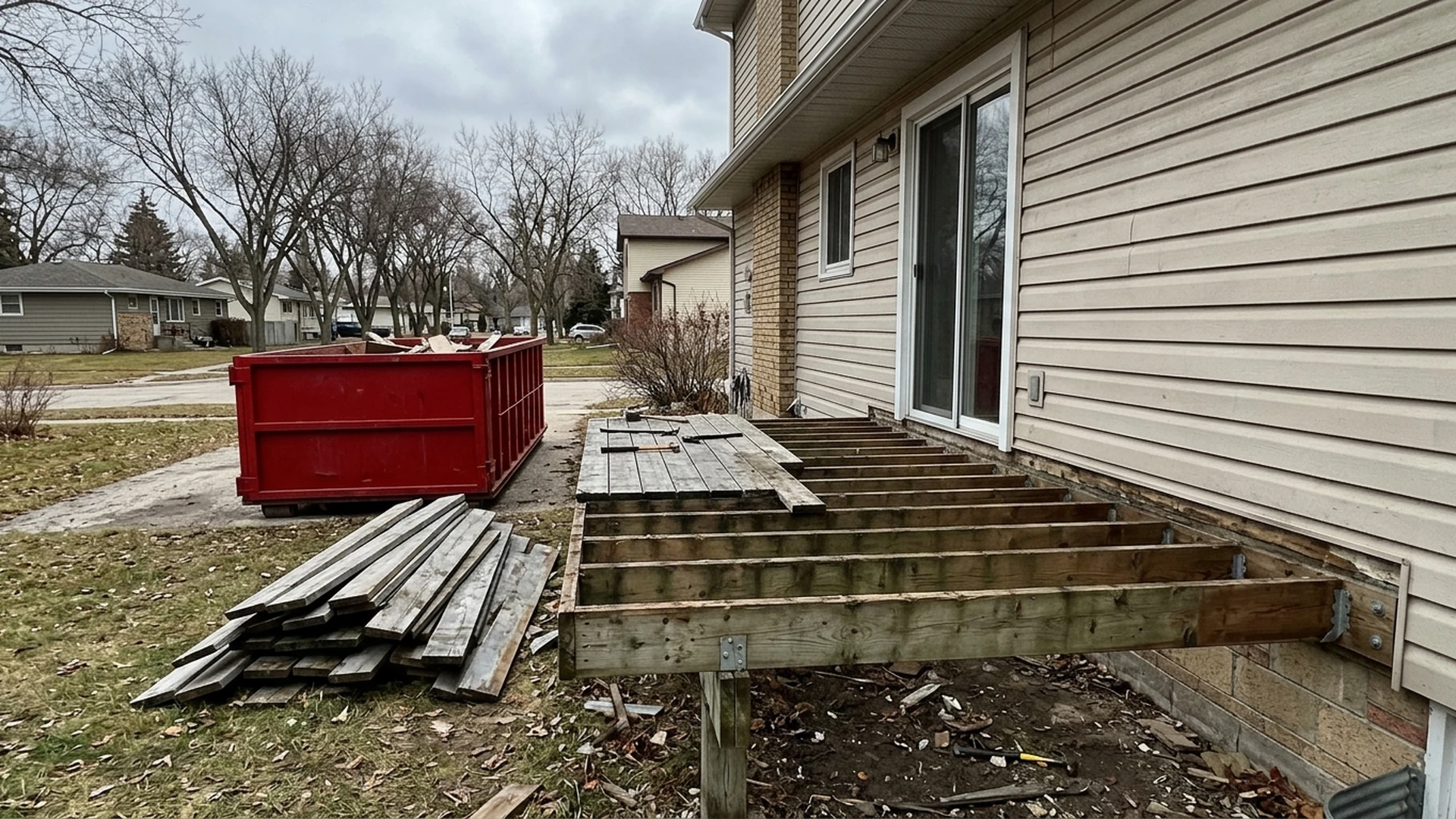
A deck attaches to the house through a ledger board, a horizontal board bolted through the house rim joist that carries one edge of the deck framing.
What You Should Find
Behind a correctly built ledger there should be flashing: a metal or membrane barrier that directs water away from the wall rather than letting it sit against the sheathing. Done right, the ledger is bolted through with proper fasteners into structure, and the flashing has kept the wall dry for the life of the deck.
What You Might Find Instead
Older decks, and particularly DIY builds, frequently have no flashing at all, or flashing that was installed incorrectly. In that case water has been running behind the ledger and sitting against the sheathing for years, and removal is when you find out what that did.
Rot in the rim joist or sheathing behind a ledger is common enough that it’s worth planning for the possibility rather than being surprised by it. If it turns up, the project has changed from a demolition into a repair, and that repair is structural rather than cosmetic.
Why This Affects Your Timeline
The discovery happens partway through demolition, which is the worst possible moment to learn the scope has grown. Building in schedule margin for it, and knowing in advance who you’d call if you find rot, turns a project-stopping surprise into a manageable delay.
The Wall After the Deck Is Gone
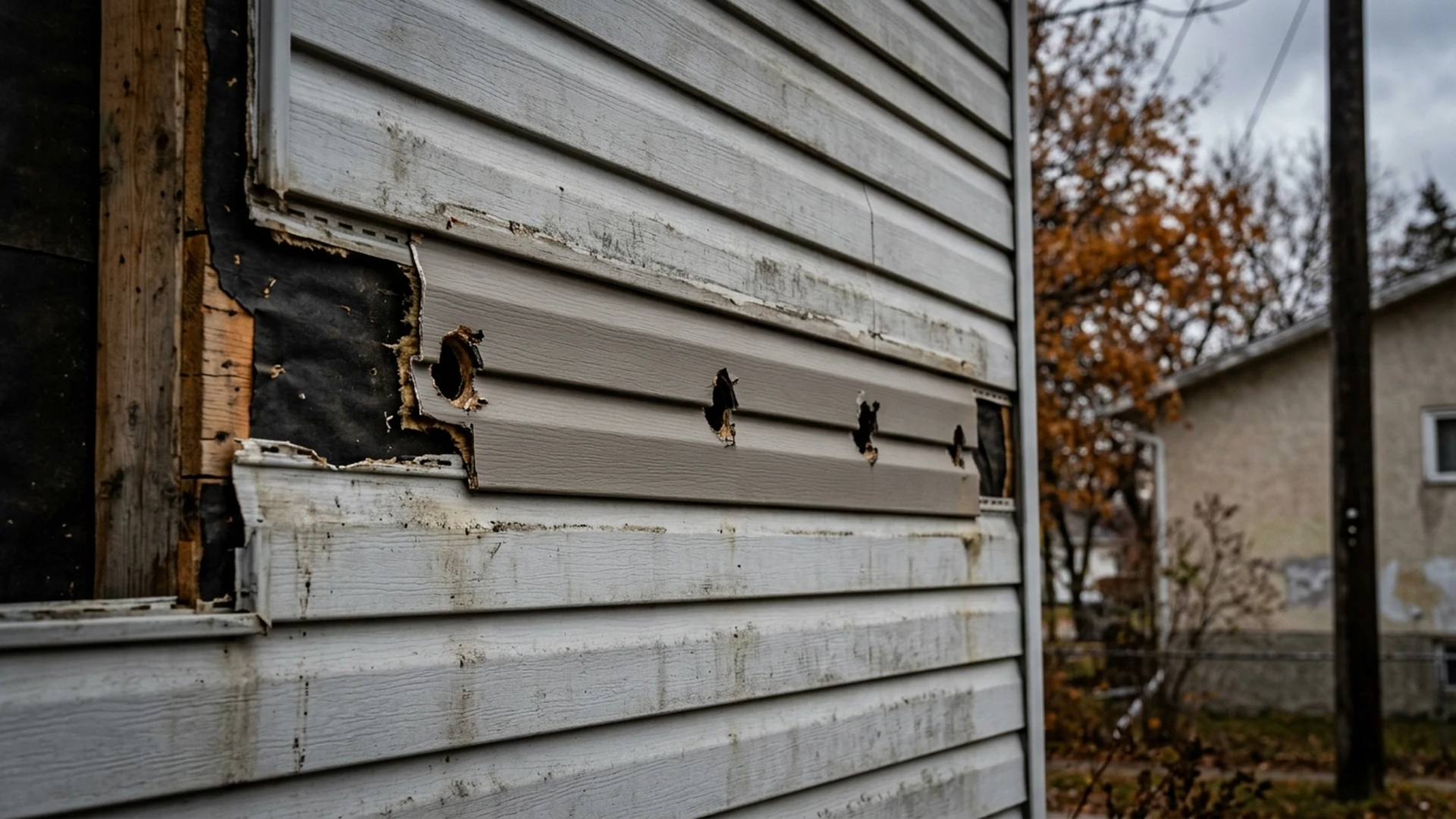
When the deck comes off, the wall behind it has been protected from weather and sunlight for as long as the deck has existed. Removing the deck exposes it, and it won’t match.
- Bolt holes through the siding and sheathing where the ledger was fastened. These are direct water paths into the wall and cannot be left open through a winter.
- Siding that was cut around the deck structure, leaving gaps and edges that were never meant to be seen
- Colour and weathering difference between the protected area and the rest of the wall
- Any flashing that needs to be removed or, if the area is staying exposed, properly terminated
On a deck that’s being replaced, much of this gets covered by the new structure, though the bolt holes and any rot still need proper attention before the new ledger goes on. On a deck being removed permanently, the wall repair is a real part of the project rather than an afterthought.
Why a Half-Finished Deck Demolition Is Worse
With a shed, stopping partway through leaves an untidy yard. With a deck, stopping partway leaves your house open.
A demolition that gets the decking and framing off but doesn’t get to the ledger, the bolt holes, and the wall means going into a Winnipeg winter with fastener penetrations through the sheathing and siding gaps that were previously covered. Winter drives moisture into exactly those openings, and freeze-thaw works it deeper.
The practical rule: if you start, plan to get the wall closed up in the same push. If the season doesn’t have room for that, the better decision is to leave the deck standing for one more winter.
The freeze-up constraint on the footings and below-grade work is the same one covered in our shed demolition timing guide. Concrete and buried footings need workable ground, and once Winnipeg’s clay locks up that part of the job stops being practical.
Two Different Material Streams
Pressure-Treated Wood
Most deck framing and a lot of older decking is pressure-treated. The handling rules are the same as for a fence or shed: it cannot be burned, it shouldn’t be chipped or composted, and bin disposal is the route. See our fence removal waste guide for the detail on treated lumber, which applies here unchanged.
Composite and PVC Decking
Composite and PVC boards are a genuinely different material. They’re a wood-plastic or all-plastic product rather than lumber, which means they don’t behave like wood in disposal terms and shouldn’t be assumed to go the same route.
Practical points for a composite deck teardown:
- Composite boards are heavier per square foot than wood decking, which affects the load weight more than people expect
- They don’t break down or compress in a bin the way wood does, so they take volume
- The framing underneath is usually still pressure-treated wood even when the surface is composite, so most composite decks generate both material streams
- Mention composite decking when you book so Ecobins & Cartage can confirm current handling for your load
Sizing a Bin for a Deck
Deck teardowns have a different volume profile than sheds or fences. The deck surface itself is a large area of relatively thin material; the railings and stairs are where the volume hides.
| Deck Scope | Typical Bin | Notes |
|---|---|---|
| Small deck, under roughly 100 sq ft, no stairs | 8 to 12-yard | Decking, framing, minimal railing |
| Standard deck, 100 to 300 sq ft with railings and stairs | 12 to 20-yard | Railings and stairs add substantial volume |
| Large or multi-level deck | 20-yard, possibly with an exchange | Multi-level adds framing volume fast |
| Any deck with concrete footings coming out | Discuss weight at booking | Footings drive tipping fees by weight |
Two things that make a real difference to how much fits: breaking the deck down rather than loading sections intact, and pulling railings apart rather than bin-ing them assembled. Assembled railing sections are mostly air.
Footing weight works the same way it does on a fence teardown, compact, heavy, and charged by scale weight rather than volume. See our fence removal waste guide for how footings affect the load, and our bin sizing guide for general sizing.
If the Deck Is Being Replaced
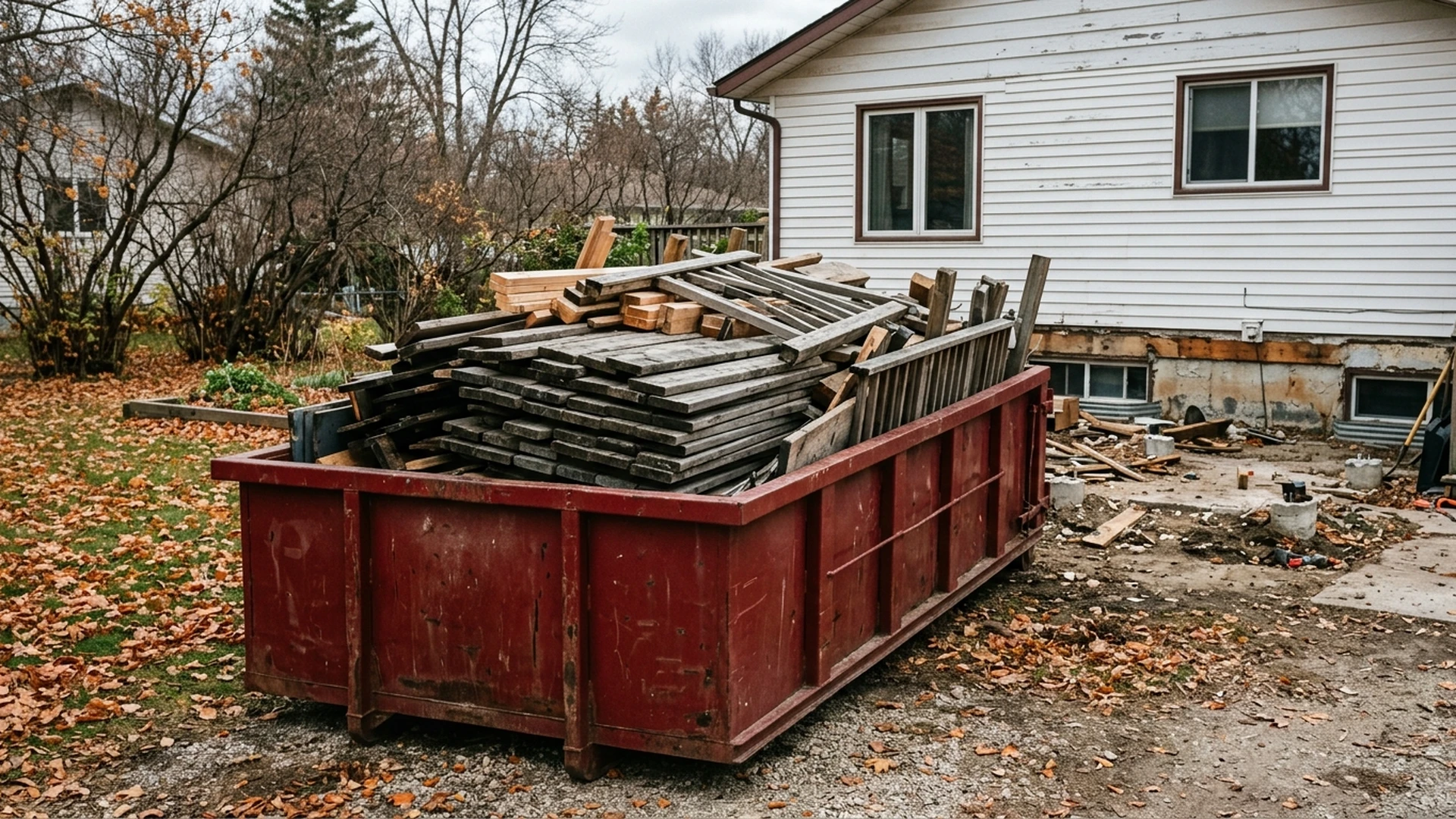
Most deck demolitions in Winnipeg are the first half of a rebuild rather than a permanent removal, and that changes the scheduling problem.
The timeline works backward from the builder, not just from freeze-up:
The builder needs the site clear and, usually, new footings in before the ground freezes
Old footings often have to come out because new post positions rarely match old ones exactly
The ledger area needs to be inspected and any rot addressed before new framing goes on. This is the step that most often causes a rebuild schedule to slip.
Confirm with the builder who is handling demolition; some include it, some expect a clear site on day one
If the rebuild is happening next spring rather than this fall, the sequencing question is whether to demolish now or wait. Demolishing now means a winter with an exposed and repaired wall, which is fine if the wall is properly closed up, and a problem if it isn’t.
Who Does the Work
Ecobins & Cartage provides the bin and hauls the material away. The demolition itself is the homeowner’s project or their contractor’s.
A ground-level deck in sound condition is a manageable DIY teardown. Where a contractor is the better call: elevated decks, anything multi-level, decks in poor structural condition where the teardown sequence matters for safety, and any situation where the wall repair behind the ledger needs to be done properly.
FAQ: Deck Demolition in Winnipeg
Can I leave the ledger board on the house?
Not if the deck isn’t being rebuilt in the same position. A ledger left bolted to the wall with nothing attached to it holds water against the siding and serves no purpose. If the deck is being rebuilt immediately and the ledger is sound, leaving it can make sense, but that’s a decision to confirm with whoever is building the new deck, since they’ll want to verify the fasteners and flashing themselves.
Do I need a permit to remove a deck?
Demolition permit requirements depend on the structure and the scope of work. Since removal often involves the house wall and the rebuild almost certainly needs a permit, confirm requirements with the City of Winnipeg for your specific project rather than assuming removal is exempt.
What do I do if I find rot behind the ledger?
Stop and assess before continuing. Rot in a rim joist or sheathing is structural and needs to be addressed properly, not covered up by new construction. This is the point to bring in a contractor if you were doing the teardown yourself, because the repair scope is different from demolition.
Book a Bin for Your Deck Removal
Describe the deck size, whether it’s wood or composite, and whether concrete footings are coming out, so Ecobins & Cartage can recommend the right bin and confirm material handling.
Book a Bin Online Call (431) 317-8581