- Anything left on a commercial lot when the snow arrives stays there until spring. It gets buried, plowed into, or becomes an obstacle the snow crew has to work around all season.
- The deadline isn’t the first snowfall, it’s the first snowfall that stays, and in Winnipeg that’s less predictable than the calendar suggests
- Debris left in a lot creates real problems for snow operations. Hidden obstacles damage equipment, and material frozen into ice is worse to deal with in March than in October.
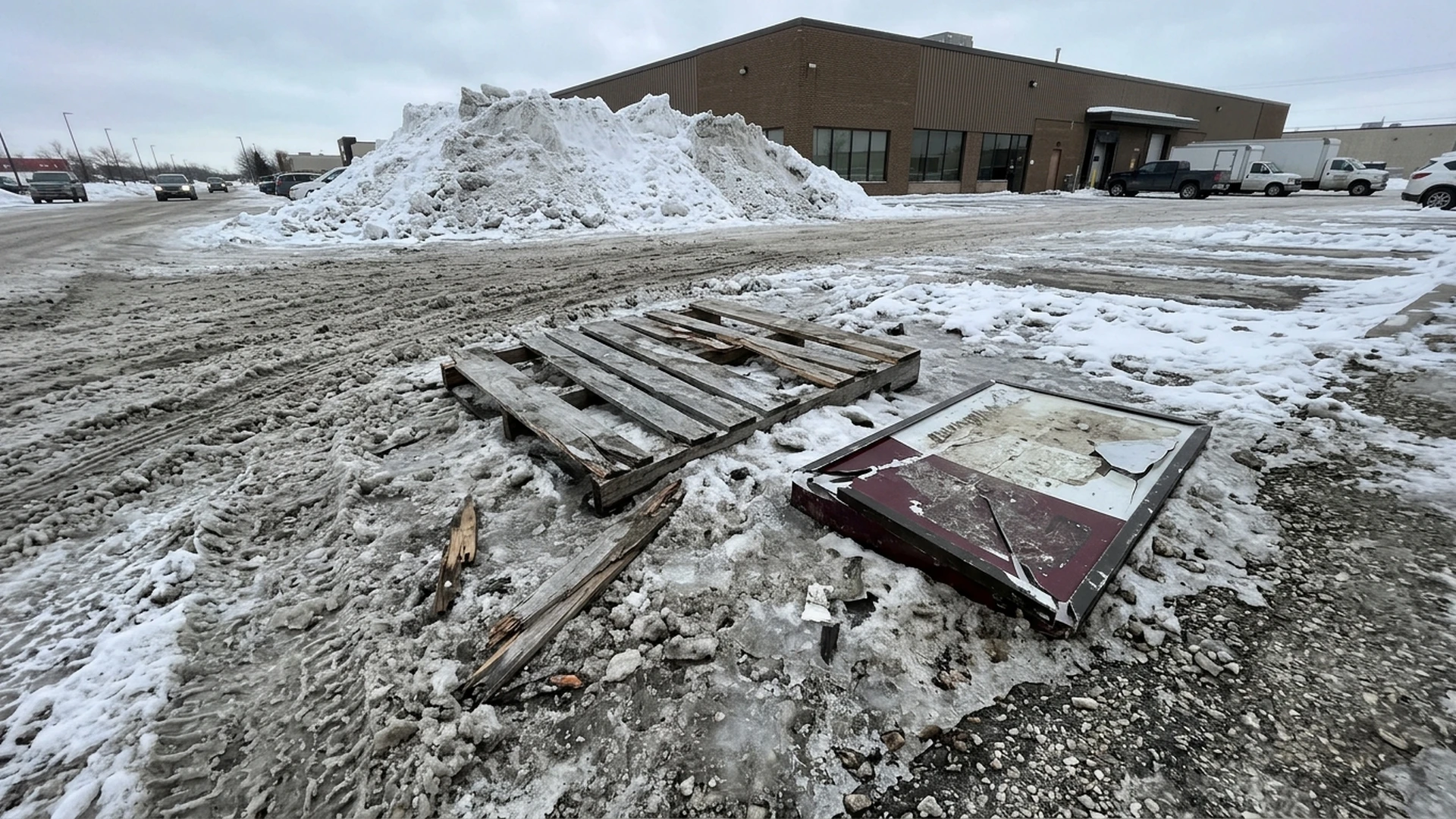
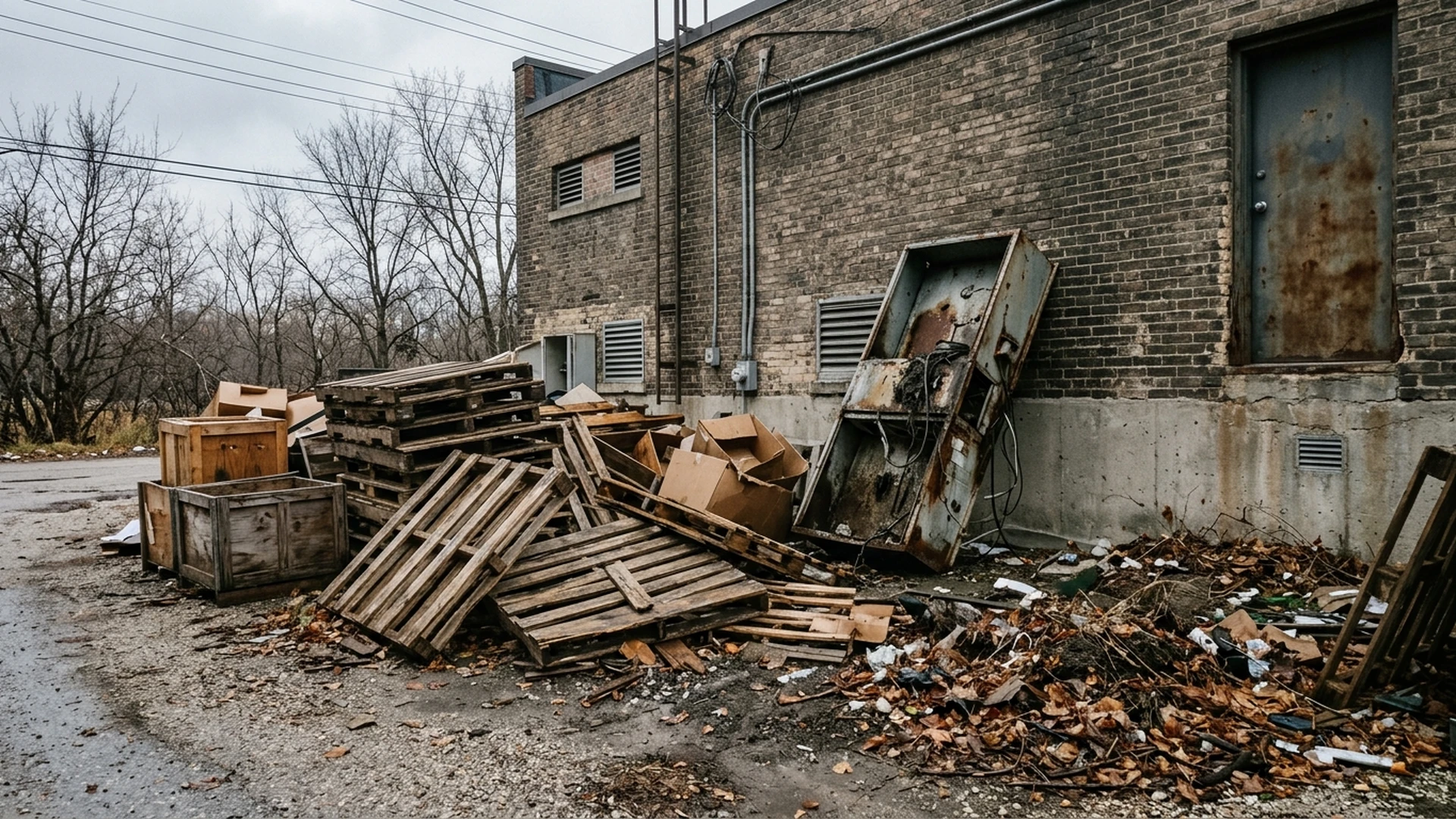
- The most commonly overlooked items are the ones that have been there long enough to stop being visible: pallets behind the building, an old sign, accumulated material at the back of the lot
- A pre-winter clearing pass is also the last practical chance to deal with anything requiring ground access before freeze-up
The Deadline Is Real
Residential cleanups have some flexibility. A pile of material in a backyard through winter is untidy but not consequential. On a commercial lot it’s different, because the lot has to function through the winter and anything on it interferes with that.
What’s sitting in the lot when the snow arrives doesn’t get dealt with until spring. It gets buried, it gets hit by a plow, or it becomes a permanent obstacle the snow crew navigates around for four months, which affects how well they can actually clear the site.

What Accumulates on a Commercial Lot
Commercial properties collect material in a way that’s easy to miss because it happens gradually and usually at the edges of the site.
- Pallets and shipping material behind the building or beside the loading area
- Old signage, fixtures, and display material from tenant turnover or rebranding
- Broken parking blocks, damaged bollards, and displaced curb sections
- Construction and renovation leftovers from work completed earlier in the year
- Accumulated yard waste from landscaped areas, particularly where beds meet parking
- Abandoned items: shopping carts, furniture, tires, and whatever gets left in a lot that isn’t monitored closely
- Damaged equipment or fixtures that were set aside to deal with later
The pattern is that material collects where nobody looks, and a pre-winter walk of the full site perimeter usually turns up more than expected.
Why It Matters for Snow Operations
The strongest argument for clearing before winter isn’t tidiness, it’s that debris and snow clearing interact badly.
Hidden Obstacles
Once there’s snow cover, anything left in the lot is invisible. A plow blade meeting a parking block that’s been sitting displaced since September damages the equipment, the block, and potentially the pavement. The snow crew doesn’t know it’s there.
Material Frozen In Place
Debris left through a Winnipeg winter freezes into the ice layer at the bottom of a plowed lot. What would have been a straightforward pickup in October becomes a chiselling job in March, and often it stays until full melt.
Snow Storage Capacity
Material sitting in the areas where snow would otherwise be piled reduces the site’s storage capacity before the season even starts. On a lot where storage is already tight, that pushes the hauling threshold earlier and costs more over the winter.
For how snow hauling works once on-site storage runs out, see the snow hauling guide from our sister company Ditchfield.
Timing the Clearing Pass
The practical deadline is the first snowfall that doesn’t melt off, which in Winnipeg is less predictable than the calendar implies. Working backward, a clearing pass completed by mid-to-late October leaves reasonable margin in most years.
A second consideration: anything requiring ground access, digging out a post, removing a footing, addressing a damaged bollard base, needs unfrozen ground. That work has an earlier deadline than simply picking material up off the surface.
Bin Sizing for a Commercial Clearing Pass
Commercial lot cleanup is usually a volume problem rather than a weight problem, since much of what accumulates is bulky and light: pallets, signage, fixtures, yard waste. The exception is anything involving concrete, which changes the calculation.
| Scope | Typical Bin | Notes |
|---|---|---|
| Single-tenant lot, routine accumulation | 12-yard | Pallets, general debris, light fixtures |
| Multi-tenant property or larger site | 20-yard | More area, more accumulation points |
| Includes concrete: broken parking blocks, curb sections, footings | 20-yard, weight discussed at booking | Concrete drives tipping fees by weight |
| Large site or multiple buildings | 20-yard with exchange, or multiple bins | Discuss staging when booking |
For commercial roll-off service generally, including site access, placement on a working lot, and scheduling around business hours, see our commercial bin rental guide. For sizing across project types, see our bin sizing guide.
Placement During a Clearing Pass
A clearing pass has a placement advantage over most commercial bin projects: the work happens across the whole site rather than at one point, so the bin can go wherever it’s least disruptive rather than needing to be adjacent to the work.
Worth confirming before delivery:
- A location that doesn’t block customer or tenant parking during business hours
- Truck access clearance for delivery and pickup, particularly for a 20-yard bin
- Plywood under contact points if the lot is asphalt and the weather is still warm
- Confirmation with property management if the lot is shared with other tenants
What Can’t Go In
Commercial lots tend to accumulate a few categories that need separate handling:
- Tires, which are common in lots and are not accepted in a general bin
- Batteries, including vehicle batteries left behind
- Paint, solvents, and chemicals from tenant operations or maintenance
- Propane tanks
- Appliances containing refrigerants, which need certified recovery first
Sort these into a separate pile at the start of the pass rather than discovering them mid-load.
For appliance handling specifically, including which units qualify for free pickup, see our appliance disposal guide.
A Pre-Winter Walk
Before booking, walk the full site including the areas nobody normally looks at:
- The full perimeter, including behind the building and along fence lines
- Loading and service areas
- The back of the lot and any overflow parking
- Landscaped areas where beds meet pavement
- Anywhere material was set aside during the year to deal with later
Note anything requiring ground access separately, since that portion has the earlier deadline.
FAQ: Commercial Lot Cleanup in Winnipeg
How late can we leave this?
Surface material can be cleared as long as the lot is accessible and free of snow cover, which in most Winnipeg years means into late October or early November. Anything requiring digging needs unfrozen ground, which is the earlier constraint. The risk in leaving it late isn’t a fixed date, it’s that the first snowfall that stays isn’t scheduled.
Can we do this at the same time as a fall landscape cleanup?
Often yes, and combining them means one bin rather than two. Describe the combined scope when booking so the size accounts for both the landscape debris and the lot material.
What if we find something we’re not sure about?
Call before loading it. Restricted material found in a load creates additional charges and disposal complications, and a two-minute call is cheaper than either. This comes up most often with tenant-abandoned material where nobody knows what’s in a container.
Book a Clearing Bin
Describe the site size and whether concrete or restricted material is part of the scope so Ecobins & Cartage can recommend the right bin and confirm handling.
Book a Bin Online Call (431) 317-8581