- Efficiency Manitoba picks up eligible working fridges and freezers free and pays a $30 rebate, which makes it the first thing to check before paying to dispose of one
- The free program only covers units that still run: at least 20 years old, 10 cubic feet or larger, still cooling, defrosted and mould-free, up to three per household, residential only
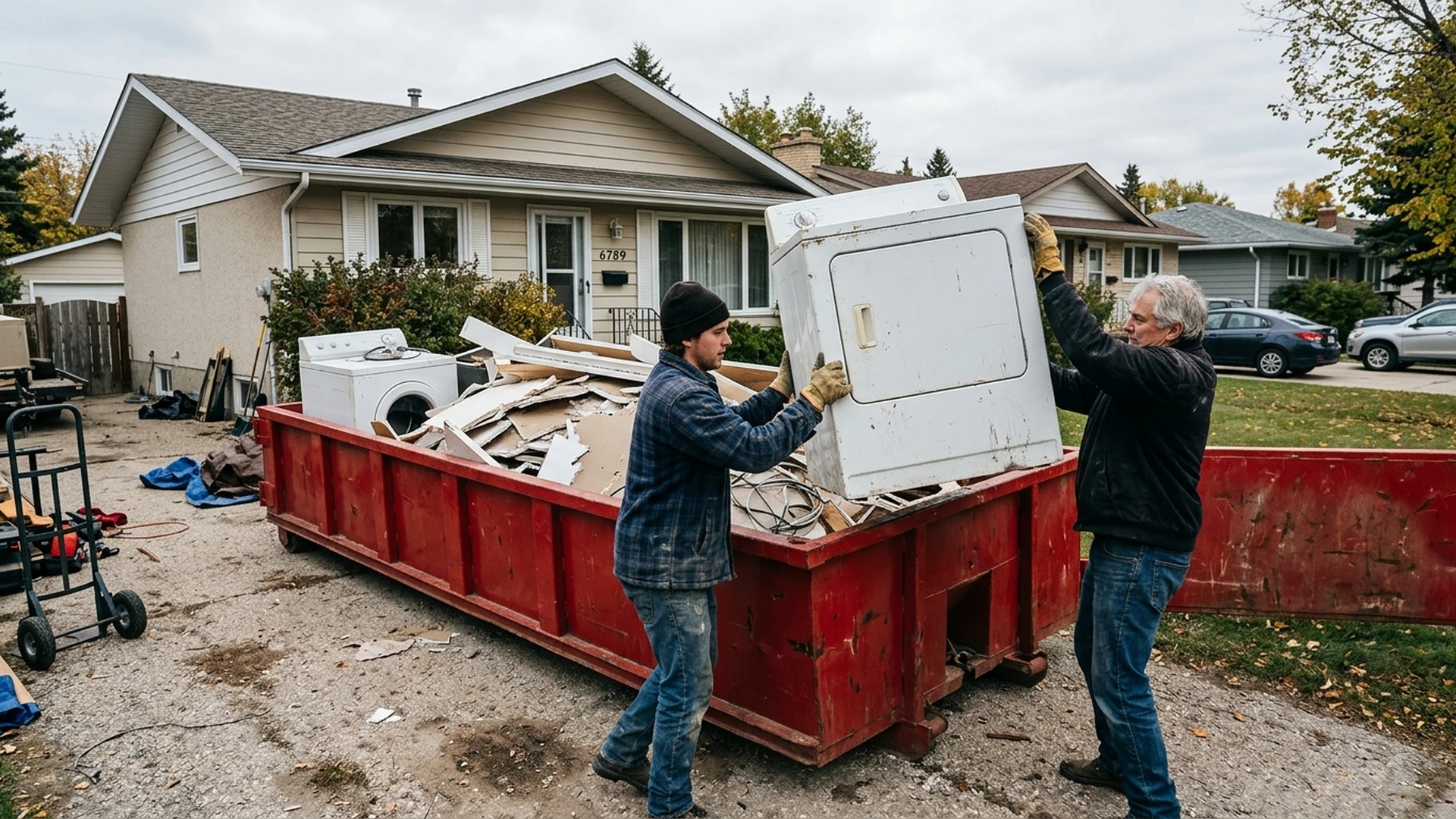
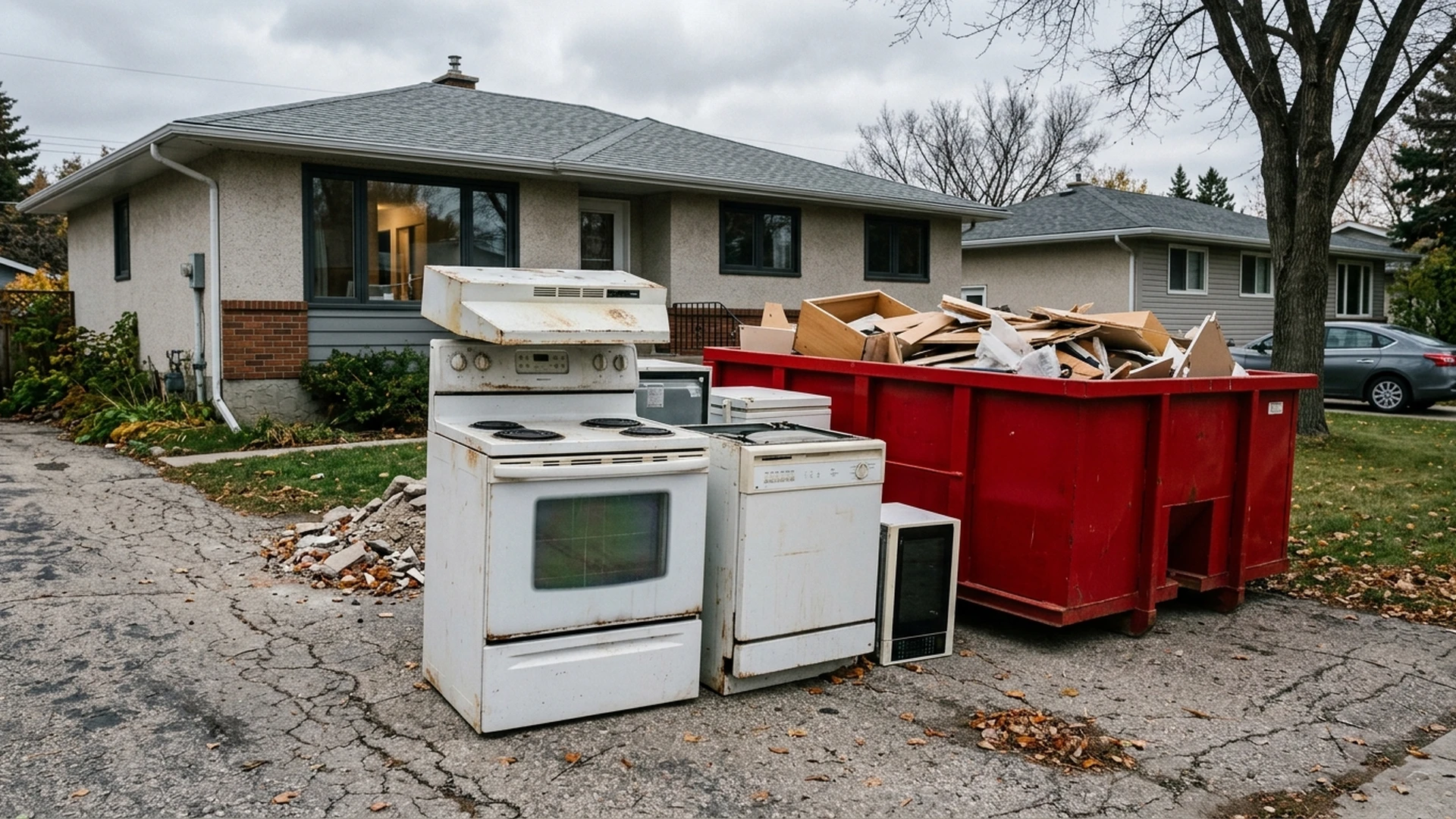
- Most large appliances contain no refrigerant at all. Washers, dryers, stoves, dishwashers, microwaves and water heaters go in a bin alongside other renovation or cleanout material.
- Refrigerant-containing appliances that don’t qualify for the free program need certified refrigerant recovery before disposal, which is a separate step from the bin
- Appliance disposal usually happens as part of something larger, a whole-home cleanout, a move, or a kitchen renovation, which is where a bin makes more sense than individual pickups
Check the Free Program First
Before arranging any paid disposal for a fridge or freezer, check whether it qualifies for free pickup. Efficiency Manitoba runs a program that collects eligible units from your home at no cost and pays you a rebate for handing it over. Bookings go through Efficiency Manitoba directly at 1-844-944-8181.
What the Program Covers
- Free at-home pickup of the appliance
- A $30 rebate per eligible unit
- Up to three eligible units per household
- Residential properties only. The program does not apply to commercial.
Eligibility Requirements
The unit has to meet all of the following:
- At least 20 years old
- 10 cubic feet or larger
- Still plugged in and cooling. The program is retiring working units from service, not collecting broken ones.
- Defrosted and free of mould
When the crew comes for an eligible fridge or freezer, they’ll also take a dehumidifier, a window air conditioner, or a small fridge at the same time at no charge. Those items don’t qualify on their own, but they ride along with a qualifying pickup, which makes it worth grouping them into a single appointment if you have more than one thing to clear.
Why the “Still Working” Requirement Exists
The program’s purpose is energy savings. A 20-year-old fridge running in a garage as a beer fridge uses considerably more electricity than a modern unit, so retiring it from service has a measurable benefit. A broken fridge isn’t using power, so it falls outside the program’s logic, which is exactly why it’s the case that needs a different solution.
The Bigger Category: Appliances With No Refrigerant
Most large appliances in a home contain no refrigerant at all, and they’re the ones people most often overthink.
- Washing machines
- Clothes dryers, gas or electric
- Stoves and ranges
- Wall ovens and cooktops
- Dishwashers
- Microwaves and over-range hood units
- Water heaters
- Garburators, range hoods, and similar built-in units
These go in a bin with the rest of your material. No special handling, no separate pickup, no certified technician. If they’re coming out as part of a renovation or cleanout, they load in with everything else.
Why the Bin Usually Makes Sense Here
Appliance disposal is rarely a standalone task. It happens because a kitchen is being renovated, a house is being cleared out, a move is happening, or a laundry pair is being replaced during a basement finish. In all of those situations there’s other material going out at the same time, and a bin handles the whole load rather than arranging separate disposal for each appliance.
For bin sizing across project types, see our bin sizing guide.
Weight Notes
Appliances are dense relative to their volume, but a handful of them in a mixed load isn’t usually the deciding factor in bin weight the way concrete or masonry is. Older appliances tend to be heavier than modern equivalents. Cast iron sinks, if they’re coming out with a kitchen, are heavier than they look.
Refrigerant-Containing Appliances
This is the category that needs a separate step, and it covers anything with a cooling system:
- Refrigerators and freezers
- Air conditioners, including window units
- Dehumidifiers
- Heat pumps and some beverage coolers
Refrigerants have to be recovered by a certified technician before the appliance is disposed of. This isn’t a preference or a fee-avoidance thing. Releasing refrigerant is a regulated matter and the recovery has to be documented.
If the Unit Still Works
The Efficiency Manitoba program above is the answer, and it’s free with a rebate on top. That covers most working fridges and freezers, and the ride-along provision covers window air conditioners, dehumidifiers, and small fridges.
If the Unit Is Broken
A fridge that’s stopped cooling doesn’t qualify for the free program, which is the gap most people run into. The disposal path involves certified refrigerant recovery first, and then the empty unit can be handled as scrap metal or general disposal.
Call Ecobins & Cartage at (431) 317-8581 before booking a bin if a non-working refrigerant appliance is part of your project. We’ll confirm the current handling and what needs to happen before the unit goes in the load.
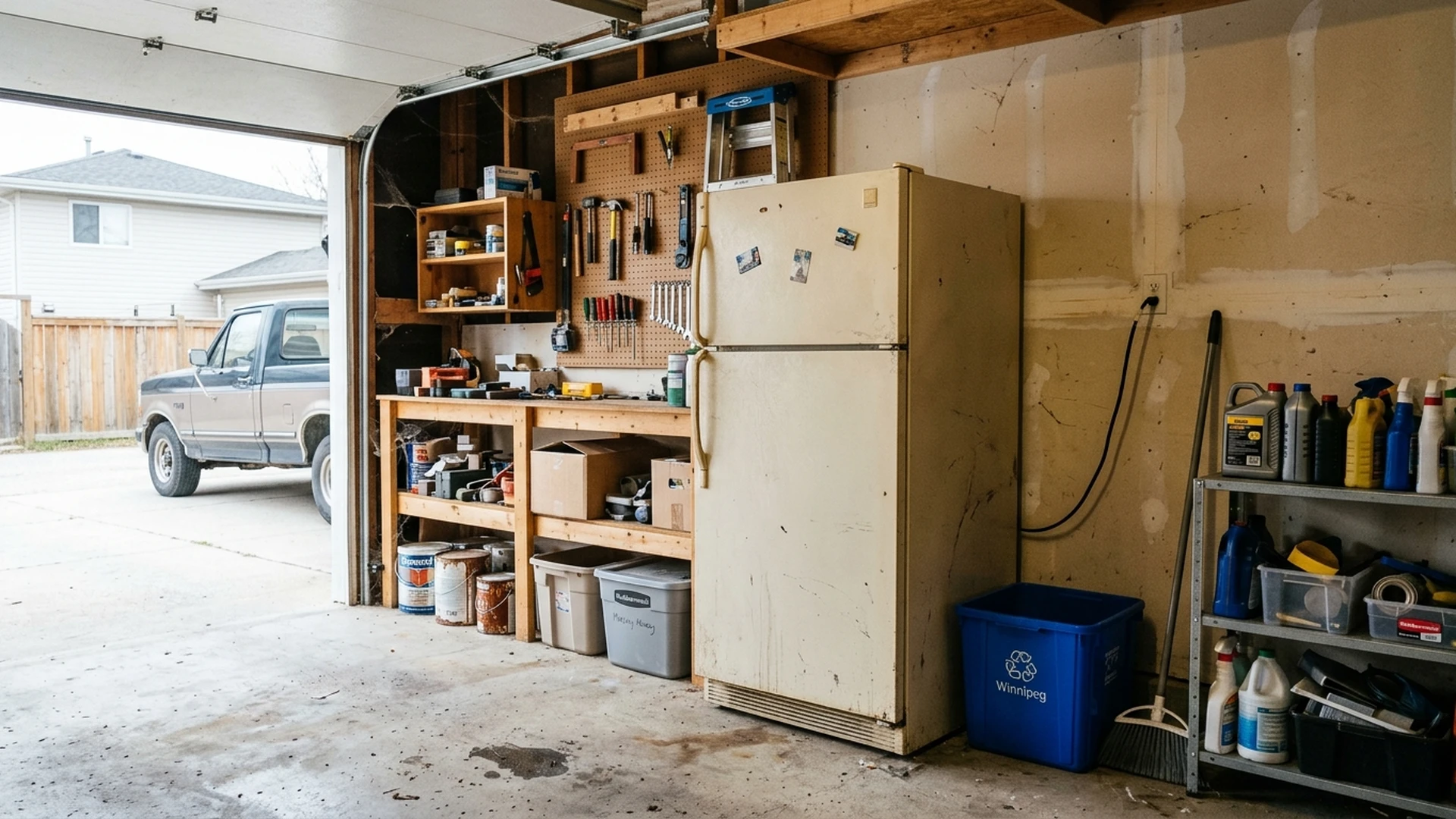
The refrigerant requirement also comes up on garage cleanouts, where an old garage fridge is a common find. See our garage cleanout guide for the rest of what typically comes out of a garage, including the hazardous items that can’t go in a bin at all.
Quick Reference
| Appliance | Contains Refrigerant? | Route |
|---|---|---|
| Fridge or freezer, still working, 20+ years, 10+ cu ft | Yes | Efficiency Manitoba free pickup, $30 rebate |
| Fridge or freezer, broken | Yes | Certified recovery first. Call to confirm handling. |
| Window AC, dehumidifier, small fridge | Yes | Free ride-along with a qualifying Efficiency Manitoba pickup |
| Washer, dryer, stove, dishwasher | No | Bin |
| Microwave, range hood, water heater | No | Bin |
Planning Around a Renovation or Cleanout
If appliances are coming out as part of a larger project, a bit of sequencing helps:
Identify any working fridges or freezers early and book the Efficiency Manitoba pickup, since that’s a scheduled appointment rather than something to arrange the day of
Flag any broken refrigerant appliances when you book the bin so the handling is sorted before the project starts
Group the rest of the appliances with your renovation or cleanout material rather than treating them separately
If a working fridge is being replaced rather than scrapped, the rebate program only takes it out of service permanently. Selling or donating a functional unit is a different route.
FAQ: Appliance Disposal in Winnipeg
My fridge is only 12 years old. Does it qualify?
No. The program requires the unit to be at least 20 years old, since the energy savings from retiring a newer unit don’t justify the program cost. A 12-year-old working fridge is a better candidate for resale or donation than disposal.
Can I put a small bar fridge in the bin?
Not without refrigerant recovery. Size doesn’t change the requirement. A small fridge does qualify for free removal as a ride-along item when Efficiency Manitoba is already coming for a larger qualifying unit, which is the easiest route if you have both.
Does the free program apply to a rental property or a business?
The program is residential only. Commercial properties, including businesses replacing a commercial fridge or a rental property owner clearing units at scale, fall outside it and need a different disposal arrangement.
Book a Bin
Mention any refrigerant-containing appliances when you book so the handling is confirmed before your project starts.
Book a Bin Online Call (431) 317-8581