Fence Removal Waste Winnipeg: Bin Sizing & Footings
- A fence teardown produces two very different material streams: the boards and rails, which are bulky but light, and the concrete post footings, which are compact but heavy
- Concrete footings are the deciding factor in both bin sizing and timing: they drive tipping fees by weight and they need unfrozen ground to dig out
- Older fence lumber is usually pressure-treated, which means it cannot be burned and shouldn’t be chipped or composted
- Most fence removals are a homeowner or contractor job; Eco Bins provides the bin and hauls the material away
- If the fence is being replaced, the removal timing has to work backward from the installer’s schedule and from freeze-up, not just from when you’re free
Two Material Streams, One Bin
A fence teardown is a more predictable project than most demolition work, because a fence is a simple structure. What makes it worth planning rather than just starting is that it generates two kinds of material with opposite properties.
Boards, Rails and Panels
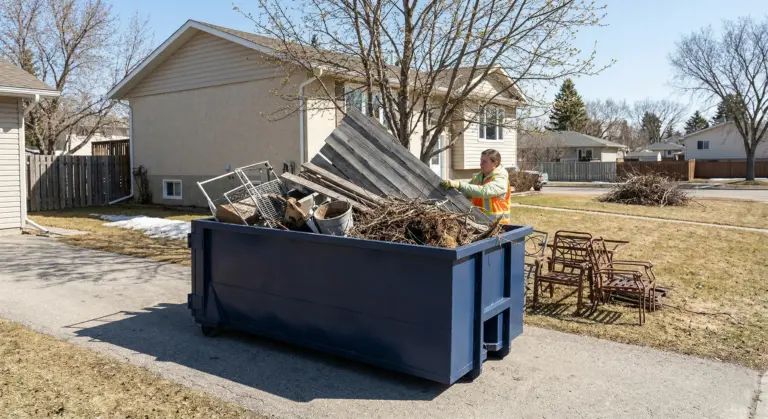
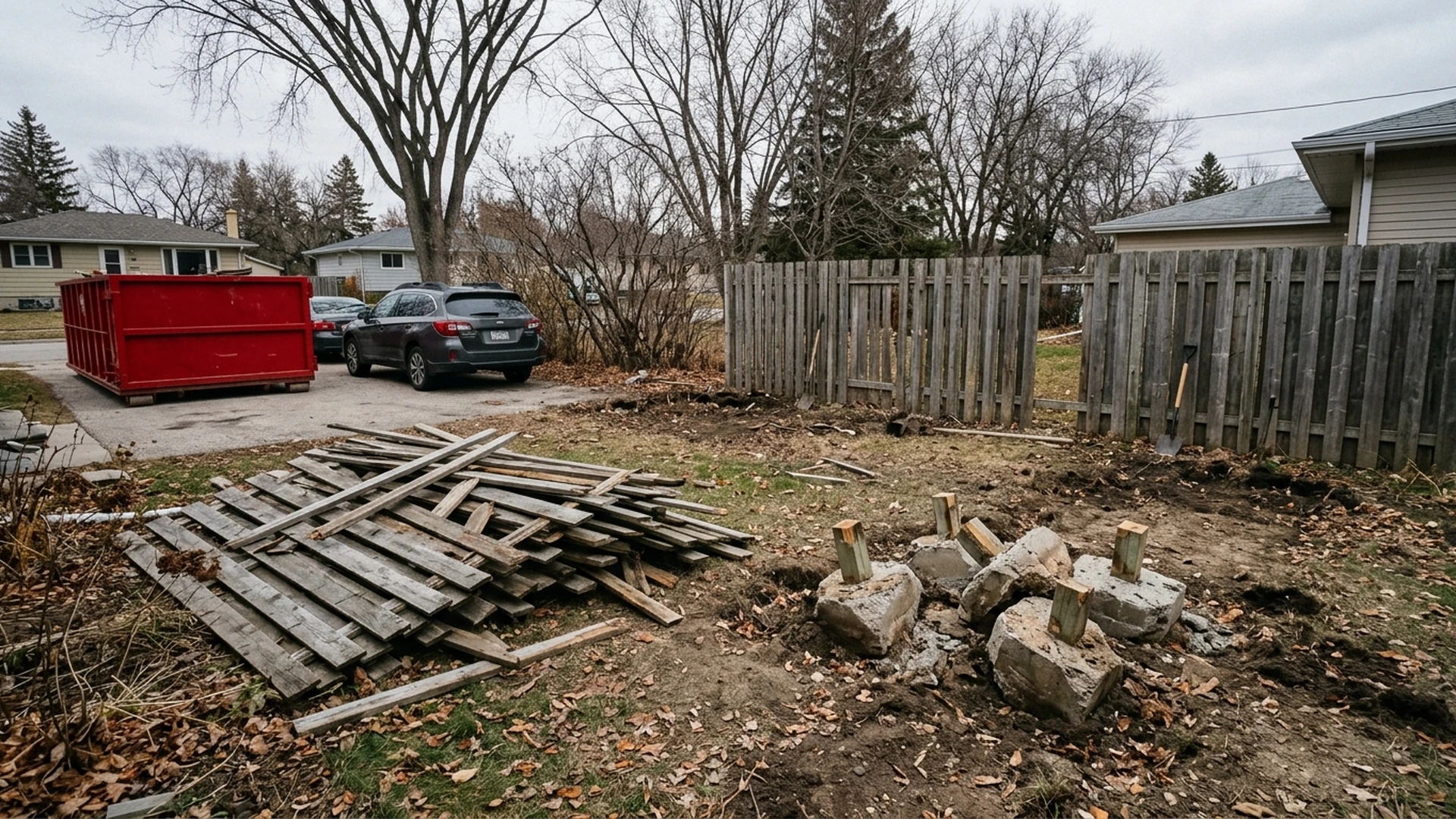
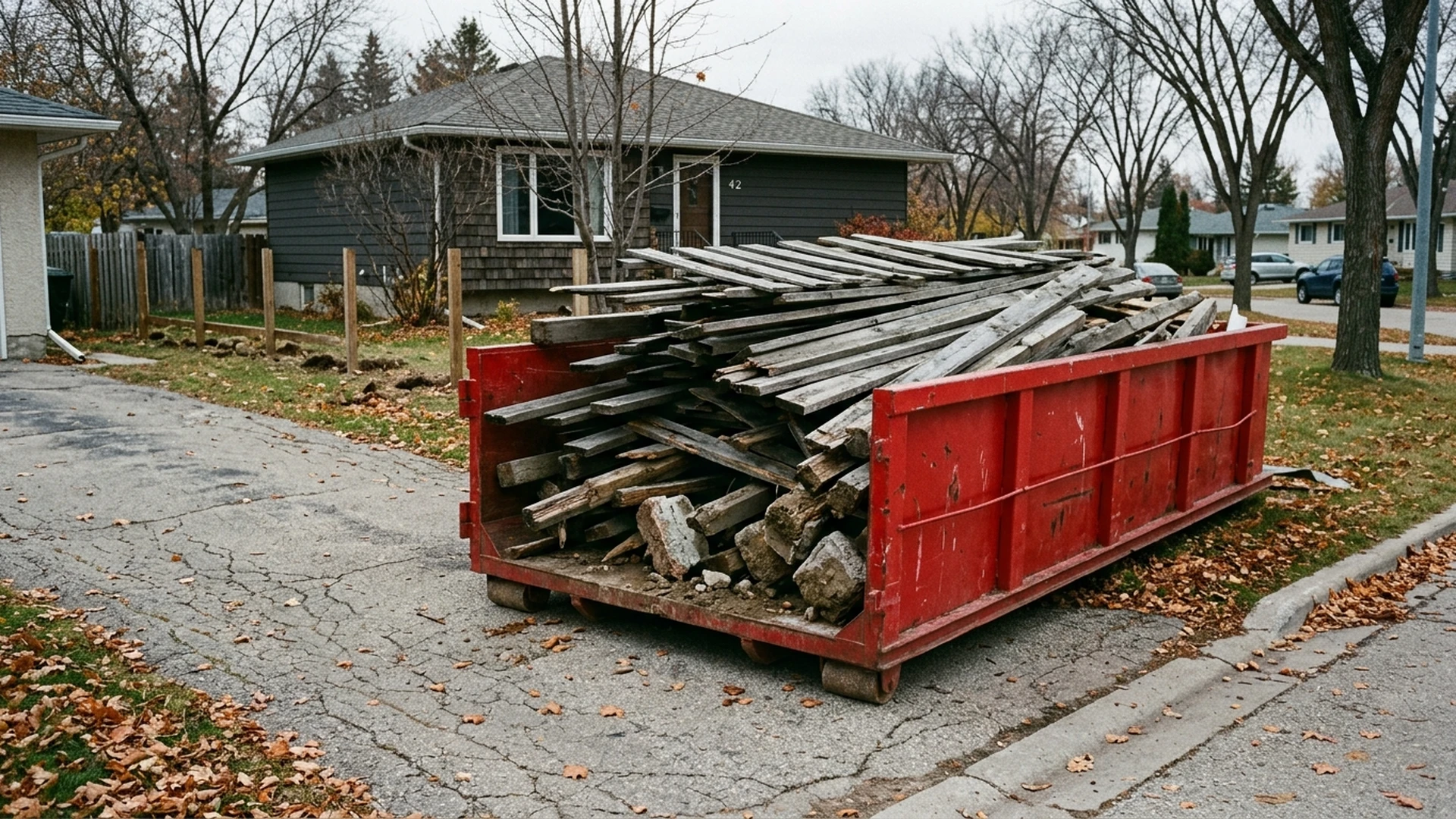
Bulky. They take up a lot of bin volume relative to what they weigh, and a long fence run produces a surprising amount of it.
Concrete Post Footings
The reverse: each one is a compact lump that weighs far more than its size suggests.
Sizing a bin for one without accounting for the other is how the estimate goes wrong.
Estimating the Boards and Rails
Fence material volume scales with the length of the run and the height of the fence. As a working reference for a standard six-foot privacy fence, a typical residential run generates enough board and rail material that volume, not weight, is the binding constraint.
| Fence Run | Boards and Rails Only | Recommended Bin |
|---|---|---|
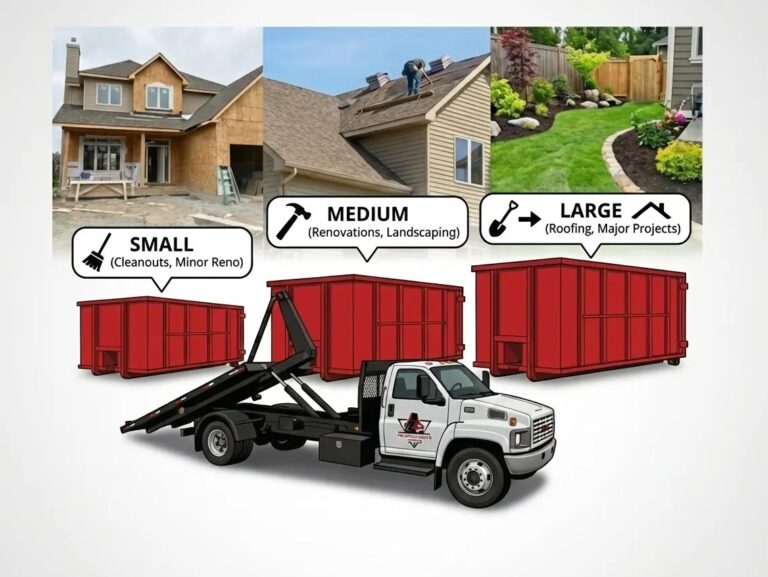
| Up to 50 feet | Modest volume, light material | 8-yard |
| 50 to 100 feet | Moderate volume | 8 to 12-yard |
| 100 to 150 feet | Substantial volume | 12-yard |
| 150 feet or more, or a full yard perimeter | Large volume | 12 to 20-yard |
Breaking panels down rather than loading them intact makes a significant difference to how much fits. A stack of loose boards packs far more efficiently into a bin than assembled panel sections with air between the boards.
The Concrete Footings
This is where a fence removal differs most from other residential demolition, and where the cost and timing decisions get made.
Weight
Most fence posts in Winnipeg are set in concrete, and Manitoba’s frost depth means those footings tend to be deep. A single post footing can weigh 50 to 100 pounds or more depending on the diameter of the hole and how deep it was poured. A fence with posts every eight feet over a hundred-foot run has around a dozen footings, and that adds up to several hundred pounds of concrete before a single board goes in the bin.
Tipping fees are charged on actual load weight at the scale. The boards contribute volume; the footings contribute the weight that shows up on the invoice. Mention footings when booking so the bin size and weight expectations are set realistically.
Digging Them Out
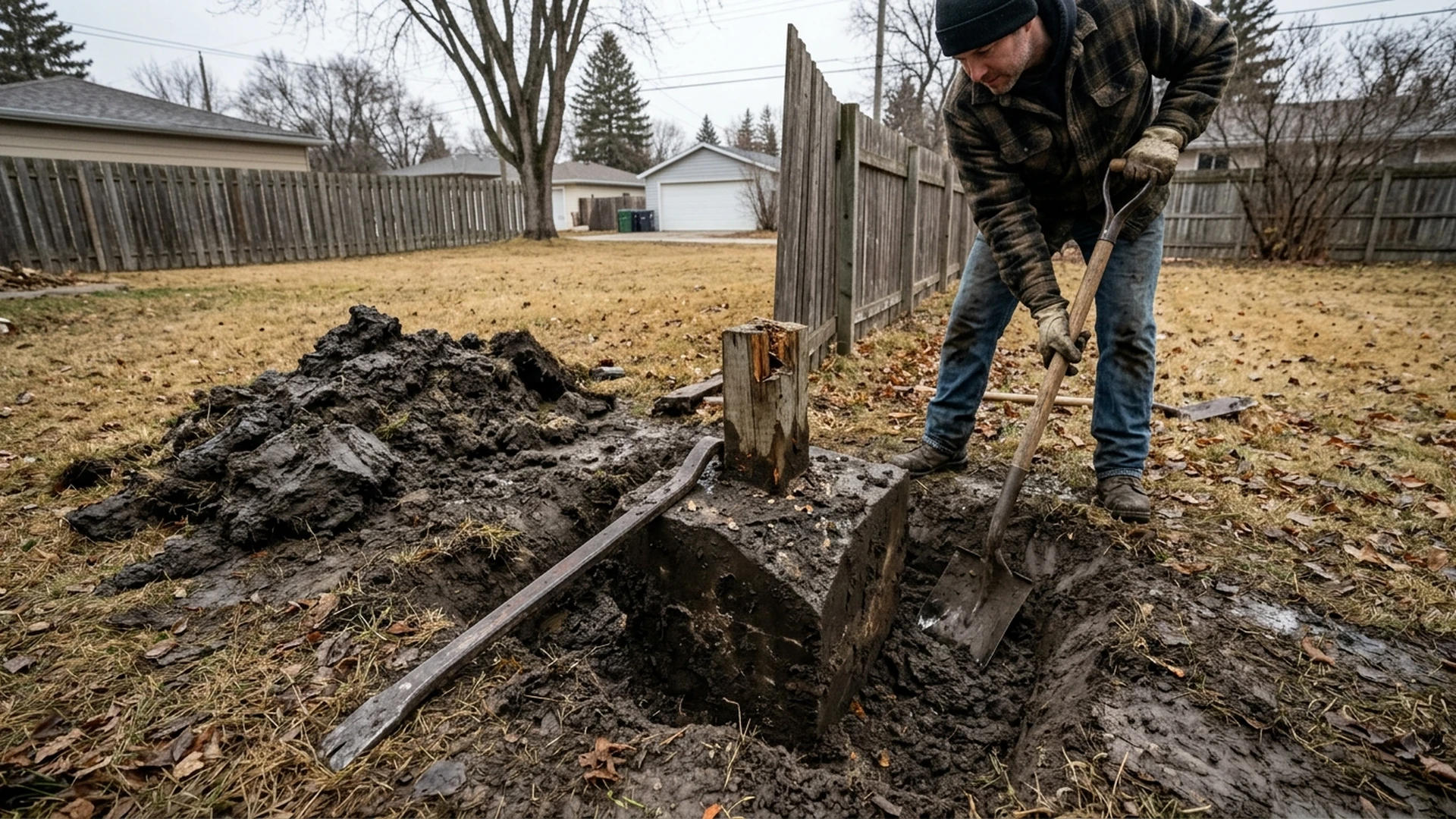
Removing a concrete footing means digging around it and working it free, which is straightforward in unfrozen clay and considerably harder once the ground locks up. This is the timing constraint on a fall fence removal.
If the fence is being replaced, the new posts need new holes anyway, so the old footings usually have to come out regardless. If the fence is simply being removed and the line isn’t being rebuilt, leaving the footings in place below grade is an option worth considering, particularly late in the season.
Concrete Weight and the Bin
Load footings on the bin floor first and build the lighter board material on top. This distributes the weight low and keeps the load stable. For more on concrete weight, tipping fee implications, and whether clean concrete can go to a recycler instead of the bin, see our concrete and brick disposal guide.
Pressure-Treated Lumber
Fence posts, rails, and often the boards themselves are pressure-treated, since anything in ground contact or exposed to Manitoba weather needs to be. On an older fence, the treatment may be an earlier formulation than what’s used today.
- It cannot be burned. This includes backyard fire pits and burn barrels. Burning releases the preservative compounds.
- It shouldn’t be chipped for mulch or composted.
- Bin disposal is the appropriate route. Mention treated lumber when booking so Eco Bins can confirm current handling for your load.
If the fence is old enough that you’re uncertain what it was treated with, the handling is the same: don’t burn it, and put it in the bin.
Other Material in a Fence Teardown
- Metal hardware: hinges, latches, brackets, and fasteners. These can go in the bin with the rest of the material without separation.
- Chain link fencing and metal posts, if that’s what’s coming out. Light per volume but awkward; rolling chain link tightly before loading saves considerable space.
- Vinyl or composite fence panels. Accepted in a standard bin. Lighter than wood but similarly bulky.
- Gate hardware and any concrete gate posts, which are often larger than line post footings.
Timing a Fence Removal in Fall
Two constraints work against each other in a fall fence project.
Freeze-up. Footing removal needs workable ground, and once Winnipeg’s clay locks up, digging footings out stops being a reasonable manual job. Anything requiring excavation belongs on the fall side of freeze-up.
The replacement schedule, if there is one. A fence being replaced means the new installer needs the line cleared and, usually, new post holes dug before the ground freezes as well. Working backward from the installer’s start date rather than forward from when you’re available is what keeps the project from stalling with a fence down and nothing replacing it.
If you’re replacing the fence, our sister company Lawn ‘N’ Order installs wood, vinyl and other fence types across Winnipeg.
Booking the Bin
Book the bin for delivery the day the teardown starts rather than several days ahead, so you’re not paying rental time on a bin sitting empty in the driveway. Describe the fence length and whether footings are coming out when you book, since those two details determine both size and weight expectations. For general sizing guidance across project types, see our bin sizing guide, and for how rental duration and tipping fees work, see our bin rental total cost guide.
Who Does the Removal
Eco Bins provides the bin and hauls the material away. The teardown itself is the homeowner’s project or their contractor’s. A wood fence removal is a manageable DIY job for most people with basic tools; the footings are the physically demanding part. For a long run, a fence in poor condition, or a project on a tight replacement schedule, a contractor handles it faster.
FAQ: Fence Removal Waste in Winnipeg
Can I leave the old post footings in the ground?
If the fence isn’t being replaced on the same line, yes. A concrete footing below grade is stable and isn’t causing a problem. If a new fence is going in, the new posts need holes and the old footings are usually in the way, so they come out as part of the job. Late in the season, leaving them is a reasonable way to defer the hardest part of the work to spring.
Does the old fence wood have any resale or reuse value?
Occasionally. Cedar fence boards in good condition sometimes find takers on local classifieds, and intact panels more so than loose boards. Treated lumber has limited reuse appeal and shouldn’t be repurposed for anything involving soil contact in a garden. For most teardowns the material goes in the bin, but it costs nothing to list it first if the boards are in reasonable shape.
What size bin do I need if I’m doing the fence and other yard cleanup at the same time?
Size up rather than booking two bins. Fence material is bulky, so a combined project fills volume quickly. Describe both parts of the scope when booking so the recommendation accounts for the combined load rather than the fence alone.
Book a Bin for Your Fence Removal
Describe the fence run and whether concrete footings are part of the removal, so Eco Bins can recommend the right bin size.
Book a Bin Online Call (431) 317-8581