Roofing Waste Disposal Winnipeg: Bin Sizing, Weight & Shingles
- Asphalt shingles are heavy — a standard residential roof generates 1,500 to 3,000+ lbs of waste per layer removed
- Weight limits apply to all bins and hit sooner for roofing waste than almost any other material
- Most standard residential roofs (15–25 squares) fit in a 12-yard bin, but multiple shingle layers change that calculation
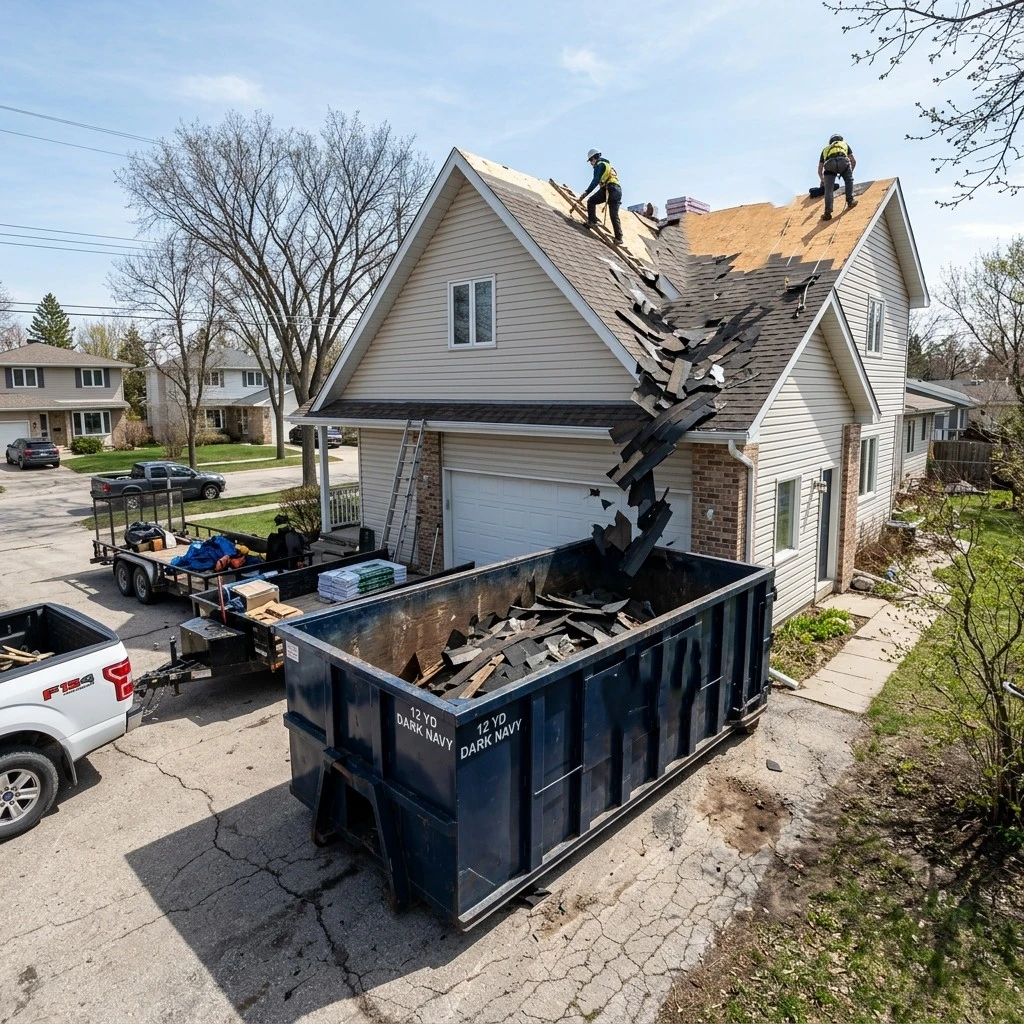
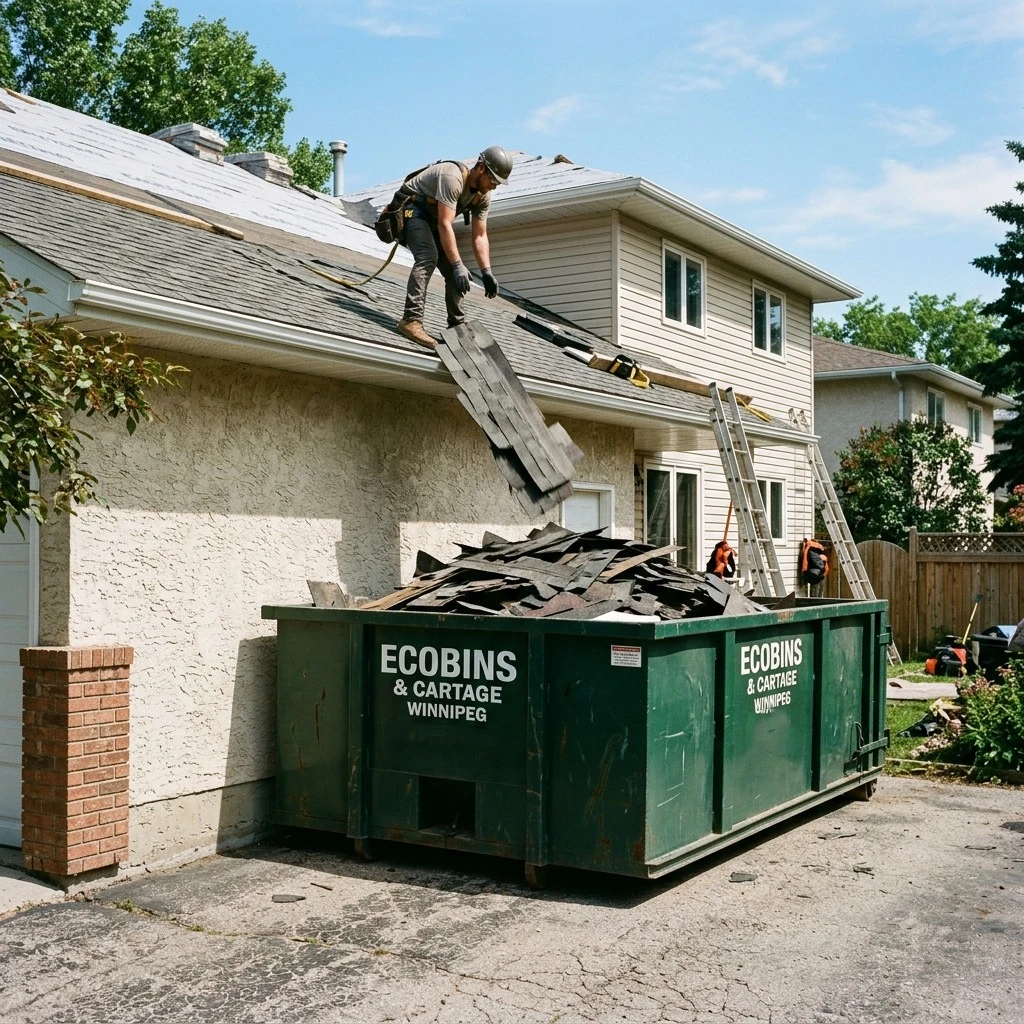
- Position the bin as close to the roofline as possible — carrying shingles across a yard adds significant labour time
- Ecobins & Cartage carries 8, 12, and 20-yard bins starting at $250 for a 7-day rental, with same-day delivery available across Winnipeg
Why Roofing Projects Need a Dedicated Bin
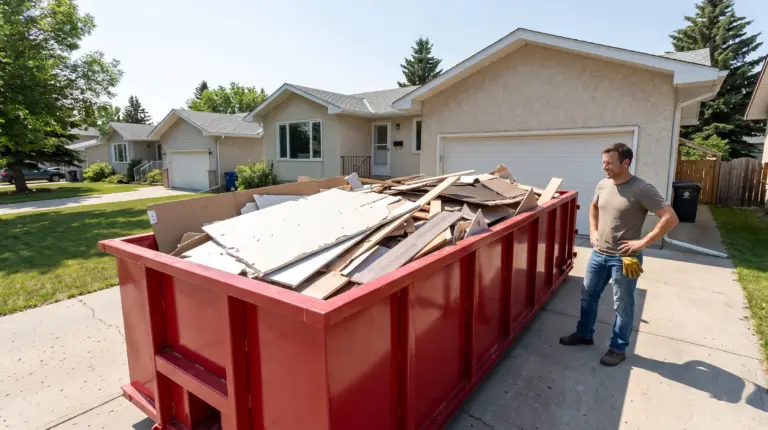
Roofing waste is unlike most other renovation debris. Asphalt shingles are dense, heavy, and awkward to handle once stripped. A full roof replacement on an average Winnipeg home generates a volume and weight of material that doesn’t fit in a pickup truck, doesn’t qualify for curbside pickup, and piling it in the driveway creates a bylaw issue while your crew is still mid-project.
The efficient approach is a bin on-site before the tear-off starts, positioned close to where the material will land, so stripped shingles can be loaded directly or with minimal carry distance. That setup keeps the project moving and the site clear throughout the work.
Choosing the Right Bin Size for Your Roofing Project
Measuring Roof Area: The Square
Roofing is measured in squares — one square equals 100 square feet of roof area. A typical Winnipeg bungalow has 15 to 20 squares of roof. A two-storey home can run 25 to 35 squares. Your roofing contractor can give you the square count from their quote documents.
Single Layer vs Multiple Layers
Winnipeg homes built before the 1990s often have two or three layers of shingles installed over the original roof deck — each reroof added on top of the previous one rather than tearing off first. Many current homes have at least two layers. Every additional layer doubles the waste weight for that portion of the roof.
If your roof has two layers, your waste calculation doubles. Three layers and you’re looking at potentially three times the single-layer estimate. Your roofing contractor should confirm the layer count before you order a bin — it directly affects which size you need.
Bin Size Guide for Roofing Projects
| Bin Size | Dimensions | Capacity | Price | Best For |
|---|---|---|---|---|
| 8-Yard | 10’L × 7.5’W × 3’H | ~3 truck loads | $250 / 7 days | Small roof sections, single-layer, garage roofs |
| 12-Yard | 12’L × 8’W × 4’H | ~5 truck loads | $275 / 7 days | Most standard residential roofs, single layer |
| 20-Yard | 14’L × 8’W × 5’H | ~8 truck loads | $300 / 7 days | Large roofs, multiple shingle layers, combined roofing + other demo |
Additional days beyond 7 days are $10 per day. Tipping fees are extra and based on weight — roofing loads are among the heavier categories and tipping fees reflect the disposal weight.
When in doubt, go larger. The cost difference between a 12-yard and 20-yard bin is $25. The cost of a second delivery and pickup if you underestimate is significantly more than that.
Weight vs Volume: The Key Distinction for Roofing
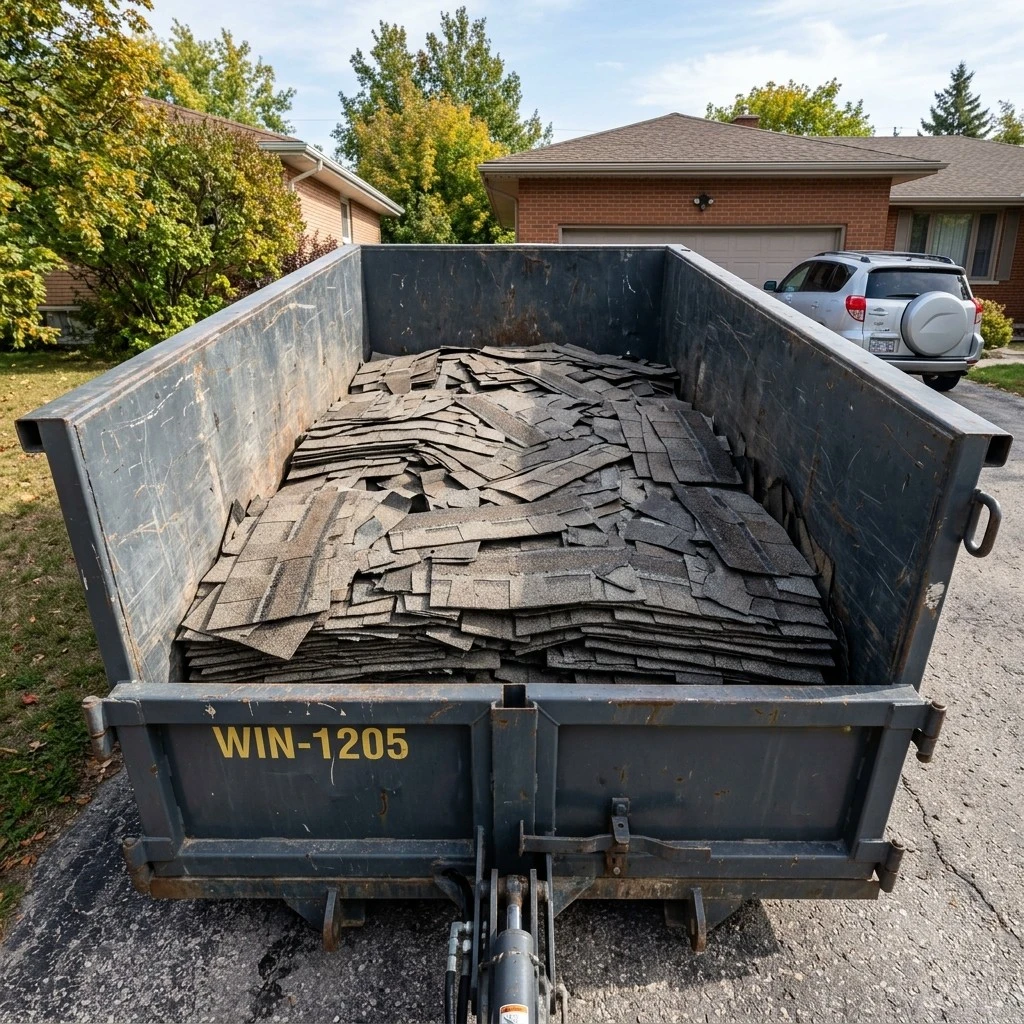
Standard rental bins have two limits: volume (how full it looks) and weight (how heavy the load is). For most renovation debris — drywall, lumber, and flooring — the volume limit is what you hit first. For roofing, it’s often the weight limit.
A 12-yard bin loaded exclusively with asphalt shingles may reach its weight limit when it’s only half to two-thirds full by visual volume. This is especially true for heavy architectural shingles or multiple-layer tear-offs.
The practical implication: tell Ecobins & Cartage what you’re loading when you book. A roofing-specific load is managed differently from a mixed renovation load. Knowing the material type upfront helps us advise on the right bin size and give you an accurate picture of what tipping fees will look like before the project starts, not after.
Bin Placement for Roofing Projects
Where the bin sits on your property matters more for roofing projects than for most other applications.
Get It Close to the Drop Zone
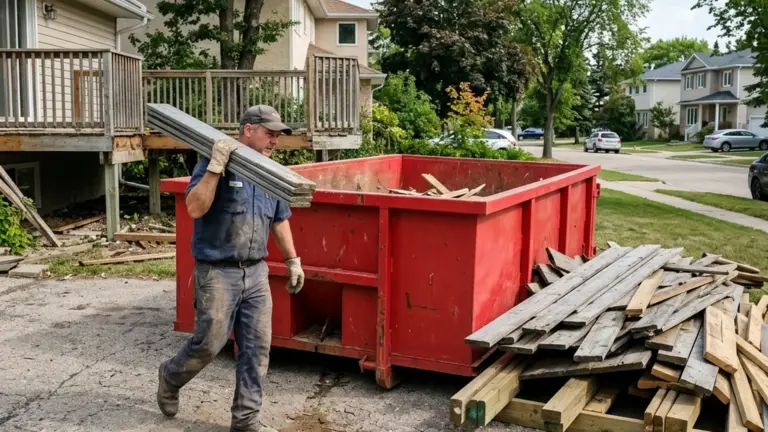
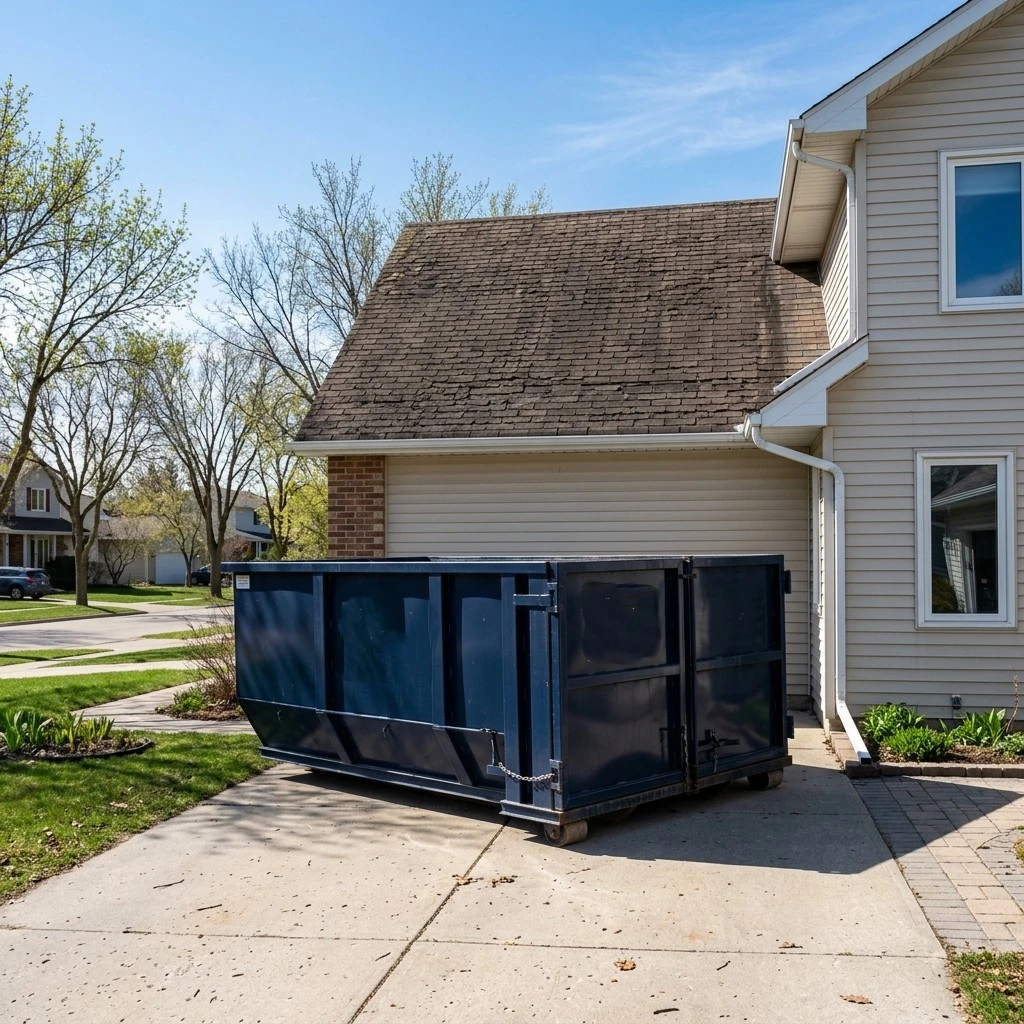
Stripped shingles are heavy and awkward. Every additional foot of carry distance from the roof edge adds labour time and physical strain for the crew. The ideal placement is directly below or adjacent to where material is coming off the roof. Your roofing contractor will have a strong opinion on placement — let that preference drive the delivery location.
Driveway Surface Protection
If the bin is going on an asphalt driveway, particularly in warm weather, the concentrated weight of a roofing load can mark or indent the surface. Placing plywood sheets under the bin contact points distributes the load and reduces the risk of surface damage. Mention this when you book.
Alley Access in Winnipeg
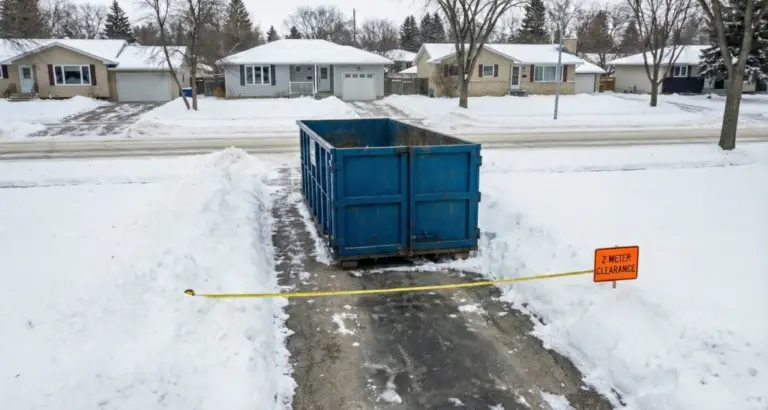
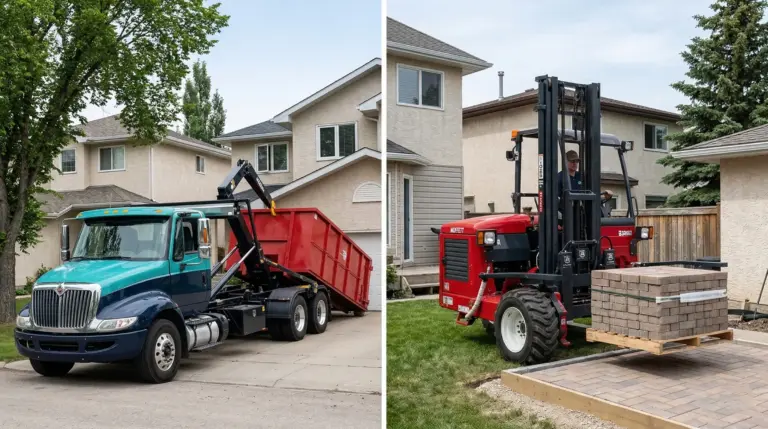
Many Winnipeg homes have alley access at the rear, which can be useful for bin placement that doesn’t block the driveway. Check overhead utility wire clearance before assuming alley delivery works for your specific address — low-hanging lines limit how a truck can position its box. Contact Ecobins & Cartage before ordering if you’re planning alley placement.
What Else Can Go in the Bin During a Roofing Project
Roofing projects often generate secondary debris alongside the shingles: old underlayment, rotted sheathing boards, flashing, vent components, and sometimes soffit and fascia if those are being replaced at the same time. All of this can go with the shingles.
What can’t go in: any hazardous materials. Older homes may have roofing materials containing asbestos, which was present in some shingles and roofing compounds used before the 1980s. If your roofing contractor identifies potentially hazardous materials, those require specialized disposal through Manitoba Hazardous Waste Management and cannot go in a standard rental bin.
Timing Your Bin for Spring Roofing Season
Spring is the busiest season for roofing in Winnipeg. The backlog of winter damage, ice dam leaks, wind-lifted sections, and deferred replacements creates a surge in roofing projects from late April through June. Bin demand follows the same pattern.
Same-day delivery is available for most Winnipeg locations, but spring peak weeks can limit availability. If your roofing project has a confirmed start date, booking the bin a few days to a week in advance locks in your preferred delivery date. Calling the morning of a project start and hoping for same-day is less reliable in April and May than it is in other months.
FAQ: Roofing Waste Disposal Winnipeg
How many squares of shingles fit in a 12-yard bin?
A 12-yard bin handles approximately 15 to 20 squares of single-layer asphalt shingles comfortably, depending on the shingle weight class. If you have two layers, that estimate is halved. For larger roofs or multiple layers, the 20-yard bin is the safer choice. When in doubt, call Ecobins & Cartage with your square count and layer information — we can help confirm the right size before delivery.
Can I mix roofing waste with other renovation debris in the same bin?
Yes, but be cautious about the combined weight. Roofing waste is heavy, and adding other dense materials — such as concrete, masonry, and ceramic tile — can push the bin past weight limits before it looks full. Lighter materials like drywall, lumber, and insulation mix well with shingles. If your project involves significant heavy debris alongside the roofing, mention that when you book.
Do I need a permit to rent a bin for a roofing project?
No permit is required for a bin placed on your private driveway. If you need to place the bin on a public street or sidewalk, you would need to contact the City of Winnipeg, but for most residential roofing projects, driveway or alley placement makes street placement unnecessary.
Book Your Roofing Bin
Book online or call (431) 317-8581. Tell us your approximate roof size and shingle layer count when you book — that’s the information that matters most for right-sizing your rental. We deliver across Winnipeg and surrounding areas, with same-day service available on most requests.
Book Your Bin Learn More